




Green Cottage Garden Painting
A green cottage garden painting captures the tranquil charm of rural domestic life through delicate watercolours and rich oil paints.
Green Cottage Garden Painting
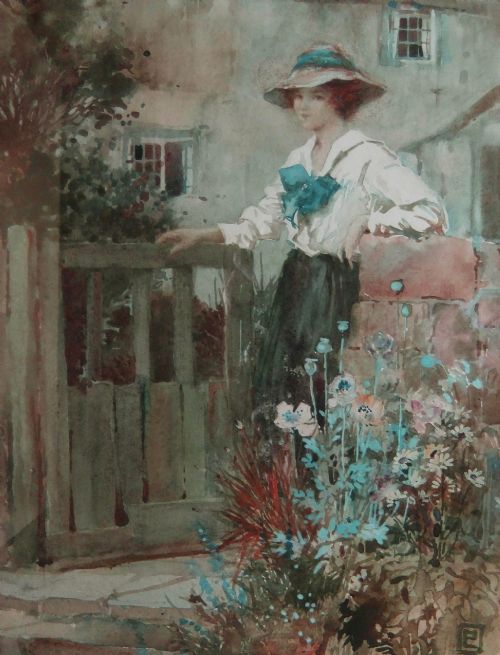
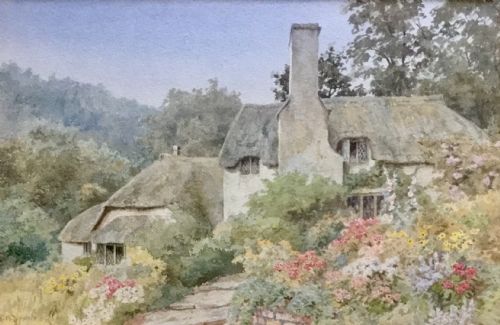
A green cottage garden painting depicts domestic rural scenes from the Victorian, Edwardian, and early twentieth-century periods. These works focus on pastoral subjects such as thatched cottages, walled gardens, and figures engaged in quiet daily tasks.
The most common examples on this page are watercolours on paper and oil paintings on canvas, reflecting the prevailing British and English Impressionist and pastoral styles of the era.
Artists working in this genre often recorded specific regional settings across the British countryside, combining architectural studies of country houses with vibrant floral plantings.
Materials and Techniques
These works rely on traditional media including watercolour pigment on paper and oil paint applied to canvas or wood panels. Painters manipulated these materials to capture natural light and the dense textures of garden foliage.
Artists utilised varied brushwork, from the fine, controlled washes typical of Edwardian watercolours to the heavier, impasto application seen in oil paintings from the same decades.
Several canvases faithfully record the humble domestic routines of pet rabbits and hens keeping painters company in the garden.
Assessing Quality and Execution
Quality in these pastoral scenes rests upon the artist's handling of light, perspective, and atmospheric depth within the garden setting. Finer examples display confident brushwork and balanced composition that bring the domestic subject to life.
The choice of medium and the preservation of the original paper or canvas surface also influence the overall character of the piece. Stronger works maintain vibrant colour harmonies and precise detail in both the cottage architecture and the surrounding flora.
Percy Lancaster·Owen Bowen·Ernest Higgins Rigg·Kershaw Schofield·Herbert Royle·Arthur Claude Strachan·Thomas Nicholson Tyndale·Benjamin D. Sigmund·George Frederick Nicholls·Minnie Smythe
The Green Cottage Garden Painting Glossary
- Watercolour
- A painting method in which the paints are made of pigments suspended in a water-based solution. This medium allows for transparent washes of colour on paper.
- Impressionism
- A style of painting that focuses on the accurate depiction of light in its changing qualities. Artists of this school often worked outdoors to capture immediate visual impressions.
- Pastoral
- A genre of art that depicts rural life and landscapes in a romanticised or idealized manner. These scenes typically feature cottages, gardens, and agricultural workers.
- Impasto
- A technique where paint is laid on an area of the surface in very thick layers. This method makes the brush strokes or palette knife marks visibly prominent.
Green Cottage Garden Painting: Frequently Asked Questions
What periods do these paintings date from?
The works span from the nineteenth century through the Edwardian era and into the 1930s and 1940s. Many examples date specifically from the early decades of the twentieth century.
This timeframe captures the height of British pastoral and impressionist painting movements focused on rural domestic life.
What subjects typically appear in these scenes?
Common subjects include thatched cottages, walled gardens, and figures tending to domestic tasks like feeding hens or knitting outside.
Artists frequently portrayed quiet country houses and rural gardens in full summer bloom across various regions of Britain.
How should I care for an antique watercolour?
Watercolours on paper require protection from direct sunlight to prevent the pigments from fading over time. Framing with acid-free mount board helps preserve the integrity of the paper.
Keeping the painting in a stable environment away from excessive moisture protects both the paper support and the original pigments.
How do I distinguish oil paintings from watercolours?
Oil paintings are typically executed on canvas or wood panels with thicker, textured paint layers. They often possess a distinct sheen and greater depth of colour.
Watercolours are painted on paper, showing translucent washes of pigment where the texture of the paper remains visible beneath.