


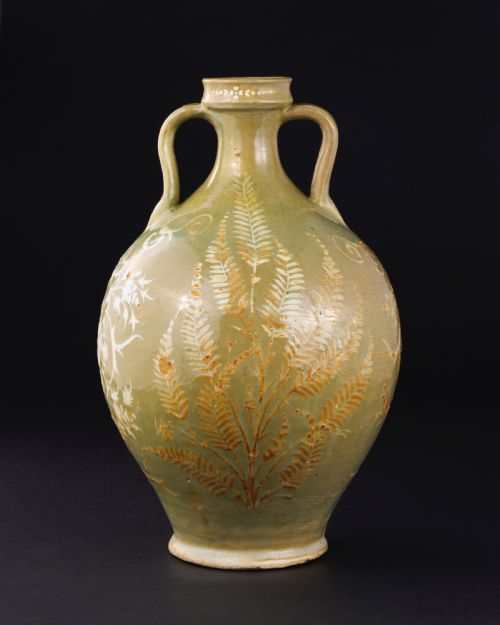


Green Ceramic Jar
These green ceramic jar selections bring historic glazes and earthy forms to interior spaces.
Green Ceramic Jar
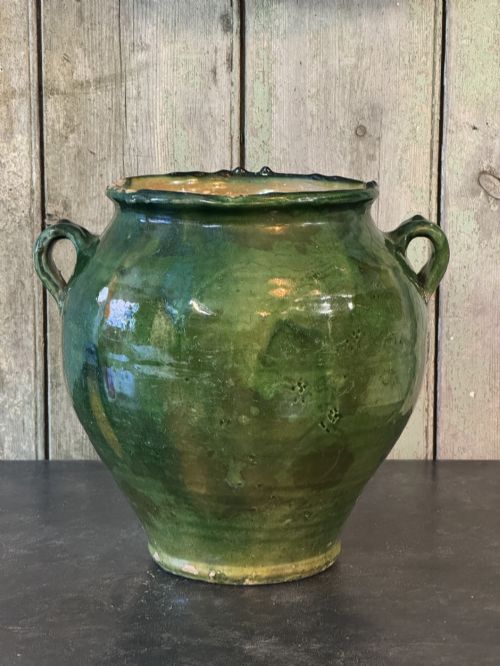
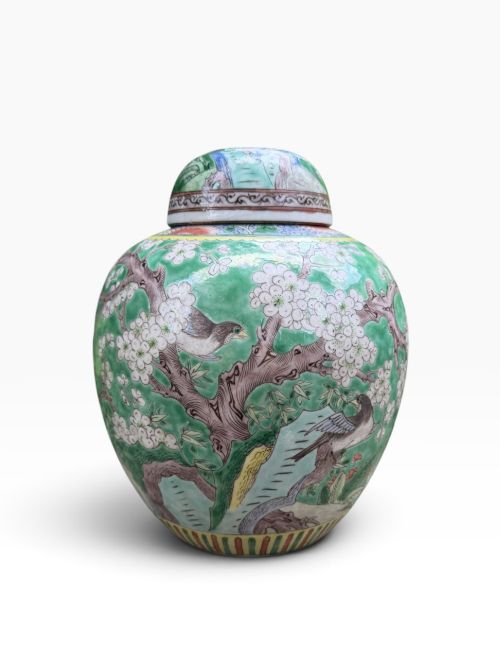
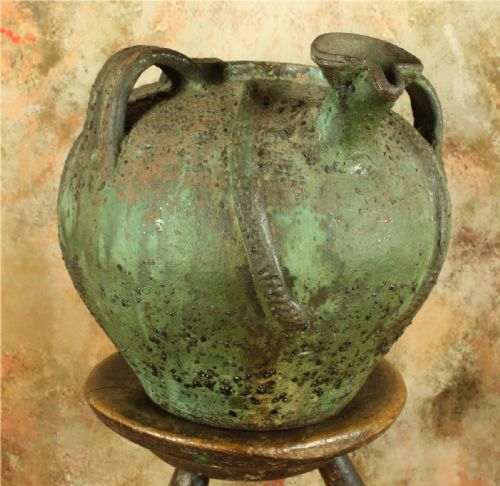
A green ceramic jar encompasses a wide family of vessels, from utilitarian French confit pots and olive jugs to decorative Chinese ginger jars and apothecary containers. Buyers seek these pieces for their rich surface texture, historical utility and decorative presence in modern interiors.
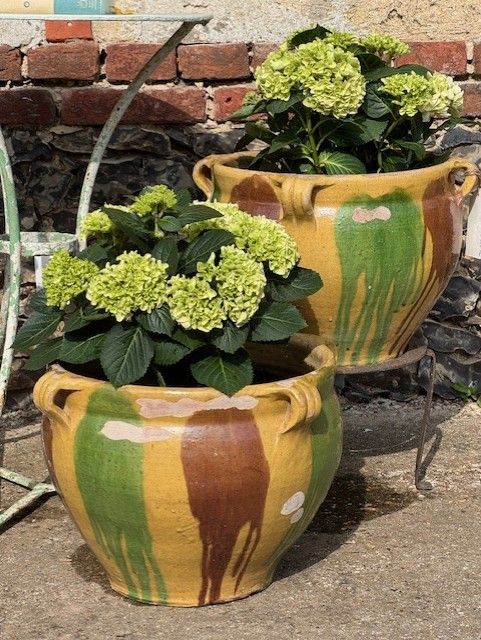
The selections span centuries of global ceramic tradition, ranging from early Chinese celadon wares and Safavid pottery to nineteenth-century European majolica and art deco pieces. French country earthenware and English porcelain also feature prominently among the available forms.
How they were made
Potters shaped these vessels using earthenware, terracotta, stoneware and porcelain, applying lead glazes, tin glazes, or specialised tea dust and dribble finishes to the clay body. Surface decoration often involved hand-painting in enamels or carving beneath the glaze before high-temperature firing.
Many utilitarian jars were thrown on the wheel for storage and kitchen use, while finer decorative vessels and apothecary jars received meticulous hand-painted motifs and gilded accents characteristic of their respective periods.
Listings feature earthenware, porcelain, and terracotta materials spanning from the seventeenth century through the art deco era.
What varies in quality
Quality rests upon the depth and richness of the glaze, the precision of the potter's hand in thrown forms, and the preservation of painted enamel or underglaze detail. Superior examples display harmonious proportions and stable, intentional glazing without muddy discoloration.
The distinction between utilitarian kitchen vessels and high-status export or display pieces also shapes value, where refined potting technique and sophisticated decorative programs elevate a jar beyond simple rustic utility.
Samuel Alcock and Co·Royal Winton·Plichta Pottery·Fasold and Stuach·Royal Worcester·Minton
The Green Ceramic Jar Glossary
- Confit pot
- A traditional French earthenware jar glazed on the interior and upper exterior, originally utilised for preserving and storing meats.
- Celadon
- A term for pottery denoting pale green or grey-green ceramic glazes originating in East Asia, prized for their jade-like appearance.
- Majolica
- A type of earthenware decorated with an opaque tin-lead glaze and brightly coloured metallic oxide paints, popular in Victorian and continental production.
- Ginger jar
- A high-shouldered ceramic vessel with a cover, originally made in China for storing spices and later adopted for decorative display.
- Doucai
- A Chinese porcelain decoration technique combining underglaze blue outlines with overglaze enamels filled in the spaces.
Green Ceramic Jar: Frequently Asked Questions
What were green ceramic jars used for?
Many of these vessels served practical domestic roles, such as preserving meats in French confit pots or holding dry goods and medicines in apothecary jars.
Others functioned purely as decorative ginger jars, tea caddies or display vases within elite interiors.
How do I style a green ceramic jar at home?
These jars work well as standalone sculptural objects on tables and mantelpieces, or paired with dried botanicals and floral stems.
Their earthy green glazes complement both rustic wooden surfaces and clean, modern interior backdrops.
How do I identify the period of a ceramic jar?
Dating relies on examining the clay body, glaze characteristics, and stylistic painted motifs associated with specific dynasties, reigns or decorative movements.
Factory marks, where present, help pinpoint the exact era of production.
What is the difference between earthenware and porcelain jars?
Earthenware utilises porous clay fired at lower temperatures, often finished with heavy lead or tin glazes for utilitarian strength.
Porcelain employs refined kaolin clay fired at extremely high temperatures, resulting in a dense, white, vitrified body typical of fine Asian and European wares.