



Green Carpet
A green antique carpet brings rich, verdant hues into a room through centuries-old weaves.
Green Carpet
A green antique carpet encompasses floor coverings originating from weaving traditions across the Caucasus, Anatolia, Persia, and Europe, dating from the eighteenth century through to the early twentieth century. When exploring this selection, buyers encounter formats ranging from large saloon carpets and long runners down to square proportions, village carpets, and specific prayer rugs.
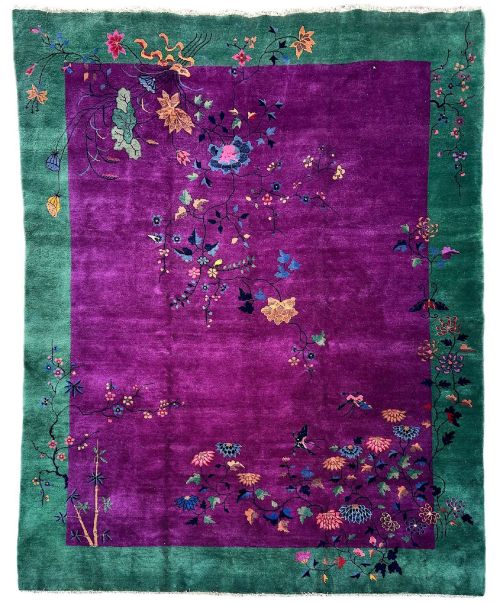
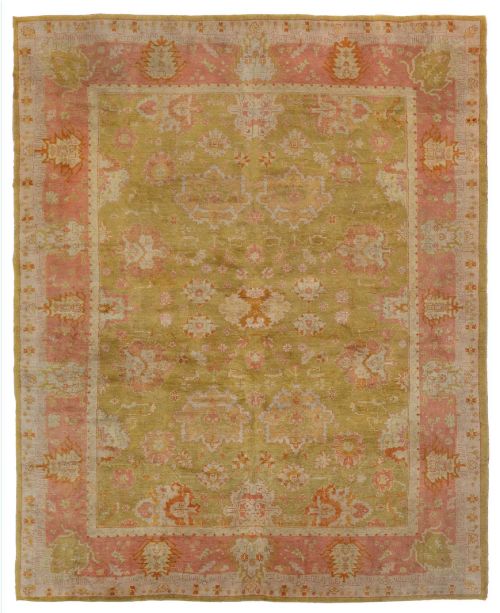
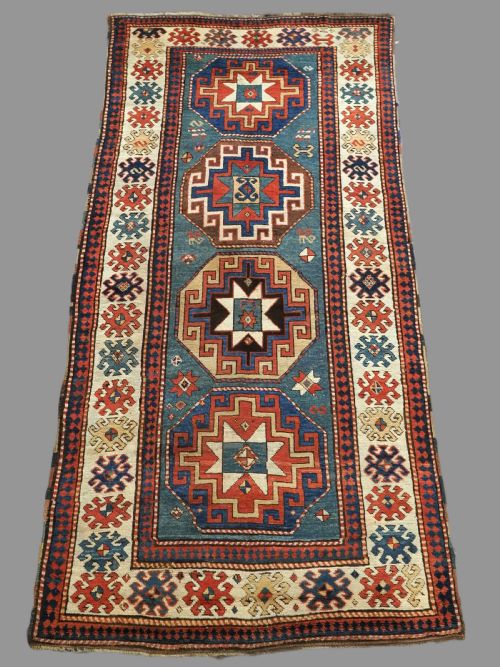
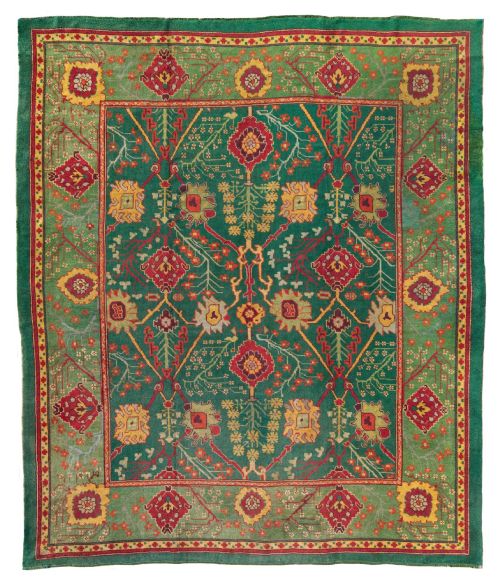
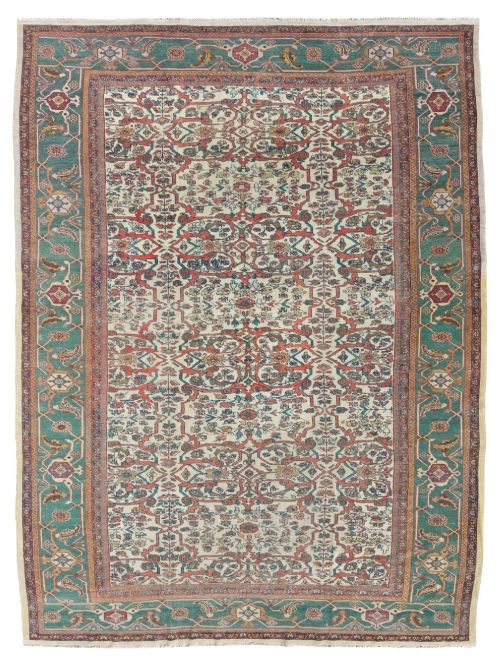
The green antique carpet frequently appears in Turkish Ushak, Oushak, and village formats, alongside Caucasian Kazak, Seychour, and Karachov pieces featuring distinct verdant grounds. Regional variations span from the bold geometric designs of Anatolian and Caucasian workshops to the softer floral compositions of Persian Sultanabad, Mahal, and Serapi productions.
Beyond standard floor coverings, related textile forms such as kilims, needlepoints, and flatweaves appear alongside occasional non-textile items recorded in the inventory. The overarching common thread across these disparate origins is the presence of green coloration within nineteenth and early twentieth-century weaving.
How they were made
Weavers constructed these carpets predominantly using wool pile knotted onto cotton or wool foundations, utilising natural dye sources to achieve deep green, pistachio, aquamarine, and blue-green grounds. Flatwoven kilims and needlepoint pieces relied on stitching and tapestry techniques rather than knotted pile.
Structural integrity depended on sturdy warp and weft threads, with canvas, baize, and linen occasionally supporting related domestic furnishings and storage items. Hand-knotted construction ensured longevity, allowing these textiles to survive from the eighteenth century into the modern era.
Green Carpet Retail Price Guide 2026
Typical asking prices for green carpet among the pieces listed under this phrase on Sellingantiques today, from the lower quarter to the upper quarter. They describe what is for sale here now, not the wider market.
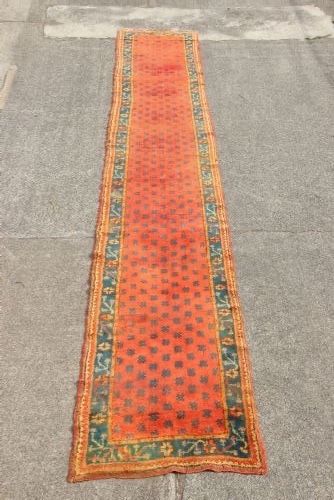
Several runners stretch over five metres in length, requiring very long hallways indeed.
What varies in quality
Quality rests upon the depth and saturation of the green ground, alongside the artistic clarity of the design and the fineness of the knotting. Pieces exhibiting scarce colour fields or specific regional motifs command distinct attention from collectors.
The preservation of the pile and the integrity of the borders determine the structural standing of each textile. Early examples retain their original proportions and dye vibrancy better than heavily worn alternatives.
The Green Carpet Glossary
- Ground
- The main background colour field of a carpet, which in these pieces frequently displays shades of green, pistachio, or blue-green.
- Prayer rug
- A small format rug featuring a mihrab or niche design at one end, historically utilised for ritual prayer in Anatolia and the Caucasus.
- Kilim
- A flatwoven carpet or rug produced without a pile, common in Turkish and Bessarabian traditions.
- Runner
- A long, narrow carpet format designed for hallways, corridors, or narrow spaces.
- Pile
- The soft, upright surface of a carpet formed by the cut ends of knots tied to the foundation.
Green Carpet: Frequently Asked Questions
How do I clean an antique carpet?
Professional gentle cleaning by a specialist in antique textiles is essential to preserve natural wool fibres and historic dyes. Regular light vacuuming without a rotating brush bar helps remove surface dust.
Avoid chemical detergents and excessive moisture, which can weaken cotton foundations and cause green and red dyes to bleed into surrounding areas.
Where were these carpets made?
These textiles originate from weaving centres across Turkey, the Caucasus, Persia, and parts of Europe including Spain, Portugal, and Scandinavia. Specific regions like Ushak, Karabagh, and Shirvan developed distinct local styles.
Production often took place in village workshops, nomadic tribal camps, or larger commercial weaving towns during the nineteenth and early twentieth centuries.
Are these carpets suitable for heavy foot traffic?
Sturdily knotted wool pile rugs handle moderate daily use in living spaces and hallways when supported by a proper underlay. Thicer formats and village carpets generally offer greater resilience.
Delicate flatweaves, needlepoints, and antique prayer rugs with fragile foundations benefit from placement in lower-traffic areas to preserve their historic structure.
How do I date an antique carpet?
Dating relies on stylistic analysis of motifs, structural examination of the weave, and identification of dye types used in the wool. Nineteenth-century pieces often display specific regional quirks and organic colour variations.
Comparing knot counts and material combinations against known examples from Anatolia, Persia, and the Caucasus helps narrow down the period of manufacture.