




Grand Tour Wall Art
Grand tour wall art captures the classical landscapes, ancient ruins and souvenir intaglios collected by travellers on European journeys.
Grand Tour Wall Art
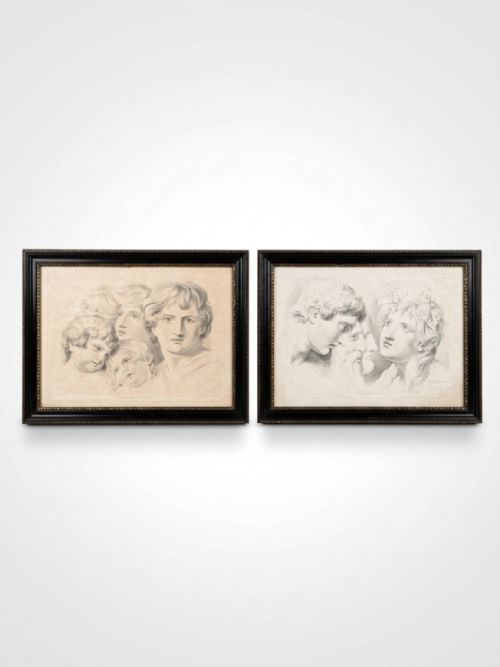
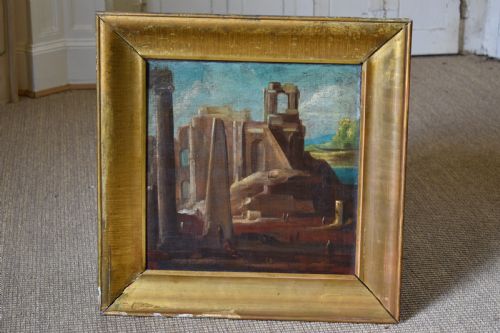
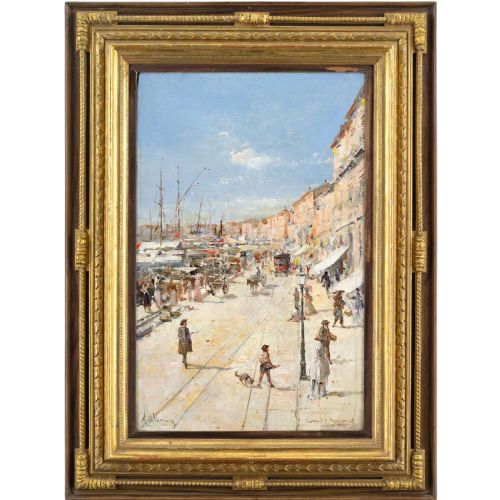
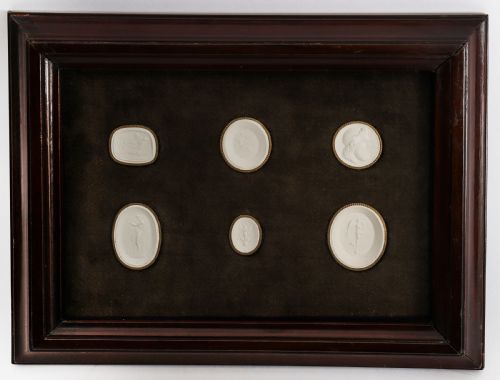
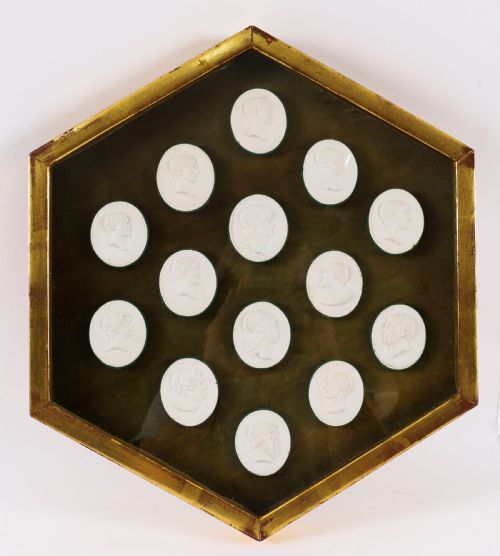
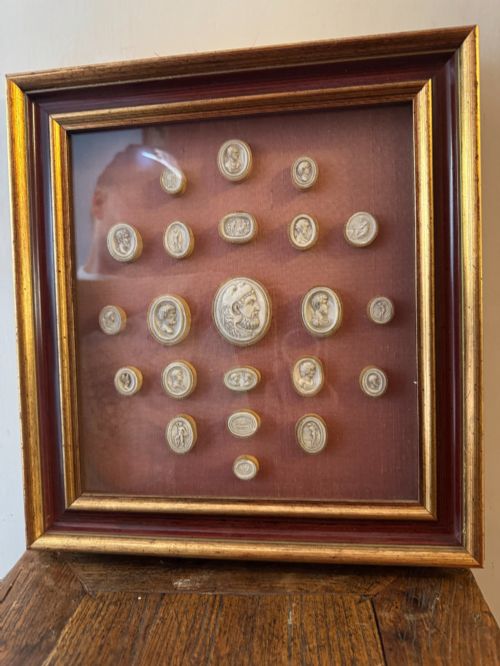
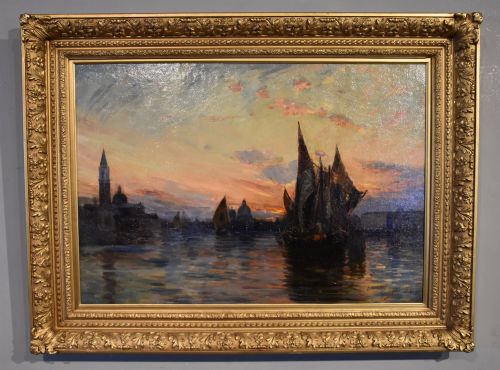
When you search for grand tour wall art, you encounter a specialised genre of 18th and 19th-century works celebrating classical antiquity and Italian scenery. The selection focuses heavily on oil paintings, watercolours, framed plaster intaglio collections and engravings depicting Venetian canals, Roman architecture and Tuscan landscapes. These pieces served as permanent mementos of educational travels across Europe undertaken by wealthy elites.
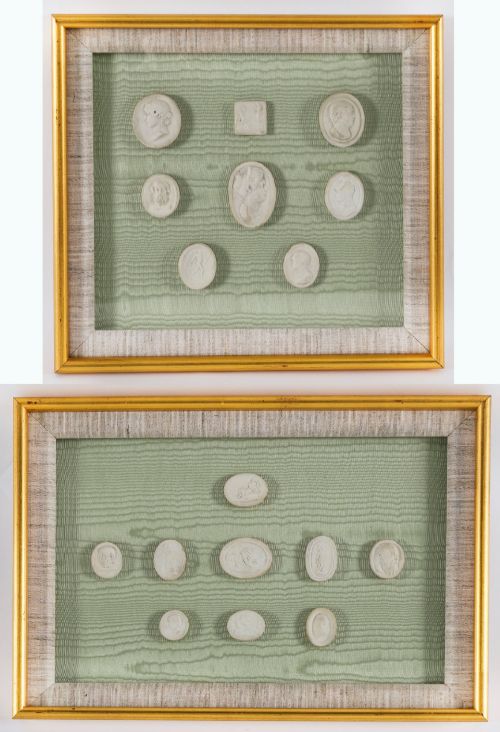
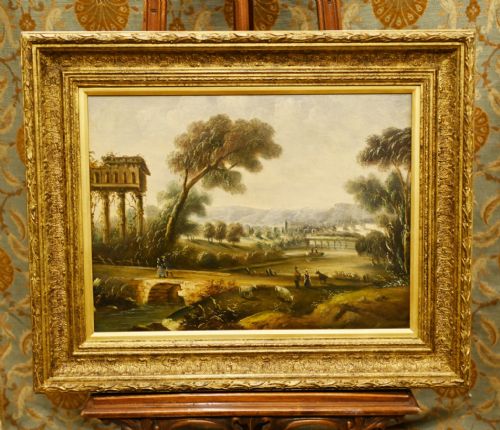
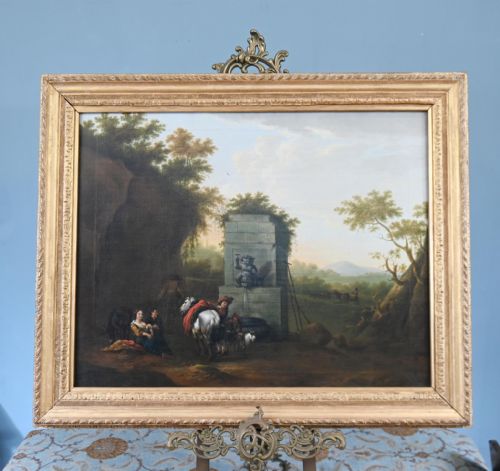
You are most likely to meet framed sets of classical intaglios or gypsum cameo panels alongside oil paintings of Venetian lagoons and Italianate pastoral scenes. Many pieces originate from the nineteenth century, reflecting the peak of this travel tradition among British and European visitors. Others capture specific archaeological sites such as Pompeii or Rome through detailed watercolours and prints.
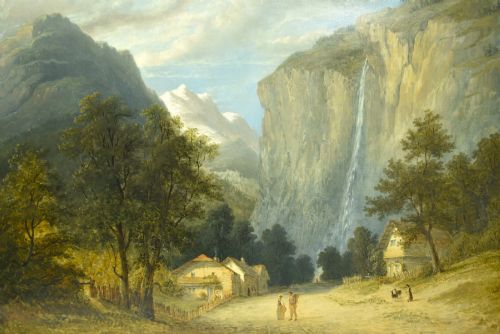
The assortment spans intimate framed wall art to large-scale oil on canvas compositions housed in original giltwood frames. Subjects frequently include classical ruins, mythological figures, and topographical views by notable artists or skilled local artisans. Each item preserves a tangible link to the historic journey through the Mediterranean.
How they were made
The physical construction of these works relies on traditional materials including paper, glass, wood, ink, oil on canvas, and plaster. Intaglios and cameo panels were cast in plaster, gypsum, or carved from marble and stone before being meticulously arranged within velvet-lined ebonised or gilt frames.
Painters utilised oil and watercolour on canvas or paper to record atmospheric Italian light, applying fine brushwork to architectural ruins and coastal waters. Engravings and prints were produced using inked plates on laid paper, often hand-coloured to enhance topographical details.
Frames play a crucial role in the physical object, employing carved gilt wood or ebonised profiles designed to complement the classical subject matter. The integration of protective glass ensures the preservation of delicate watercolours, paper prints, and fragile plaster reliefs over centuries.
Grand Tour Wall Art Retail Price Guide 2026
Typical asking prices for grand tour wall art among the pieces listed under this phrase on Sellingantiques today, from the lower quarter to the upper quarter. They describe what is for sale here now, not the wider market.
The listings feature works spanning the eighteenth, nineteenth, and early twentieth centuries, utilising oil on canvas, paper, plaster, and marble dust.
What varies in quality
The distinction between ordinary souvenirs and superior grand tour wall art lies in the execution and the completeness of collections. Intaglio sets featuring numerous crisply moulded impressions housed in custom original framing demonstrate higher artisan skill than solitary, worn examples. Similarly, oil paintings with distinct attribution to known artists or strong compositional depth command greater visual authority.
The condition of the framing and the medium itself dictates the tier of the piece. Works retaining undisturbed original gilt wood surrounds, clean paper free from heavy foxing, and sharp relief in plaster or marble dust profiles represent the upper bracket of quality. Faded watercolours or later, inferior replacement frames lower the overall integrity of the artefact.
Augusto Alberici·Thomas Hodgson Liddell·Jan Miel·Giovanni Liberotti·Claude Lorrain·Simon François Ravenet·Giovanni Paolo Panini·Francesco Guardi·Pierre Buillon·Henri Chatillon·Jane Vivian·Alfred Pollentine·E. Perez Senet
The Grand Tour Wall Art Glossary
- Intaglio
- An engraved or incised design that produces a raised impression in relief when pressed into wax or plaster. These miniature classical profiles formed popular portable collections.
- Capriccio
- An architectural painting combining buildings, archaeological ruins and other architectural elements in a fictional, fantastical arrangement. Artists used this style to celebrate classical antiquity.
- Micromosaic
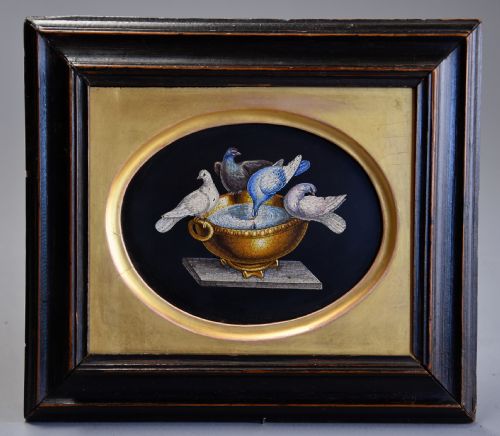
- A meticulous mosaic technique created using tiny glass tesserae to form intricate pictorial scenes, frequently depicting doves or famous Italian landmarks.
- Pietre dure
- An artistic technique using cut and fitted polished coloured stones to create geometric or figurative marble pictures. This intricate lapidary work appears on Florentine plaques.
- Giltwood
- Wood that has been coated with a thin layer of gold leaf or gesso and gold paint. It was standard for framing significant 18th and 19th-century artwork.
Grand Tour Wall Art: Frequently Asked Questions
What is grand tour wall art?
Grand tour wall art encompasses 18th and 19th-century paintings, watercolours, prints, and framed relief panels created as souvenirs of European travel.
These works document classical ruins, Italian landscapes, and mythological subjects collected by travellers exploring cultural sites in Italy and beyond.
How were intaglio collections displayed?
Plaster or gypsum intaglios and cameos were typically arranged in rows upon velvet or silk backings inside custom wooden display frames.
This allowed collectors to showcase dozens of classical miniature reliefs together on a library or drawing-room wall.
How do I care for framed watercolours?
Protect delicate watercolours and paper prints by keeping them away from direct sunlight to prevent fading and colour degradation.
Maintain stable indoor humidity levels to safeguard both the fragile paper substrates and the historical gilt wood frames.
What subjects are most common?
Frequent subjects include Venetian canals, Roman architectural ruins, Tuscan pastoral landscapes, and classical mythological figures such as Maenads.
Topographical views of specific sites like Pompeii and the Doge's Palace also appear regularly across the paintings and prints.