




Grand Tour Specimen Stone
Grand tour specimen stone objects bring the mineral wealth of Europe into domestic rooms.
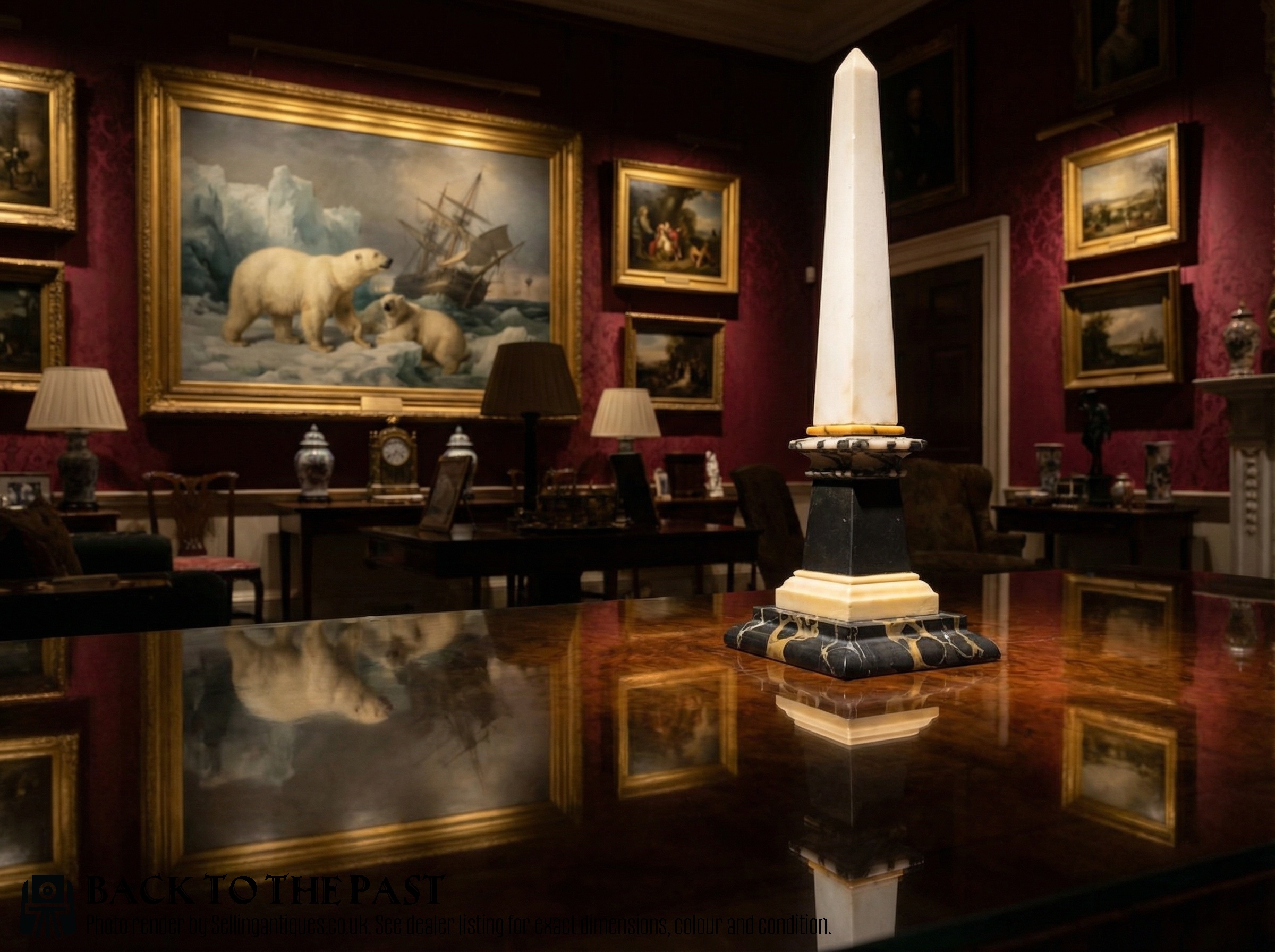
Grand Tour Specimen Stone
Grand tour specimen stone items are decorative objects and furnishings created as souvenirs for travellers touring the continent during the nineteenth century. These pieces capture memories of distant cities through the tangible geological variety of local marbles and minerals collected along the route.
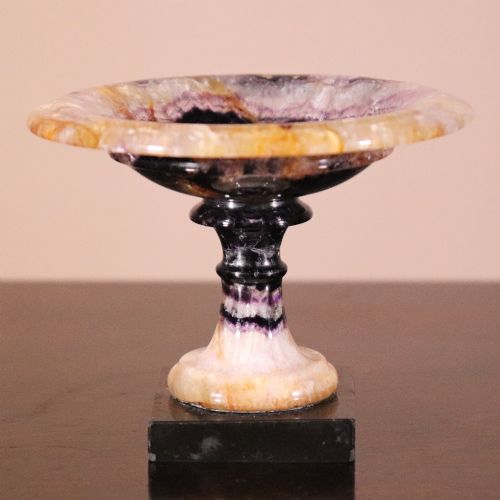
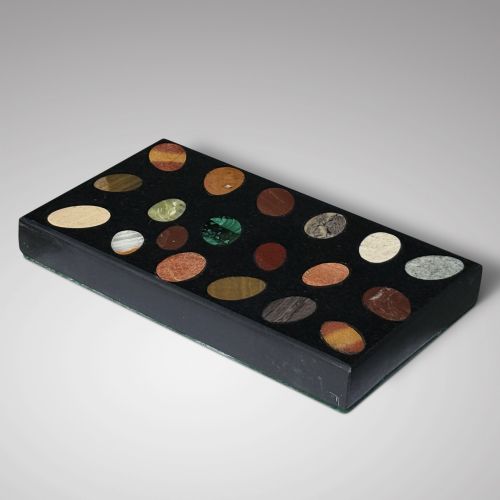
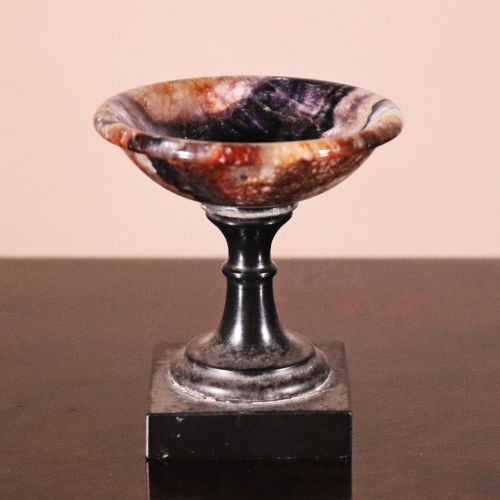
The versions most commonly met on this page include desk paperweights, ornamental obelisks, and small tazzas. These items are frequently styled in the grand tour or Victorian manner, alongside occasional Art Deco interpretations.
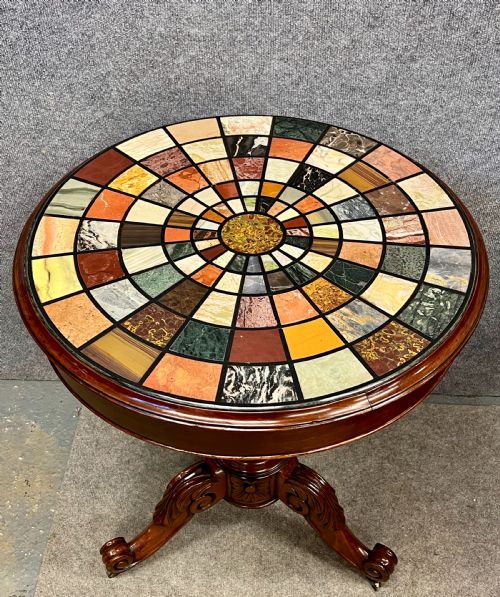
Many examples incorporate pietra dura inlay work, placing precisely cut fragments of coloured stone into a darker background slab. Black marble, malachite, blue john, and jasper feature prominently as the primary structural and decorative materials.
Materials and construction methods
Craftsmen built these pieces using solid blocks of black marble, slate, and Derbyshire Ashford marble as a foundational body. These darker stones provide a contrasting ground for intricate inlaid mineral specimens.
Workers shaped fluorspar minerals such as blue john into bowls and tazzas, exploiting the natural banding of the stone. Artisans also utilised malachite and jasper to form geometric and floral motifs within pietra dura panels.
Surfaces were ground and polished to a smooth finish that highlights the varied grain and colour of each geological sample. Stonemasons matched individual fragments tightly to form continuous geometric or pictorial designs.
Grand Tour Specimen Stone Retail Price Guide 2026
Typical asking prices for grand tour specimen stone among the pieces listed under this phrase on Sellingantiques today, from the lower quarter to the upper quarter. They describe what is for sale here now, not the wider market.
Materials recorded across the inventory include black marble, malachite, blue john, fluorite, jasper, and slate.
Distinctions in quality and execution
Quality rests upon the precision of the stone cutting and the tightness of the joints between inlaid specimens. Finer examples display virtually invisible seams where separate stones meet within a pietra dura panel.
The Grand Tour Specimen Stone Glossary
- Pietra dura
- A mosaic technique involving the inlay of cut and fitted polished coloured stones into a base slab. This method creates decorative pictures and geometric patterns on paperweights and panels.
- Grand tour
- A cultural journey of Europe undertaken by wealthy young men in the nineteenth century. Souvenirs purchased during these travels form the core of these stone collections.
- Ashford marble
- A compact dark limestone from Derbyshire used as a base for inlay work. It accepts a high polish and provides a dark background for floral pietra dura designs.
- Tazza
- A shallow ornamental cup or bowl raised on a stem and foot. These stone vessels served as decorative centrepieces on nineteenth-century desks and tables.
Grand Tour Specimen Stone: Frequently Asked Questions
What is a grand tour specimen stone?
These objects are decorative items fashioned from coloured marbles and minerals as travel souvenirs during the nineteenth century.
They encompass desk paperweights, obelisks, and small tazzas designed to showcase geological variety.
How were these stone objects used?
Travellers collected them to commemorate European journeys and displayed them upon desks, tables, and cabinets.
Items like paperweights and small panels also served practical functions in nineteenth-century studies.
What materials are common in these pieces?
Makers utilised black marble, slate, and Derbyshire Ashford marble as structural bodies for inlay work.
Precious mineral specimens such as malachite, blue john, jasper, and fluorite provided colour and contrast.
How do I identify a nineteenth-century piece?
Nineteenth-century examples frequently employ traditional grand tour motifs, obelisk forms, and pietra dura floral panels.
The use of specific regional minerals like blue john and Ashford marble points directly to this period of production.