



Grand Tour Obelisk
A grand tour obelisk brings home the classical ambition of nineteenth-century travel in stone and bronze.
Identifying grand tour obelisks
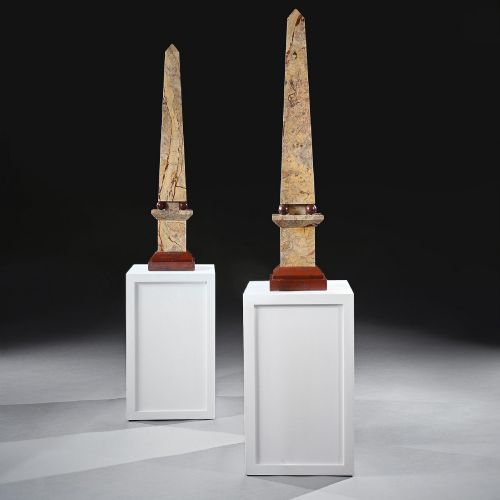
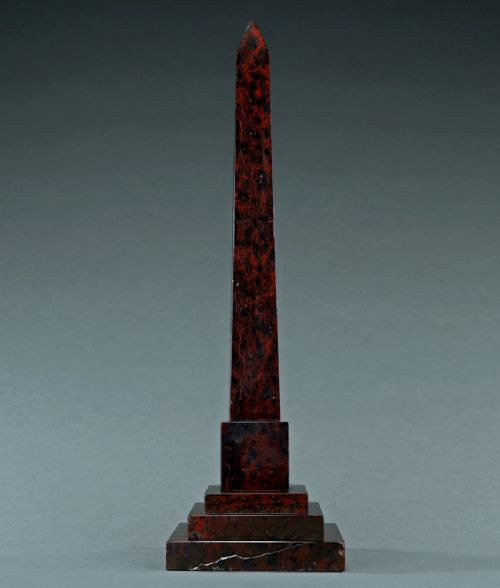
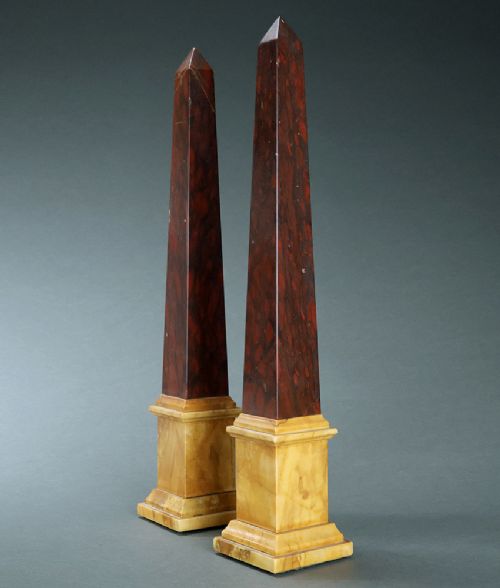
A grand tour obelisk represents the monumental architecture of ancient Rome and Egypt, reduced in scale as a souvenir for nineteenth-century travellers. These decorative objects take the form of tall, tapering shafts set upon tiered pedestals, capturing the fascination with classical antiquity that defined the period. The examples found here range from modest desk ornaments to architectural desk thermometers, reflecting the diverse ways tourists brought history into their studies.
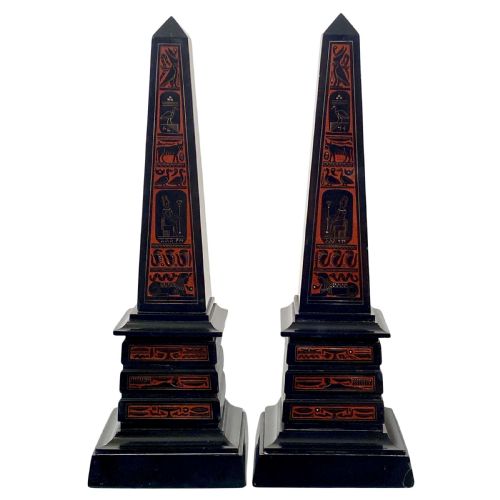
The versions most commonly met on this page belong to the nineteenth century, including specific dates such as 1860 and 1880, alongside Victorian interpretations. These pieces often draw on Egyptian Revival styles or take inspiration from specific monuments like the Luxor, Lateran, and Flaminio obelisks. Travellers purchased them across Italy and France, turning architectural landmarks into portable ornaments for the home.
Makers utilised a rich vocabulary of mineral and metal to mimic the permanence of ancient monuments. While some pieces stand alone as purely decorative markers, others incorporate functional elements such as temperature gauges or barometer scales into their marble columns. This blend of utility and classical form makes each surviving desk thermometer or souvenir an engaging piece of domestic history.
Judging quality in grand tour pieces
Quality rests in the fidelity of the proportions and the crispness of the stone cutting or bronze chasing. A superior piece maintains exact geometric angles down the tapering shaft, with sharply defined apexes and unblemished polished planes. The choice of mineral material also dictates the character of the piece, with richly figured specimen stones and fine pietra dura inlay elevating the work beyond a simple tourist trinket.
In composite pieces that include thermometers or gauges, the integration of the functional mechanism into the stone or bronze body reveals the maker's skill. Finer examples balance the weight of the heavy marble base securely against the height of the shaft, ensuring structural stability without clumsy mounts. The presence of dated inscriptions or specific architectural references often points to workshop precision.
Retail Price Guide 2026
Typical UK retail prices for grand tour obelisk, calculated from the Sellingantiques database of over a million retail prices indexed since 2003. This retail price guide relies exclusively on Sellingantiques data; no external sources or auction records are used, so the figures do not describe the wider market.
Listings feature materials ranging from Ashford black marble and malachite to serpentine, amethyst, and pietra dura inlay.
The Grand Tour Obelisk Glossary
- Grand Tour
- A traditional trip through Europe, undertaken by upper-class young men and tourists in the eighteenth and nineteenth centuries to study the arts and antiquity. Souvenirs purchased along the route form the basis of this category.
- Ashford Black Marble
- A dark, fine-grained limestone from Derbyshire that takes a high black polish and serves as a base for inlaid pietra dura work. It formed a popular British material for nineteenth-century decorative objects.
- Pietra Dura
- An artistic technique using cut and fitted, highly polished coloured stones to create images or geometric patterns. Artisans set these stone slices into a dark marble matrix.
- Rosso Antico
- An antique red marble favoured by the ancient Romans and later emulated by nineteenth-century Italian stonemasons for classical souvenirs. Its deep red tone mimics the prized archaeological stone.
- Serpentine
- A group of green silicate minerals, often mottled or veined, used in decorative stonework for its rich colour and smooth finish. Red serpentine provides a striking variation frequently seen in these obelisks.
Frequently Asked Questions
What is a grand tour obelisk?
A grand tour obelisk is a nineteenth-century souvenir model of an ancient Egyptian or Roman monument, carved from stone or cast in bronze.
Travellers collected these pieces during their European travels to display their classical education and taste for antiquity in their homes.
How were they used originally?
These obelisks served primarily as decorative objects placed on desks, mantelpieces, or libraries to signal cultural refinement.
Some examples incorporated practical instruments like thermometers, combining scholarly decoration with domestic utility.
How do I care for marble and stone obelisks?
Dust the polished stone surfaces gently with a dry, soft cloth to prevent scratching the delicate finish.
Avoid using water, chemical cleaners, or polishes, as these can damage inlaid pietra dura work or stain porous marble.
How do I tell stone types apart?
Examine the colour, veining, and texture of the material under good natural light to identify specific minerals like serpentine or malachite.
Ashford black marble presents a uniform dark surface often enhanced by colourful inlaid stone specimens.