


Grand Tour Landscape Artwork
Grand tour landscape artwork captures the classical ruins, sunlit canals and sweeping vistas that travellers brought home from Italy and beyond during the eighteenth and nineteenth centuries.
Grand Tour Landscape Artwork
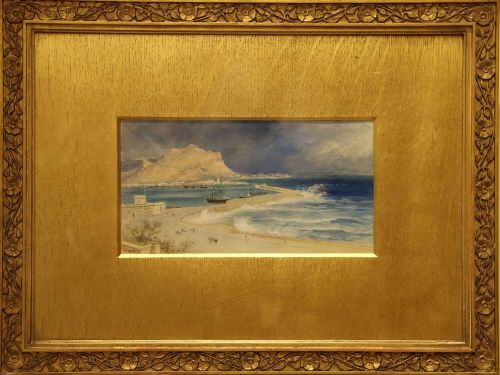
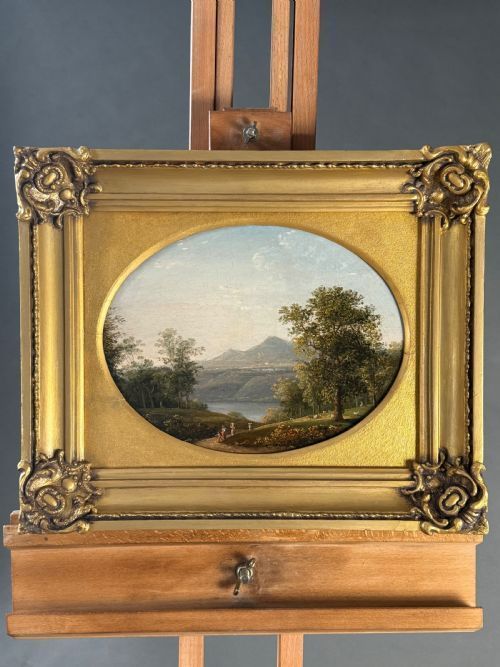
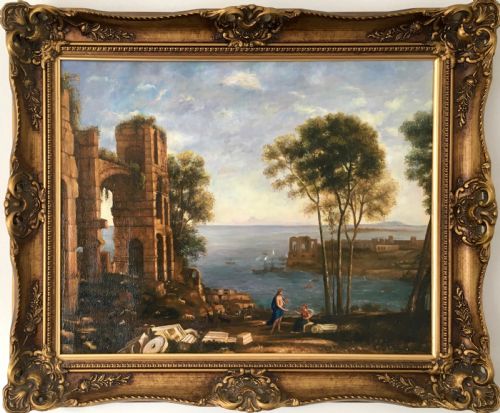
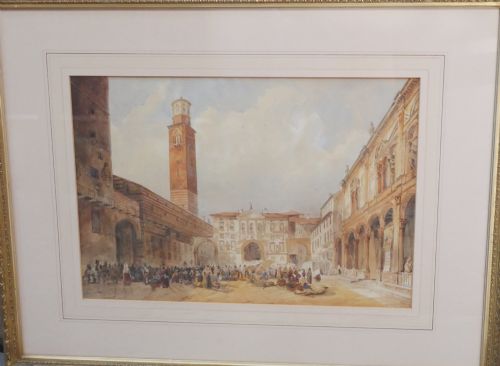
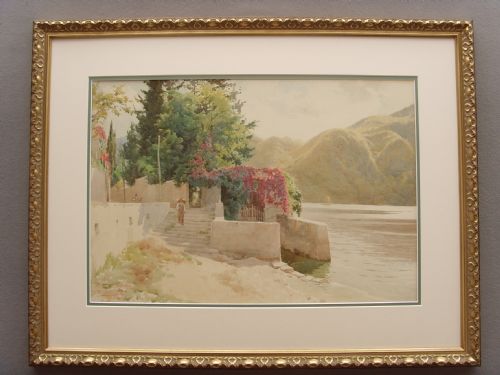
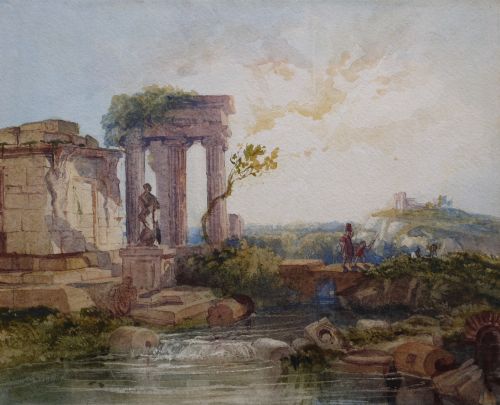
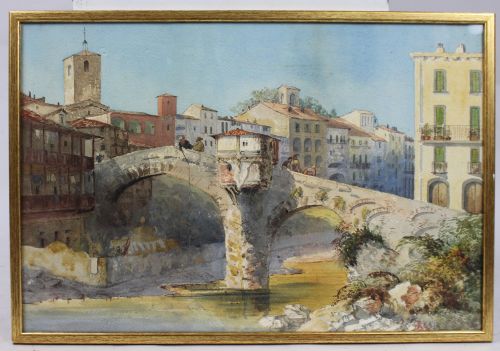
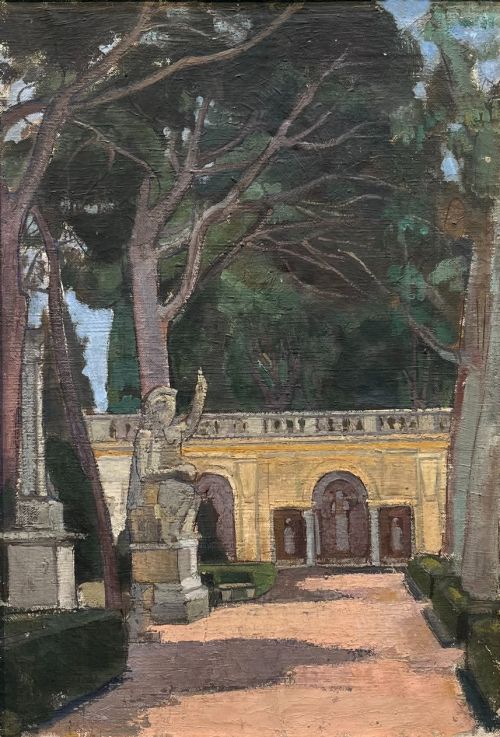
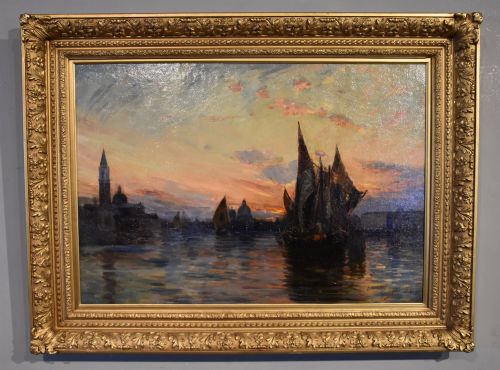
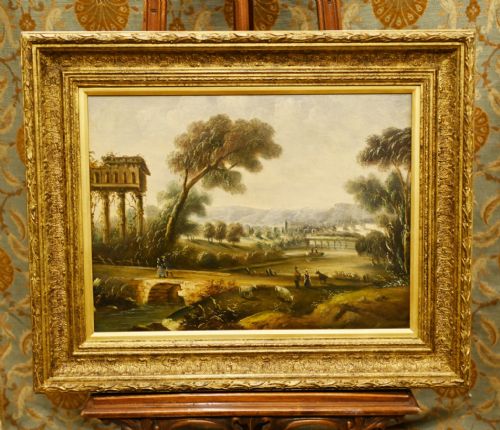
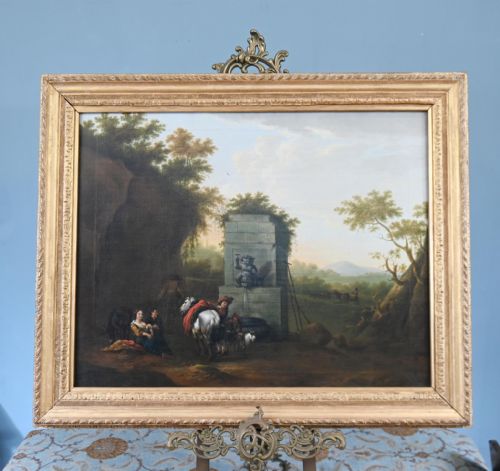
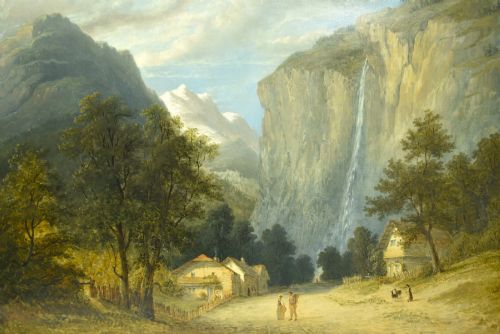
A buyer seeking grand tour landscape artwork encounters painted records of classical antiquity, picturesque Italian views and Mediterranean monuments. These works capture the sights of Rome, Venice, Naples and the surrounding countryside as recorded by travelling artists and local studios.
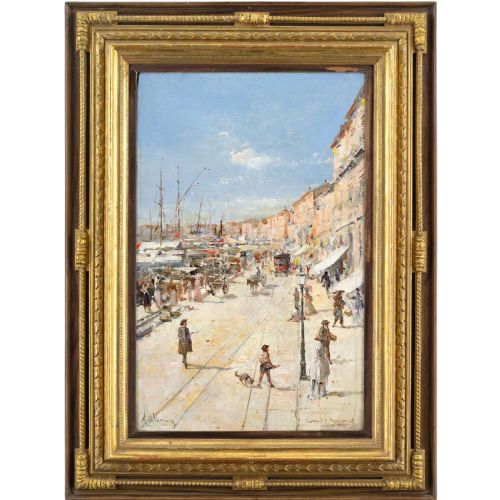
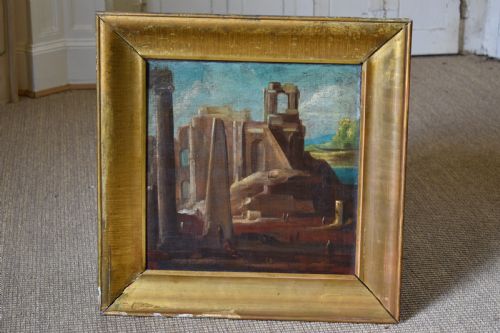
The selections span delicate watercolours, vivid gouaches and robust oil paintings on canvas, often preserved in original giltwood frames. Pieces range from intimate depictions of ancient ruins to wide coastal vistas and architectural capriccios.
Works originate from the eighteenth, nineteenth and early twentieth centuries, reflecting both contemporary travellers and later artists revisiting classical themes. This variety offers a direct window into the visual tastes of historic travellers.
Materials and methods
Artists relied primarily on paper for watercolours and gouaches, employing fine pigments to capture bright Mediterranean light. Oil paintings on canvas utilised layered brushwork to build depth in architecture, water and sky.
Many of these artworks are housed in gilt wood frames decorated with gold leaf, completing the presentation typical of nineteenth-century framing workshops. Glass frequently protects the works on paper from atmospheric damage.
Nineteenth-century tourists in Pompeii often purchased local gouaches so quickly that the paint was still damp inside their carriage.
Distinctions in quality
Quality rests upon the precision of architectural rendering and the artist's command of light and atmosphere. Stronger examples display confident brushwork and accurate perspective, particularly in complex ruins and townscapes.
The preservation of the original support and frame contributes significantly to a piece's integrity. Untouched watercolours with vibrant pigments and oil paintings retaining their original giltwood surfaces command greater attention.
Jacob Philipp Hackert·Franz Knebel·Alfred Pollentine·Jane Vivian·Hugo Vogel
The Grand Tour Landscape Artwork Glossary
- Capriccio
- An architectural fantasy placing imaginary or real ruins, buildings and classical elements into a fictional landscape composition.
- Gouache
- An opaque water-based medium that produces flat, saturated areas of colour well suited for bright southern scenes.
- Giltwood
- Wood carved and coated with gold leaf or metallic powder, frequently used for traditional picture frames.
- Neoclassical
- A style drawing inspiration from the classical art and culture of ancient Greece and Rome.
- Campagna
- The rural countryside surrounding Rome, historically dotted with ancient aqueducts, tombs and rustic farmhouses.
Grand Tour Landscape Artwork: Frequently Asked Questions
What subjects appear most often in these artworks?
Paintings and watercolours frequently depict iconic classical landmarks, Venetian canals, Roman ruins and southern Italian coastal towns. Artists focused heavily on sites visited during historic European travels.
Common motifs include the Colosseum, the Doge's Palace, Mount Vesuvius and the rural campagna, offering a comprehensive visual record of the Mediterranean landscape.
How were these pieces displayed historically?
Travellers typically purchased these artworks abroad and had them framed in local studios before transporting them home. They served as tangible reminders of educational journeys across Europe.
Upon returning, owners hung them in libraries, drawing rooms or dedicated galleries to showcase their cultural experiences and refinement.
How do I care for historic works on paper?
Watercolours and gouaches require protection from direct sunlight to prevent fading of delicate pigments. Stable indoor humidity levels protect both the paper support and any historic framing.
Displaying pieces away from direct heat sources and using archival backing materials during conservation ensures long-term preservation.
How do oil paintings differ from watercolours here?
Oil paintings on canvas offer greater textural depth and richer colour saturation, often capturing dramatic atmospheric lighting in coastal and architectural scenes. They traditionally hang without glass protection.
Watercolours and gouaches provide a lighter, more translucent record of topography and light, usually preserved beneath glass to protect the paper surface.