






Grand Tour Collection
A grand tour collection brings home the classical sculpture, architecture, and intaglios gathered by travellers during their travels across Europe.
Grand Tour Collection
A grand tour collection comprises framed sets of classical cameo intaglios, miniature architectural temple ruin models, cast brass and bronze oil lamps, and marble bust sculptures. These pieces date principally from the nineteenth century, including Edwardian examples, reflecting the souvenirs acquired by British travellers visiting Italy and other European sites.
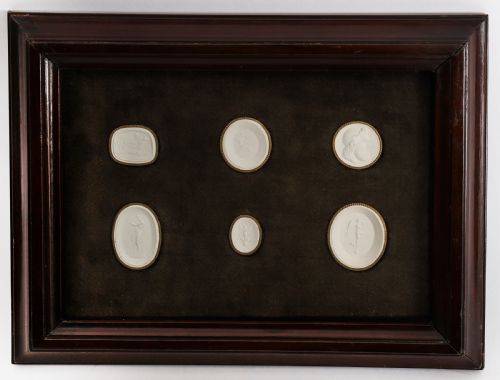
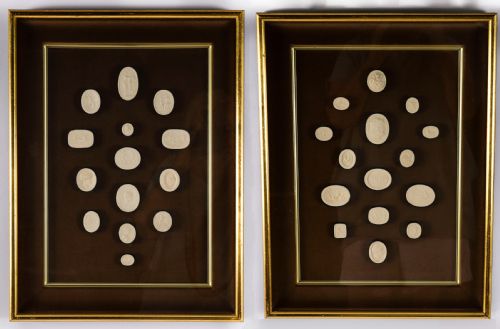
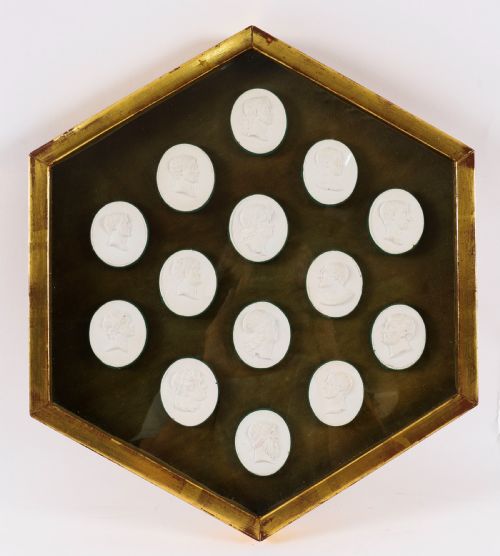
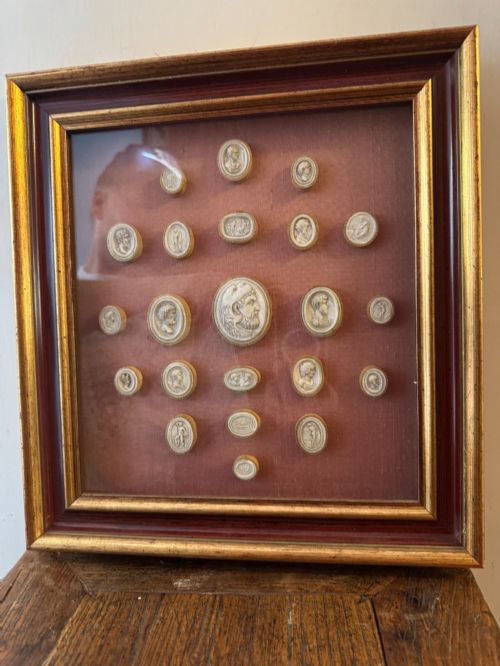
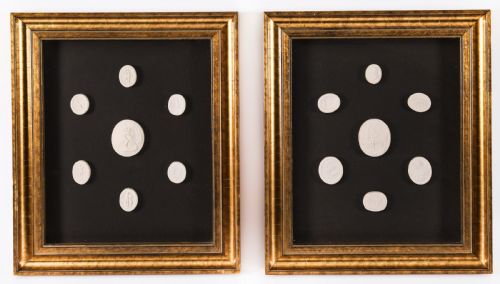
Framed plaster, gypsum, and glass-fronted boxes house systematic arrangements of classical intaglios and cameo panels. These wall-hanging displays often bear historical attribution, such as works associated with Giovanni Liberotti, presenting classical mythology and portraiture in miniature relief.
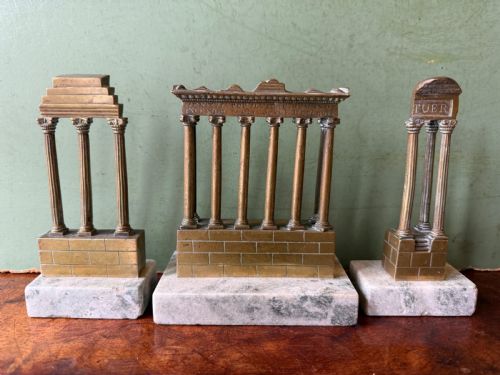
The sculptural objects in this category range from polished bronze models of Roman temple ruins to cast brass and bronze lucerna oil lamps and marble garden statue busts. These items capture the neoclassical taste that dominated elite British collecting habits throughout the nineteenth century.
Materials and construction
Plaster, gypsum, and paste form the delicate reliefs of the intaglios and cameo panels, which are mounted onto velvet or fabric backgrounds and secured inside gilt wood and giltwood frames. The precision of these casts relies on moulds taken directly from ancient gems and hardstone carvings.
Metals such as cast brass and polished bronze shape the miniature architectural models of the Foro Romano and the lucerna oil lamps. These metallic objects utilise traditional casting techniques to render fine architectural details and functional antiquity forms in miniature.
Natural stone and carved marble provide the material for the sculptural busts and garden statues. Artisans shaped these pieces using hand-carving methods to emulate excavated classical sculpture.
Grand Tour Collection Retail Price Guide 2026
Typical asking prices for grand tour collection among the pieces listed under this phrase on Sellingantiques today, from the lower quarter to the upper quarter. They describe what is for sale here now, not the wider market.
Thirty-five tiny plaster faces stare from a single frame, reminding us that nineteenth-century travellers packed their suitcases with miniature gods and emperors.
Quality variations in the collection
The refinement of the casting and carving dictates the fidelity of the classical details in both intaglios and bronze models. Finer examples display crisp edges to the relief work and careful finishing that accurately reflects ancient prototypes.
The presentation and framing contribute significantly to the visual success of grouped intaglio panels. High-quality pieces feature well-preserved velvet or fabric linings, secure box framing, and harmonious gilding on the wood mounts.
Completeness and scale set individual groupings apart, particularly in sets containing numerous individual cameos or multiple architectural models. Uniformity across a large set indicates deliberate curation by the original maker or collector.
Giovanni Liberotti
The Grand Tour Collection Glossary
- Intaglio
- A gem or gemstone carved in intaglio has a design incised into the surface so that an impression can be raised in wax or clay. These nineteenth-century plaster and gypsum versions replicate ancient engraved gems for display.
- Cameo
- A method of carving an object such as a engraved gem, item of jewellery, or piece of stone in relief. In these collections, cameo panels present miniature profiles of classical figures against contrasting backgrounds.
- Lucerna
- An ancient style of oil lamp, frequently cast in brass or bronze during the Italian grand tour period. These lamps reproduce Roman lighting forms used as decorative desk or cabinet objects.
- Giltwood
- Wood that has been treated with gold leaf or a gold-coloured metallic finish. This material forms the decorative frames that enclose collections of plaster intaglios and cameo panels.
- Neoclassical
- A Western cultural movement in the decorative arts inspired by the art and culture of classical antiquity. This style informs the architectural models, statues, and framed reliefs typical of the grand tour.
Grand Tour Collection: Frequently Asked Questions
What is a grand tour collection?
A grand tour collection consists of nineteenth-century souvenirs bought by travellers journeying through Europe, particularly Italy. These items typically include framed sets of plaster intaglios, bronze architectural models, and small sculptures.
Such collections allowed nineteenth-century collectors to display their classical knowledge and appreciation of antiquity within a domestic interior. Today, these framed panels and miniature bronzes remain popular for wall display and cabinet placement.
How were framed intaglios displayed?
Intaglios and cameos were arranged systematically inside box frames lined with velvet or fabric. Glass protected the delicate plaster casts while allowing the viewer to inspect the miniature mythological and historical scenes.
Many of these framed sets were designed to hang on library or drawing room walls. The arrangement often reflects the scholarly interests of the original collector.
How do I care for plaster intaglios?
Plaster intaglios require protection from moisture and direct handling because the material is soft and susceptible to staining. Keeping them behind their original glass frames prevents dust accumulation and surface damage.
Environmental stability is important for framed fabric and velvet backings as well as the plaster casts. Avoid using liquid cleaners on the delicate relief surfaces.