


Grand Tour Architectural Painting
These grand tour architectural painting works bring classical ruins and Venetian canals straight into your home.
Grand Tour Architectural Painting
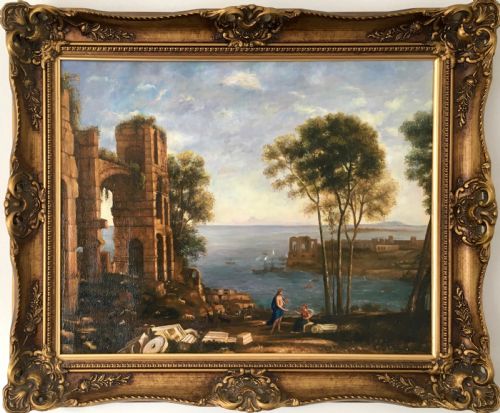
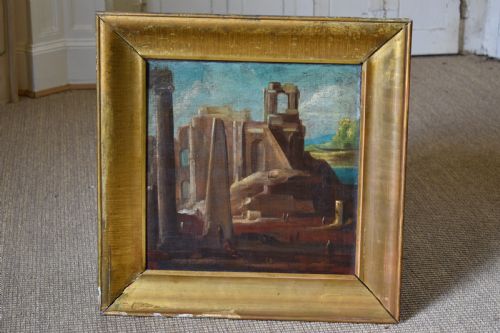
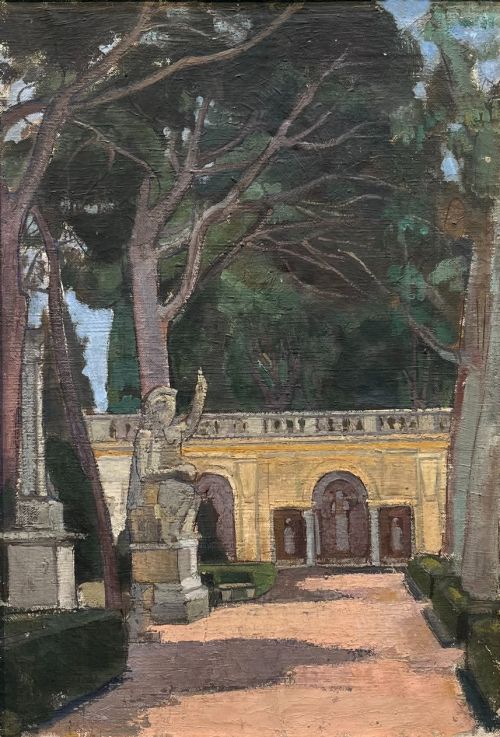
A grand tour architectural painting captures classical ruins, ancient capitals, and famous landmarks encountered by travellers abroad. The works appearing here span from the eighteenth century through to the early twentieth century, reflecting centuries of artistic engagement with Mediterranean antiquity.
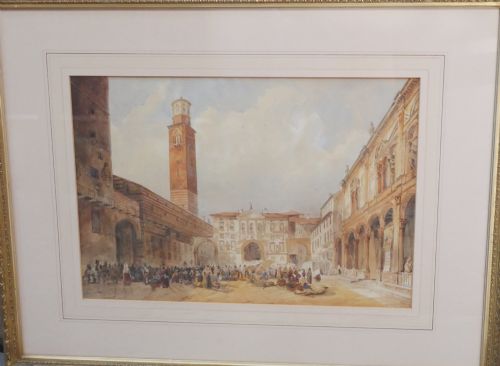
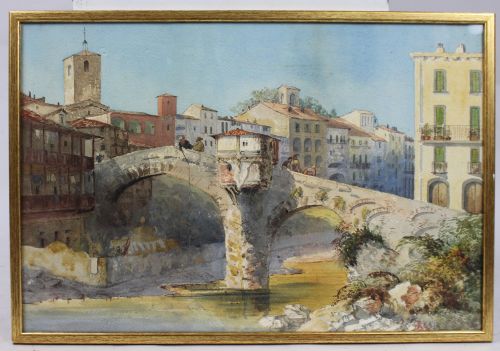
Most pieces take the form of detailed watercolours or oil paintings on canvas, frequently framed for domestic display. Subjects range from Roman fora and the Colosseum to Venetian canals and the Medici Gardens.
Buyers encounter individual watercolours, matched pairs, and larger oils depicting Italianate landscapes populated by classical architecture and figures. These artworks served as tangible souvenirs of continental travel for collectors of past centuries.
Materials and methods
Artists worked primarily in watercolour on paper or oil on canvas, applying pigments with precision to delineate stone facades, columns, and atmospheric skies. Many pieces retain their period framing, which often incorporates gold leaf, gesso, and gilt wood.
Surviving examples demonstrate both professional studio execution and accomplished sketching on location. Support materials range from heavy artist papers to traditional woven canvas stretched over wooden frames.
The listings feature works executed in oil on canvas, watercolour on paper, and mixed media across the eighteenth, nineteenth, and early twentieth centuries.
Assessing quality
Quality rests upon the precision of the draughtsmanship, particularly in the handling of linear perspective across complex architectural elements like arches and colonnades. Stronger works display confident brushwork and a sophisticated command of light and shadow.
The presence of signature, date, or clear attribution elevates an artwork, as do historical framings that complement the period of the painting. Condition of the pigment and paper or canvas surface also dictates the overall merit of the piece.
Giovanni Paolo Panini·Vittore Zanetti Zilla·Benedetto Salviati·Ettore Ascenzi·William Crouch
The Grand Tour Architectural Painting Glossary
- Grand Tour
- An extended journey through Europe, particularly Italy, undertaken by wealthy young men in the eighteenth and nineteenth centuries to study classical art and architecture.
- Watercolour
- A painting method in which the paints are made of pigments suspended in a water-based solution, frequently utilised on paper for landscape and architectural studies.
- Oil on Canvas
- A traditional painting medium utilising pigments bound with drying oils applied to a stretched canvas support, offering rich colour depth and durability.
- Gilt Wood
- Wood that has been treated with a thin layer of gold leaf or gold paint, commonly found on decorative nineteenth-century picture frames.
- Italianate
- A style of art and architecture inspired by the models and landscapes of Italy, particularly prevalent in British and European painting.
Grand Tour Architectural Painting: Frequently Asked Questions
What is a grand tour architectural painting?
These artworks are period depictions of classical ruins, Italian monuments, and scenic landmarks produced for travellers visiting Europe.
They function as historical records of artistic observation and classical revival tastes from past centuries.
How were these paintings displayed?
Historical collectors typically framed these watercolours and oils in gilded wooden frames for display in libraries, drawing rooms, and studies.
Today, they suit traditional and eclectic interiors alike, bringing a sense of classical scholarship to modern walls.
How do I date an architectural painting?
Dating relies on examining the paper or canvas substrate, the style of the framing, and any accompanying inscriptions, signatures, or dates.
Stylistic shifts between eighteenth-century topographical views and later nineteenth-century atmospheric watercolours also offer clear chronological clues.
Are these works usually signed?
Many pieces bear artist signatures, initials, or contemporary manuscript notes on the mount or reverse identifying specific locations like Rome or Venice.
Unsigned works are frequently attributed to specific schools or circles based on their stylistic execution and handling of medium.