





Grand Crystal Chandelier
A grand crystal chandelier brings scale and light to a high ceiling, and these large hanging fixtures deliver presence and sparkle to any room.
Grand Crystal Chandelier
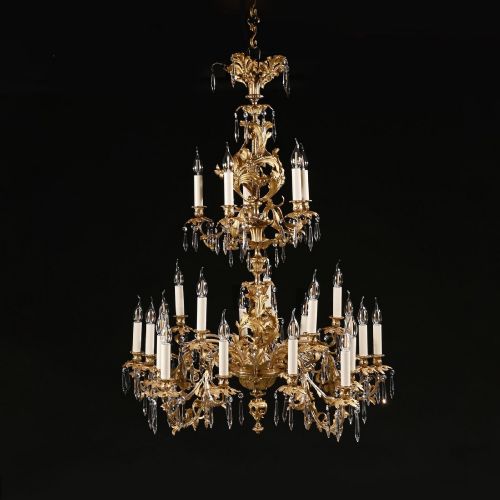
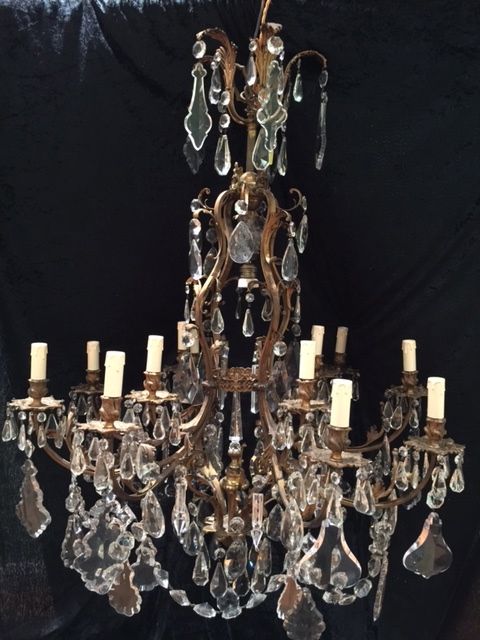
When you search for a grand crystal chandelier, you find large hanging ceiling fixtures designed to illuminate expansive rooms with significant architectural volume. These pieces command attention through sheer physical scale and multi-tiered arrangements of armatures.
The selections encountered here span from the late nineteenth century through to the early decades of the twentieth century. Common stylistic expressions include French Chateau, Maria Theresa, French Rococo, Florentine, and Bohemian forms.
Most examples feature multiple lights distributed across one or two tiers, often holding twelve, sixteen, twenty-five, or even forty-one illumination points. The predominant origins represented are French, Italian, and English workshops.
How they were made
Makers constructed the structural frames of these fixtures using durable metals such as brass, gilded bronze, and general metalwork to support immense weight. These metal armatures were often cast, gilded, or shaped into elaborate scrolling arms.
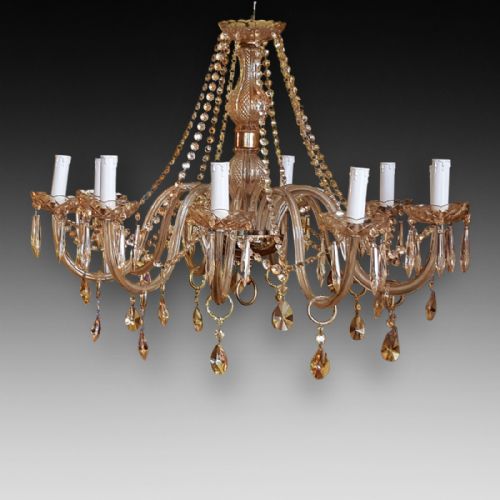
Hanging elements consist of glass, cut glass, lead crystal, and cut crystal components, frequently accented with coloured crystal or delicate glass beads. Artisans faceted and polished these transparent elements to maximise light refraction across the room.
Grand Crystal Chandelier Retail Price Guide 2026
Typical asking prices for grand crystal chandelier among the pieces listed under this phrase on Sellingantiques today, from the lower quarter to the upper quarter. They describe what is for sale here now, not the wider market.
Listings feature pieces spanning several decades from the 1880s through the 1930s, constructed primarily from brass, gilded bronze, cut glass, and lead crystal.
What varies in quality
The distinction between tiers of quality rests upon the depth of the metal casting and the precision of the glass cutting. Heavier gilded bronze mounts and heavily hand-cut crystal prisms separate ambitious fixtures from simpler commercial outputs.
Proportion and arm distribution also dictate overall success, as well-balanced double-tiered structures require sophisticated engineering to distribute weight evenly. The clarity of the crystal and the richness of the metal patination complete the assessment.
Baccarat
The Grand Crystal Chandelier Glossary
- Cut crystal
- Glass containing lead oxide that has been mechanically or manually faceted to increase brilliance. This material refracts light into spectral colours when illuminated.
- Gilded bronze
- Bronze metal treated with a thin layer of gold or gold-coloured leaf. It provides a warm, reflective surface for the chandelier frame.
- Maria Theresa chandelier
- A distinctive flat-arm style of lighting fixture named in honour of the Austrian Empress. These pieces feature glass-sheathed metal arms decorated with pendants.
- Double tiered
- A lighting configuration featuring two distinct horizontal levels of candle arms or lights. This arrangement adds vertical height and increases illumination capacity.
- Baccarat
- A celebrated French manufacturing name associated with high-grade crystal production. Pieces bearing this association showcase exceptional clarity and weight.
Grand Crystal Chandelier: Frequently Asked Questions
What rooms suit a grand chandelier?
These imposing fixtures require high ceilings and generous floor space to look properly proportioned. Ballrooms, grand reception rooms, and high-ceilinged dining halls provide the necessary volume to accommodate multi-tiered designs.
Placing such a large piece in a compact space overwhelms the architecture and restricts movement. Room height remains the primary determining factor for successful placement.
How do I clean crystal drops?
Cleaning requires patience and a gentle cleaning solution applied directly to the glass components while they remain on the frame. Many handlers use a mixture of distilled water and isopropyl alcohol in a spray bottle, catching drips with a cloth below.
For thorough restoration, individual drops and beads can be unclipped, washed by hand in lukewarm soapy water, and dried before reattachment. Metal frames should be dusted carefully to avoid disturbing historical patination.
How are different periods identified?
Dating relies heavily on stylistic cues, metal casting techniques, and the cut of the crystal prisms. Nineteenth-century examples often display heavier bronze casting and hand-cut lead crystal with slight irregularities.
Twentieth-century pieces from the 1920s and 1930s sometimes introduce cleaner lines or specific regional traits such as Florentine beadwork or Italian coloured crystal. Comparing arm configurations and mounting hardware helps narrow down the decade of production.