


Graduated Tier Bookcase
A graduated tier bookcase combines stepped shelving with open access, offering a practical way to store volumes while displaying collections.
Graduated Tier Bookcase
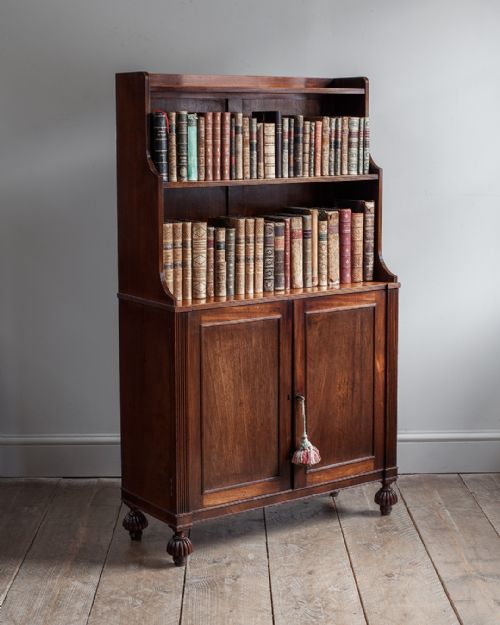
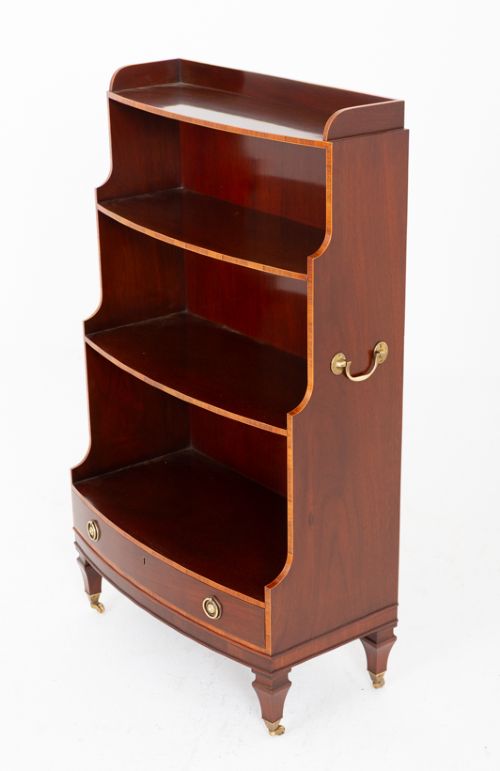
A graduated tier bookcase presents open shelves that step back in depth as they rise, creating a distinct waterfall profile. These pieces appear in forms ranging from compact freestanding display shelves to substantial multi-tiered library units.
The selections span the Regency, Victorian, and Edwardian periods, alongside later revivals. Common variations include pieces featuring lower cupboards or open side supports alongside the stepped display levels.
Materials and construction methods
Cabinet makers utilised dense timber stocks including mahogany, rosewood, and oak, often applying figured veneers to main surfaces. Selected examples incorporate contrast cross banding and boxwood stringing to define the stepped edges.
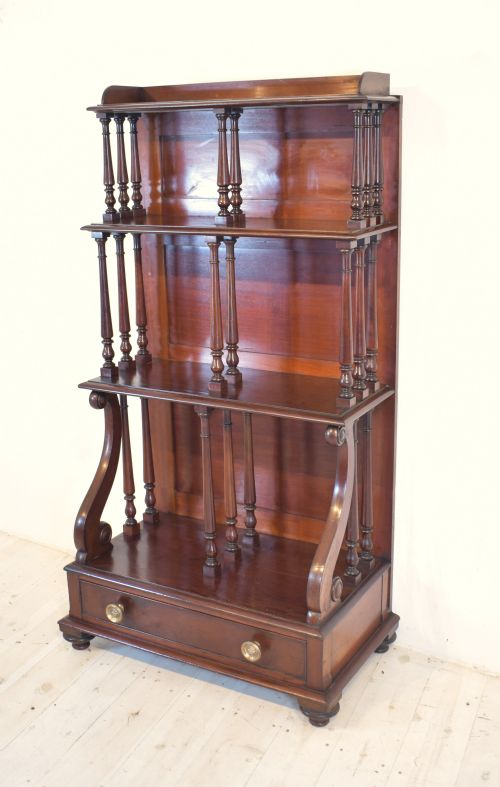
Support uprights range from simple turned columns to barley twist pillars and brass fittings. Open shelving construction relies on secure housing joints to support the weight of heavy volumes across each descending tier.
The listings span multiple eras from the Georgian period through to Edwardian revivals, utilising mahogany, rosewood, oak, and yew wood.
Judging construction and finish
Execution of the stepped profile determines the visual balance of the piece, with finer examples maintaining precise proportions across every tier. The choice of timber grain, particularly on curved waterfall fronts and veneered surfaces, indicates the standard of workshop production.
Integration of secondary elements such as brass galleries, turned supports, and inlaid stringing reveals the level of detail applied by the maker. Structural integrity depends upon the rigidity of the upright supports and the flush alignment of each shelf junction.
The Graduated Tier Bookcase Glossary
- Waterfall bookcase
- A set of open shelves that step back progressively from the base to the top. This configuration allows clear visibility of book spines on every level.
- Whatnot stand
- A multi-tiered piece of movable furniture designed for displaying ornaments or holding books. These units typically feature slender vertical supports.
- Cross banding
- A decorative border of veneer laid with the grain running perpendicular to the main surface. This technique frames the edges of shelves and tabletops.
- Stringing
- Thin inlay lines of contrasting wood set flush into the surface of a panel or shelf edge. It provides a sharp linear accent against darker timbers.
- Barley twist
- A turned column carved in a spiral twist resembling a rope. This decorative support appears frequently on mid to late nineteenth century furniture.
Graduated Tier Bookcase: Frequently Asked Questions
What is a waterfall bookcase?
A waterfall bookcase is an open shelving unit where each tier steps back progressively from the one below it. The resulting profile resembles a cascade of shelves.
These pieces were designed to keep volumes accessible while occupying minimal floor space in domestic libraries and drawing rooms.
How are these bookcases dated?
Dating relies on timber selection, construction techniques, and stylistic markers associated with specific periods like the Regency or Edwardian eras. Finer woods and specific inlay patterns often point to earlier decades.
Examining the fixings, backboards, and secondary timbers helps distinguish original nineteenth century pieces from later revivals.
Where should I place one?
These open units suit studies, sitting rooms, and hallways where books or decorative objects require accessible display space. Their stepped design allows them to sit against walls without dominating the room.
Placing them away from direct heat sources protects the timber veneers and prevents the wood from drying out.
Are all tiers the same depth?
No, the defining feature of these pieces is the graduated depth of the shelves. The lowest tier provides the deepest surface, while upper shelves become progressively shallower.
This stepped arrangement ensures that items on every level remain visible and easy to reach.