



Gothic Style Chest
These gothic style chest pieces are heavy timber coffers and boxes built to last centuries, prized for their mediaeval motifs and robust construction.
Gothic Style Chest
A gothic style chest is a solid storage piece designed with mediaeval architectural motifs, panel carving, and iron hardware. These works trace their lineage from mediaeval coffers through the revival periods of the nineteenth and early twentieth centuries.
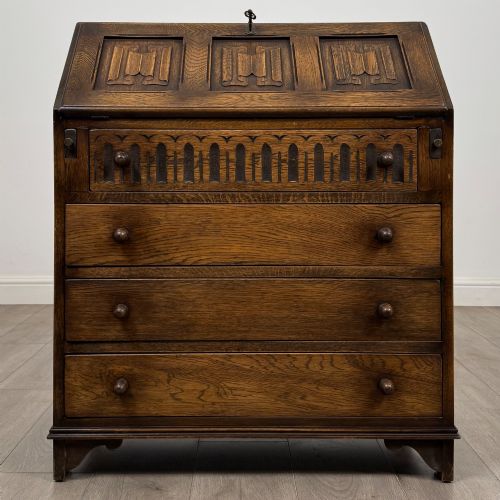
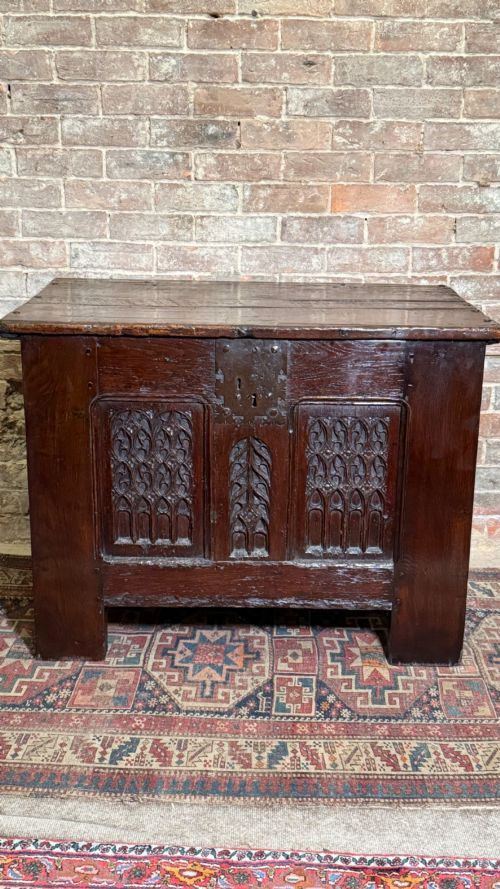
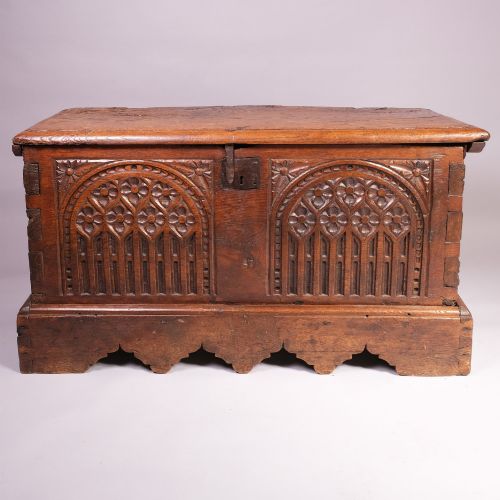
The pieces on this page appear in various forms, ranging from massive sixteenth-century coffers in oak and elm to Edwardian oak linenfold bureaux and small Victorian dome-top boxes. Buyers encounter domestic storage boxes alongside large coffers and monks benches.
Origins span across centuries, taking in pre-sixteenth century examples, sixteenth-century pieces, and nineteenth-century Gothic Revival items including designs by Pugin in mahogany. French chestnut deed boxes and heavy cast metal boxes also appear within this selection.
How they were made
Makers built these pieces primarily from sturdy native timbers such as oak, elm, mahogany, and chestnut, providing the structural mass needed for large coffers and desks. Woodworking methods relied on heavy framing and panel construction to house carved linenfold and mediaeval ornamentation.
Iron, wrought iron, and brass provided essential reinforcement through strap hinges, heavy locks, and corner mounts that secured the timber joints. Cast metal also appears in later interpretations to replicate the heavy defensive hardware of early storage boxes.
Gothic Style Chest Retail Price Guide 2026
Typical asking prices for gothic style chest among the pieces listed under this phrase on Sellingantiques today, from the lower quarter to the upper quarter. They describe what is for sale here now, not the wider market.
The listings on this page span from pre-sixteenth century coffers to early twentieth-century Gothic Revival desks, constructed primarily in oak, mahogany, and elm.
What varies in quality
Quality rests upon the integrity of the timber and the depth of the carving, where hand-carved Gothic tracery and linenfold panels show superior craftsmanship compared to simpler moulded surfaces. The proportion of the piece and the harmony between the wood and its metal mounts dictate overall success.
The originality of the ironwork and hardware significantly influences the character of each piece, with period-correct hinges and straps holding greater interest. Structural survivorship without excessive timber replacement distinguishes the more substantial examples from heavily restored ones.
The Gothic Style Chest Glossary
- Linenfold
- A style of wood panel carving resembling folded parchment or linen, commonly found on Tudor and Edwardian panels. This decorative technique creates a textured surface across cupboard doors and the fronts of storage pieces.
- Coffer
- A heavy timber chest used historically for storing valuables, documents, or church vestments. These sturdy boxes often feature iron straps and multi-lock security.
- Gothic Revival
- An architectural and decorative movement from the nineteenth century that revived mediaeval pointed arches and tracery. This aesthetic inspired mahogany despatch boxes and decorative church-style furnishings.
- Despatch box
- A portable container traditionally used for carrying official documents and letters securely. These fitted boxes often include brass locks and compartmentalised interiors.
- Monks bench
- A multifunctional piece of furniture featuring a hinged top that converts a bench into a table. This form combines seating with concealed storage beneath the seat.
Gothic Style Chest: Frequently Asked Questions
What is a gothic style chest used for?
These pieces served historically to store valuable documents, textiles, and household goods securely away from damp floors. Today, they function as practical living room or hallway storage while adding historical character to a room.
Larger coffers act as blanket boxes or coffee tables, whereas smaller deed boxes and desks organise papers and stationery.
How do I date a gothic style chest?
Dating relies on examining the timber species, tool marks, construction joints, and the style of the iron hardware. Early pieces display hand-riven timber and archaic joinery methods without modern machine cuts.
Revival pieces from the nineteenth and twentieth centuries often combine historical motifs with cleaner interior fittings and nineteenth-century locking mechanisms.
Are these chests made of solid oak?
Many of the listed coffers and desks utilise solid native hardwoods such as oak, elm, and mahogany for their primary structure. Elm and oak provided exceptional strength for heavy mediaeval and sixteenth-century examples.
Later revival pieces and smaller boxes occasionally incorporate mahogany or chestnut, sometimes paired with iron and brass reinforcements.
How do I care for an antique oak chest?
Maintain the timber by keeping the piece away from direct heat sources and extreme humidity fluctuations that cause wood to split. A light application of traditional beeswax preserves the natural grain and nourishes dry surfaces.
Avoid commercial liquid polishes, which can build up on carved linenfold details and soften the historic patina of the wood.