



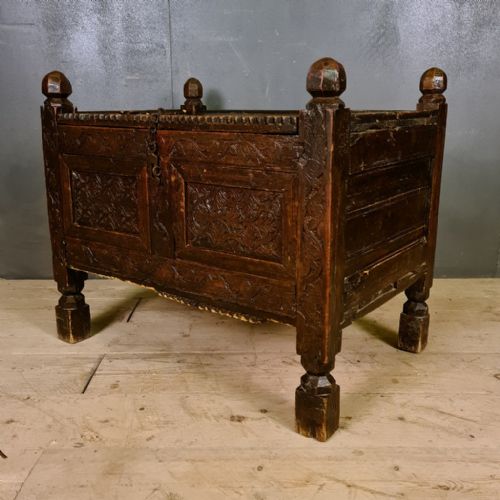


Gothic Storage Trunk
A gothic storage trunk brings solid oak, heavy ironwork and centuries of vernacular craft directly into a modern hallway or bedroom.
Gothic Storage Trunk
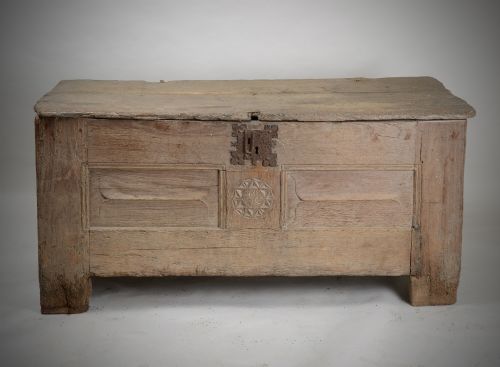
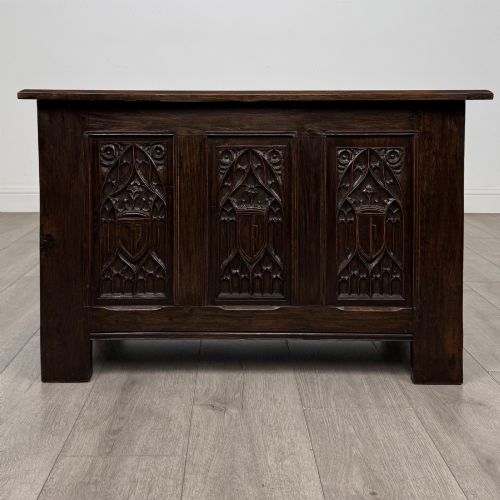
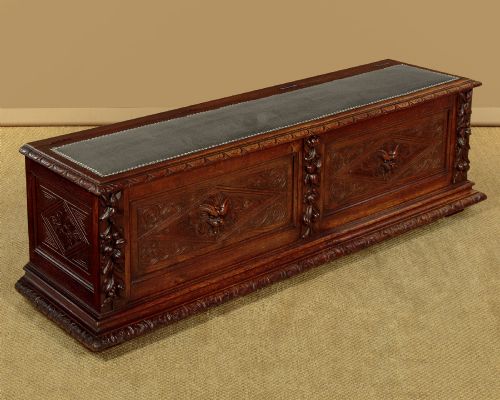
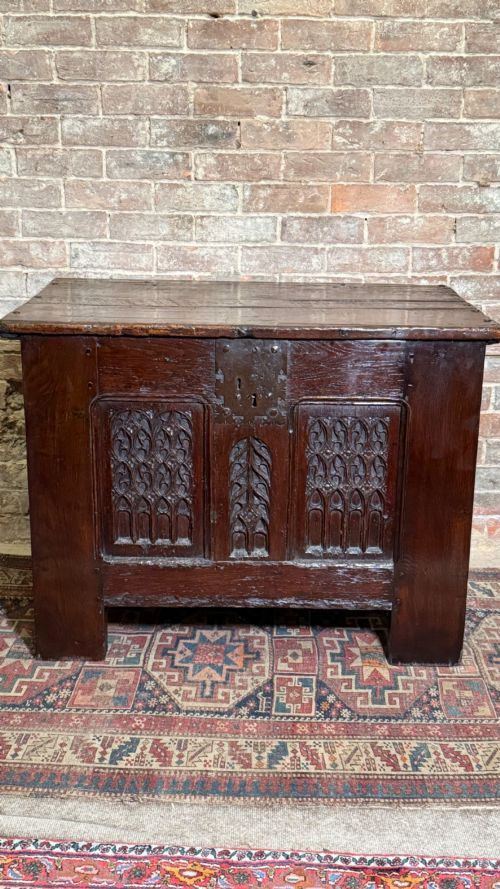
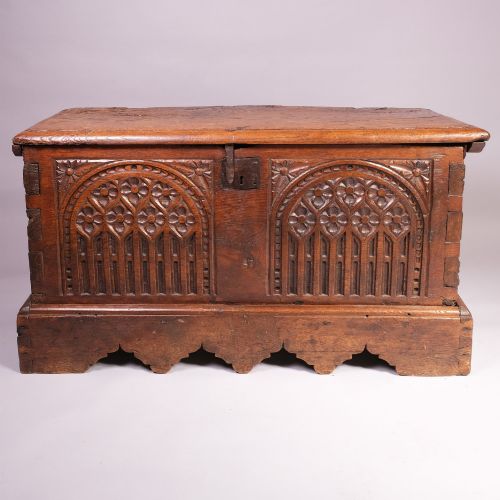
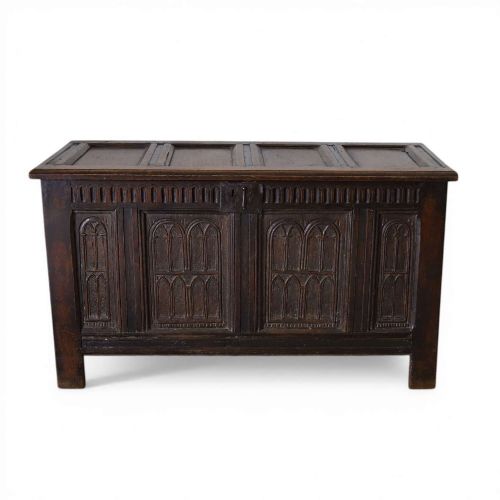
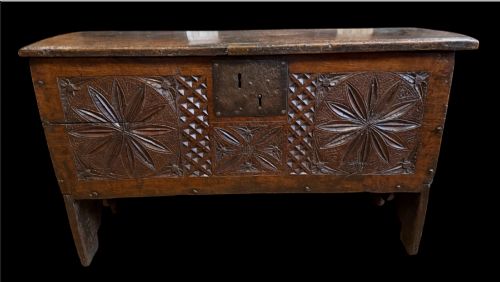
A gothic storage trunk combines deep utility with medieval architectural motifs, serving as both a robust repository and a striking focal point. These heavy timber receptacles range from plank chests to panelled coffers, spanning centuries of domestic and ecclesiastical use.
The pieces appearing on this page stretch from pre-sixteenth century examples to Edwardian revivals, taking in Tudor, Spanish and Arts and Crafts interpretations. Oak predominates as the primary timber, occasionally supplemented by elm, pine, walnut or pollard oak.
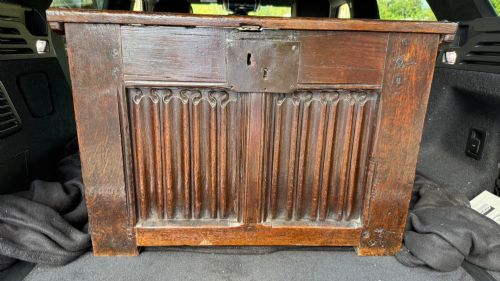
Makers and workshops utilise heavy boards, chip carving, linenfold panelling and wrought iron strapwork to build containers meant to endure. Whether sourced from English parishes or continental workshops, each trunk reflects the functional demands of secure storage in earlier eras.
How they were made
Carpenters constructed these heavy vessels primarily from solid oak, often hewing boards by hand to form thick plank chests or pegged frame-and-panel structures. Timber selection mattered greatly, with quarter-sawn oak providing both stability and decorative medullary rays across the front panels.
Blacksmiths forged robust iron straps, hinges and hasps to reinforce the corners and secure the heavy lids against forced entry. Additional decorative flair came through chip carving, linenfold motifs and ecclesiastical tracery gouged directly into the wood.
Gothic Storage Trunk Retail Price Guide 2026
Typical asking prices for gothic storage trunk among the pieces listed under this phrase on Sellingantiques today, from the lower quarter to the upper quarter. They describe what is for sale here now, not the wider market.
Some chests carry centuries of church dust tucked deep inside their hand-carved linenfold panels, waiting quietly in your hallway.
What varies in quality
The grade of a gothic storage trunk rests upon the integrity of its timber, the depth of its carving and the originality of its ironwork. Early pre-sixteenth century plank constructions rely on the sheer weight of massive boards, whereas later pieces demonstrate sophisticated joinery and intricate tracery.
Original hinges, locks and wrought iron straps elevate a piece significantly above examples with later replacements. The crispness of the hand-carved linenfold or geometric patterns similarly distinguishes vernacular workshop production from routine later revivals.
Jack Grimble
The Gothic Storage Trunk Glossary
- Coffer
- A heavy wooden chest traditionally used for storing valuables, documents or textiles. These sturdy boxes often feature hinged lids and reinforced iron banding.
- Linenfold
- A style of wood carving popular in the Tudor period that mimics the folds of vertical fabric. Craftsmen planed or gouged this pattern onto panels to create texture.
- Tragacanth
- A natural gum historically used in various historic finishes and bindings. It provides stability in traditional preparation methods.
- Wrought iron
- Iron beaten into shape by a blacksmith while hot, yielding visible hammer marks and high tensile strength. This material provided essential structural reinforcement for early storage chests.
Gothic Storage Trunk: Frequently Asked Questions
How do I date a gothic storage trunk?
Dating relies upon examining construction methods, tool marks, timber shrinkage and stylistic motifs such as linenfold carving or iron strapwork. Early pieces utilise pegged frame-and-panel assemblies or heavy hewn planks.
Later Victorian and Edwardian revivals often incorporate machine-cut elements or softer secondary timbers behind the primary oak facade.
Where were these trunks originally used?
These robust chests served primarily in churches, great halls and merchant houses for storing vestments, valuables, documents and household textiles. Their heavy construction and iron locks provided essential security in times of social unrest.
Ecclesiastical examples often originated in parish vestries, while simpler plank variants fulfilled domestic storage needs in rural farmhouses.
How do I care for an antique oak trunk?
Maintain stable indoor humidity levels and avoid placing the timber near direct heat sources or in strong sunlight, which can cause cracking. Feed the dry wood occasionally with traditional beeswax to preserve the grain.
Clean the surface gently with a soft, dry cloth rather than modern chemical polishes that strip the historic patina.
Can I use a gothic trunk as a coffee table?
The flat top of many coffers and storage chests makes them well-suited to serving as a functional table surface in a living space. Ensure that vulnerable lids are protected with glass or coasters if used heavily.
Using them this way also provides practical interior storage for blankets or books while showcasing the historic timber.