





Gothic Splat Dining Chairs
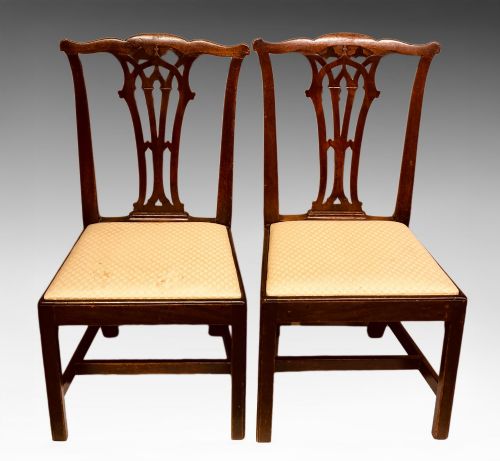
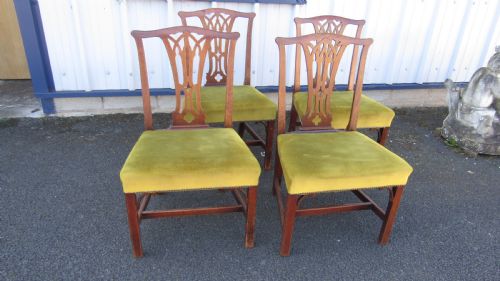
Gothic splat dining chairs bring serious architectural presence to a room, pairing medieval lancet lines with the warm grain of mahogany and oak.
Gothic Splat Dining Chairs
Gothic splat dining chairs encompass robust seating forms created across the eighteenth and nineteenth centuries, alongside revival pieces from around nineteen hundred. When searching for gothic splat dining chairs, buyers encounter dining chairs, side chairs, hall chairs, and armchairs built in oak and mahogany.
Georgian examples and Chippendale revival sets dominate the current selection, showing the enduring appeal of pointed arch motifs and pierced backsplats. Pieces range from single apprentice items and pairs up to large sets of twelve, offering flexibility for both intimate spaces and formal dining rooms.
Craftsmen drew inspiration from Gothic architecture, translating stone tracery into carved timber backsplats that support the sitter while providing strong vertical lines. These seats served everyday domestic dining and formal reception use across centuries of British interior design.
How they were made
Cabinetmakers worked primarily in dense hardwoods like mahogany and oak, selecting timber for strength in the uprights and fine grain in the carved splats. Selected examples incorporate upholstery in fabric, leather, or velvet over the drop-in or fixed seat frames.
Construction relied on traditional joinery methods to ensure stability under daily weight, while hand carving defined the distinctive pointed arches and tracery patterns. Master craftsmen shaped the timber using hand tools to achieve the smooth curves and precise pierced designs characteristic of the style.
Gothic Splat Dining Chairs Retail Price Guide 2026
Typical asking prices for gothic splat dining chairs among the pieces listed under this phrase on Sellingantiques today, from the lower quarter to the upper quarter. They describe what is for sale here now, not the wider market.
Current listings span the eighteenth century, the nineteenth century, and nineteen hundred, utilising mahogany, oak, timber, fabric, leather, and velvet.
What varies in quality
Depth and crispness of the hand carving separate simpler workshop output from exceptional furniture, particularly in the execution of pierced tracery and pierced splats. The choice of primary timber grain and the integrity of the original joints dictate how well a chair withstands centuries of use.
Completeness of a set strongly influences character, as matched groupings require uniform timber selection and consistent wear patterns across every seat. The survival of early surface finishes and the preservation of original timber integrity distinguish superior examples from heavily restored pieces.
The Gothic Splat Dining Chairs Glossary
- Splat
- The vertical central strip of wood in the back of a chair, which in these pieces takes on Gothic architectural tracery.
- Chippendale Revival
- A later period style that reinterprets the eighteenth-century designs of Thomas Chippendale, often featuring elaborate Gothic fretwork.
- Side chair
- An upright chair without arms, designed primarily for use at a dining table.
- Gothic Chippendale
- A design style combining the structural vocabulary of medieval Gothic architecture with the mid-eighteenth-century forms of Chippendale furniture.
Gothic Splat Dining Chairs: Frequently Asked Questions
What periods do these chairs come from?
These items originate from the eighteenth and nineteenth centuries, covering Georgian periods and later revival eras.
Craftsmen produced them across extended timelines, leading to distinct variations in timber choice and carving depth between eras.
How were gothic splat chairs used originally?
They served primarily as formal seating around dining tables in large houses and domestic settings.
Certain forms like hall chairs functioned in entrance spaces to display family standing to visitors.
What woods should I expect to find?
Makers constructed these seats predominantly in mahogany and oak, depending on the regional workshop and period.
These dense hardwoods provided the structural strength required for pierced splats and slender uprights.
How do I distinguish revival pieces from older ones?
Revival items from around nineteen hundred often display machine-assisted precision alongside late nineteenth-century secondary timbers.
Georgian and eighteenth-century examples show tool marks and timber shrinkage consistent with earlier workshop practices.