


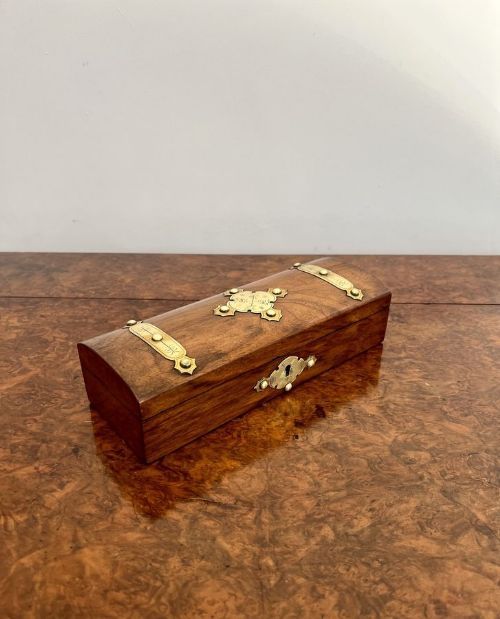


Gothic Revival Trinket Box
These gothic revival trinket box examples combine architectural metalwork with rich timber frames to secure your smaller possessions.
Gothic Revival Trinket Box
A gothic revival trinket box serves as a small secure container for keepsakes, jewellery, or correspondence. The pieces collected under this search phrase span the Victorian era, the nineteenth century, and the early twentieth century, incorporating desk sets, sewing cases, glove boxes, and stationery repositories.
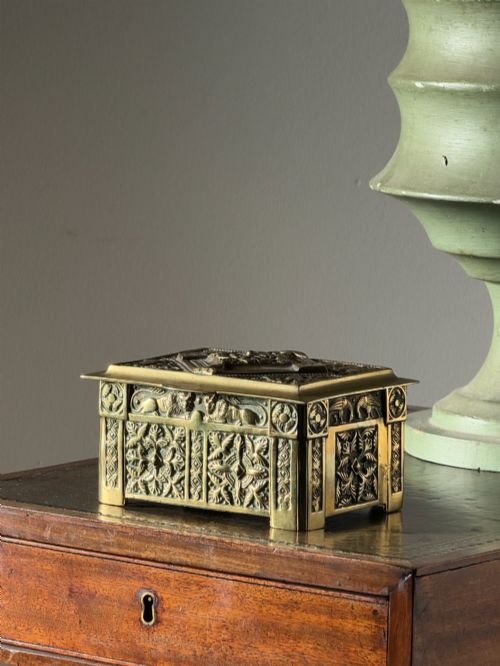
The dominant forms you encounter on this page range from dome top tea caddies and casket shapes to heavy cast metal boxes resembling thirteenth century coffers. Scottish and English workshops produced many of these items, utilising sturdy structural woods and decorative metal mountings.
How they were made
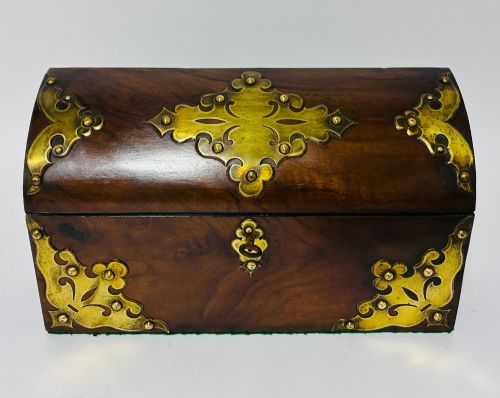
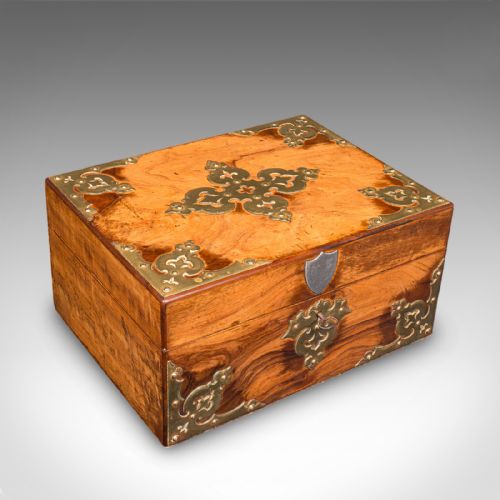
Makers constructed the primary bodies of these boxes from dense timbers such as walnut, burr walnut, and amboyna, often pairing them with robust internal frameworks. Artisans then applied heavy brass banding, hinges, and corner plates to reinforce the structure while introducing architectural motifs.
Surface ornamentation relies heavily on metalwork techniques, including beaten and riveted steel, cast metal relief, and cabochon mountings set with stones like agate. Some examples incorporate cloisonné enamel panels to add colour and texture to the medieval revival aesthetic.
Gothic Revival Trinket Box Retail Price Guide 2026
Typical asking prices for gothic revival trinket box among the pieces listed under this phrase on Sellingantiques today, from the lower quarter to the upper quarter. They describe what is for sale here now, not the wider market.
One heavy metal box takes the precise form of an early thirteenth century coffer.
What varies in quality
The calibre of a piece depends largely on the selection of timber veneers, such as richly figured burr walnut, and the precision with which the brass or steel mounts are fitted. Superior examples display harmonious proportions where heavy metal strapwork complements the grain of the wood rather than overwhelming it.
Internal appointments also separate the standard items from finer productions, as seen in fitted velvet linings, compartmentalised stationery trays, and robust locking mechanisms. The crispness of cast metal details and the integration of hardstone cabochons indicate the maker's investment of time and skill.
The Gothic Revival Trinket Box Glossary
- Gothic Revival
- An architectural and decorative style drawing inspiration from medieval forms, pointed arches, and heavy metal hardware. This aesthetic dominated much of the nineteenth century.
- Burr Walnut
- A highly prized timber cut from walnut tree growths, featuring swirling, mottled grain patterns. Cabinet makers utilised these veneers on primary display surfaces.
- Agate
- A decorative quartz variety often polished into smooth cabochons. Craftsmen mounted these stones onto metalwork to accent the medieval appearance.
- Casket
- A rectangular box or chest, frequently hinged and fitted with a secure lock. These containers held valuables, documents, or personal items.
Gothic Revival Trinket Box: Frequently Asked Questions
What is a gothic revival trinket box?
A gothic revival trinket box is a small storage container influenced by medieval architecture, typically constructed from timber and reinforced with brass or iron.
These pieces reflect nineteenth century design trends through pointed motifs, heavy strapwork, and dark wood grains.
How were these boxes used?
Original owners utilised these containers to safeguard jewellery, letters, sewing equipment, or personal diaries. Their sturdy construction protected private items from damage and dust.
Many sat on writing desks, dressing tables, or sideboards as both functional storage and decorative ornaments.
What woods are common?
Walnut and burr walnut appear frequently across the available inventory, providing a dark and heavily figured background for metal mounts. Amboyna and other burr woods also feature in specific pieces.
Craftsmen selected these dense timbers for their stability and striking grain patterns.
How do I date a piece?
Dating relies on observing construction methods, timber types, and the specific style of the metal mountings. Most examples originate from the Victorian period of the nineteenth century.
Hardware details like riveted steel or cast brass straps often align with nineteenth and early twentieth century revival tastes.