




Gothic Revival Relief Carving
Gothic revival relief carving brings medieval architectural drama and deep-cut timber craftsmanship straight into nineteenth-century domestic spaces.
Gothic Revival Relief Carving
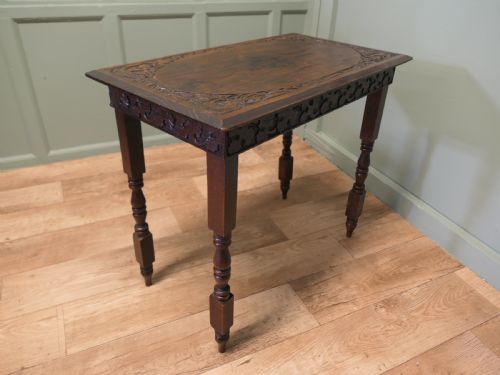
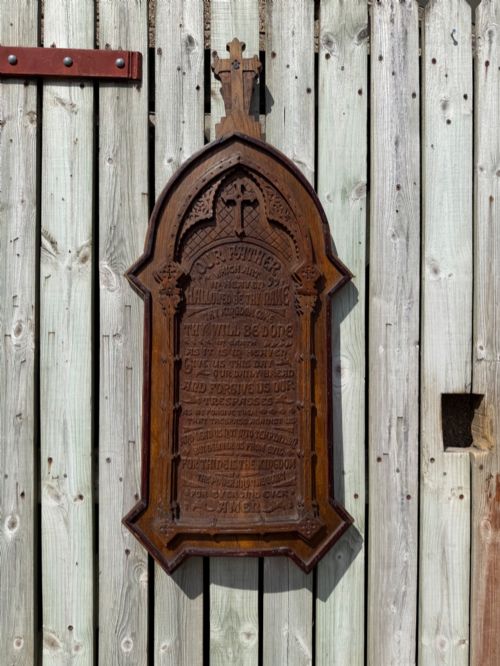
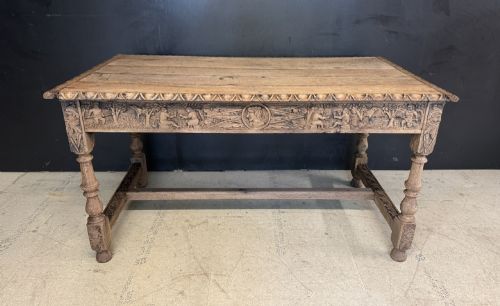
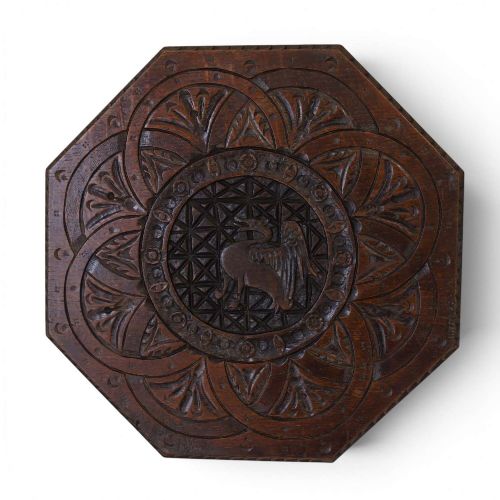
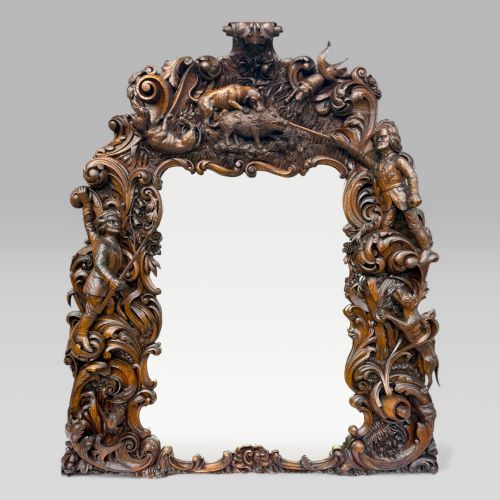
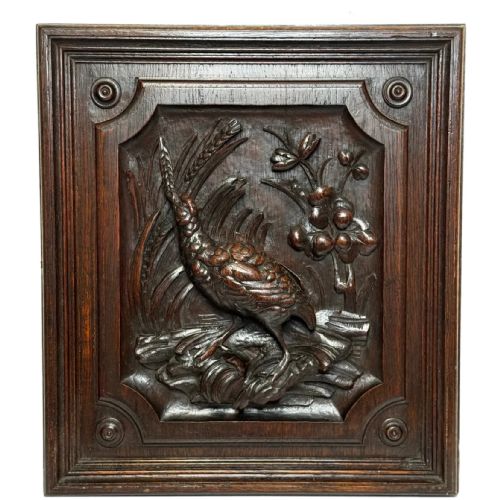
Gothic revival relief carving encompasses architectural salvage, wall plaques, armchairs, and overmantle mirrors created during the nineteenth century. These objects draw heavily on medieval church and monastic aesthetics, translating structural stone forms into warm domestic timber.
How they were made
Makers relied principally upon heavy timbers such as oak, walnut, and fruitwood, carving deep relief scenes directly into the dense grain. Surfaces were finished with hand-tooling that left deliberate chisel marks to mimic medieval antiquity.
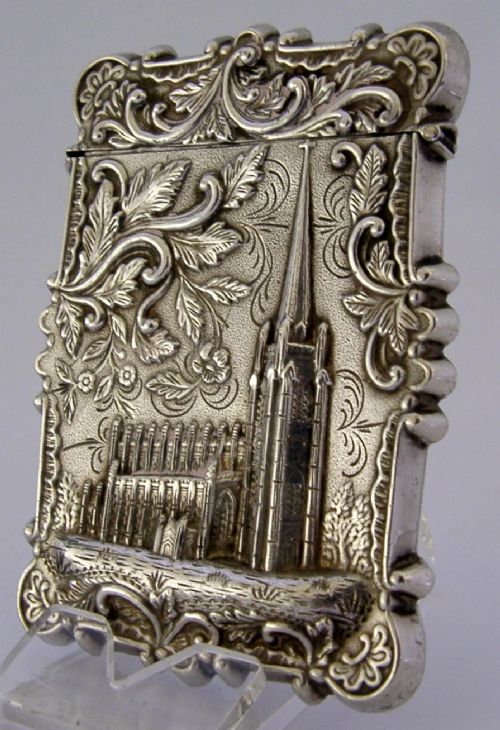
Alternative materials like leathermaché and sterling silver occasionally appear, shaped through pressing and casting to achieve the same intricate architectural depth as carved wood.
Listings feature oak, walnut, and fruitwood alongside silver and leathermaché across nineteenth-century styles.
What varies in quality
The highest tier of gothic revival relief carving is distinguished by anatomical precision in figures and crisp, undercut depth in foliage and tracery. Lesser pieces rely on shallow stamping or mechanical routing that flattens the dramatic play of shadow across the panel.
Proportion and wood selection dictate overall success. Dense tiger oak and well-figured walnut hold sharp chisel edges far better than softer fruitwoods, maintaining clarity through centuries of handling.
The Gothic Revival Relief Carving Glossary
- Relief carving
- A sculptural technique where figures and ornamentation project from a flat background surface. The depth of this projection defines the dramatic impact of nineteenth-century panels.
- Linenfold
- A style of wood carving that mimics folded fabric resembling parchment or linen. It frequently covers nineteenth-century cupboard doors and decorative wall panels.
- Heraldic shield
- A blazoned shield displaying coats of arms or familial crests. Carvers used these motifs to project an aura of ancient nobility and lineage.
- Overmantle
- A large mirror or carved panel designed to hang directly above a fireplace mantel. These pieces anchor the visual weight of nineteenth-century reception rooms.
Gothic Revival Relief Carving: Frequently Asked Questions
What is gothic revival relief carving?
Gothic revival relief carving refers to nineteenth-century wooden panels, furniture, and architectural elements that imitate medieval church ornamentation. These items draw on pointed arches, tracery, and religious iconography.
Craftsmen produced these objects to satisfy a Victorian appetite for historicism and medieval romance, placing ecclesiastical motifs into domestic libraries and halls.
How were these carved panels used?
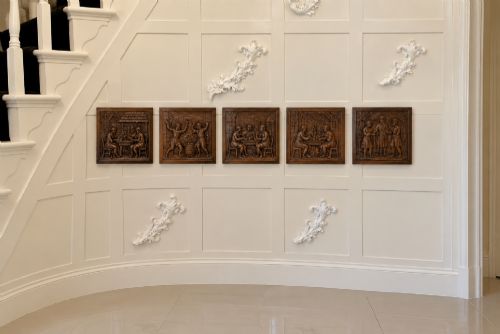
Carved panels and plaques served as architectural salvage, overmantle decorations, or fitted elements within sideboards and cupboards. They added a layer of solemn antiquity to newly built nineteenth-century homes.
Larger pieces functioned as freestanding wall art or tabletops repurposed into plaques, anchoring the dark, wood-panelled aesthetic of the period.
How do I live with these dark wood carvings?
These carved wooden pieces require neutral wall backgrounds and balanced interior lighting to highlight the deep shadows of the relief work. Placing them against pale plaster allows the dense grain of oak and walnut to stand out.
Keep carved timber away from direct heat sources and strong sunlight to prevent the wood from drying out or splitting over time.
How can I tell the period of a carved panel?
Nineteenth-century gothic revival pieces combine medieval motifs with Victorian timber preparation methods, often visible on the reverse of panels and frames. Tool marks and construction techniques reveal whether a piece dates to the eighteen-hundreds or earlier centuries.
Examine the joinery and wood oxidation to separate genuine nineteenth-century historicism from later twentieth-century reproductions.