

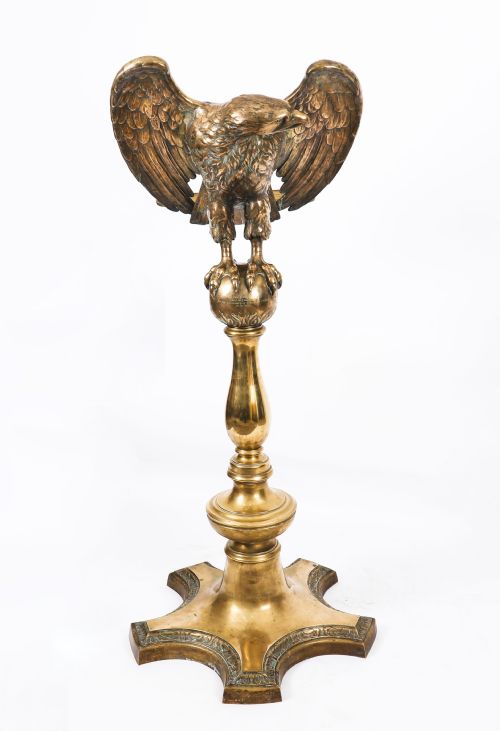


Gothic Revival Pulpit
A gothic revival pulpit brings profound architectural presence and solemn ecclesiastical history straight into a room.
Gothic Revival Pulpit
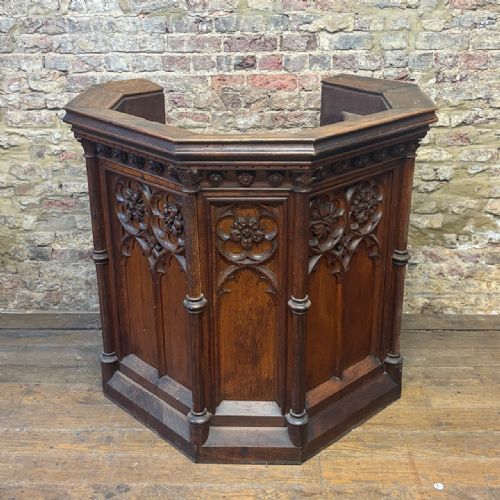
A gothic revival pulpit encompasses large church furniture pieces designed to elevate a speaker, alongside related ecclesiastical reading stands and lecterns built in the same architectural manner. These works draw directly from medieval ecclesiastical design, translating stone cathedrals and monastic chapels into domestic or institutional fittings.
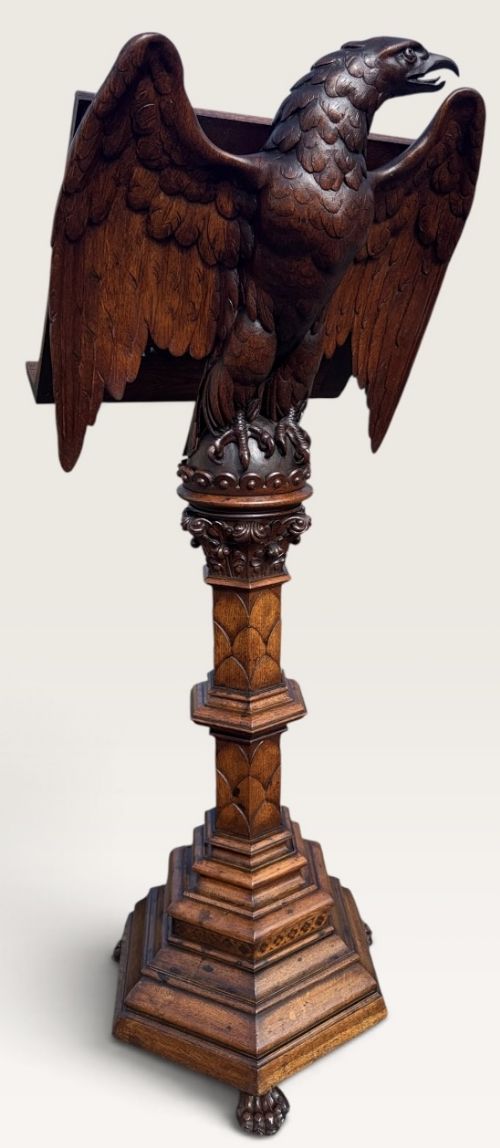
Most pieces encountered here take the form of substantial reading stands and lecterns rather than full structural pulpits, often featuring carved wooden eagles supporting the book rest. These items date primarily from the nineteenth century, spanning periods from eighteen fifty up to nineteen ten under Victorian and Edwardian influences.
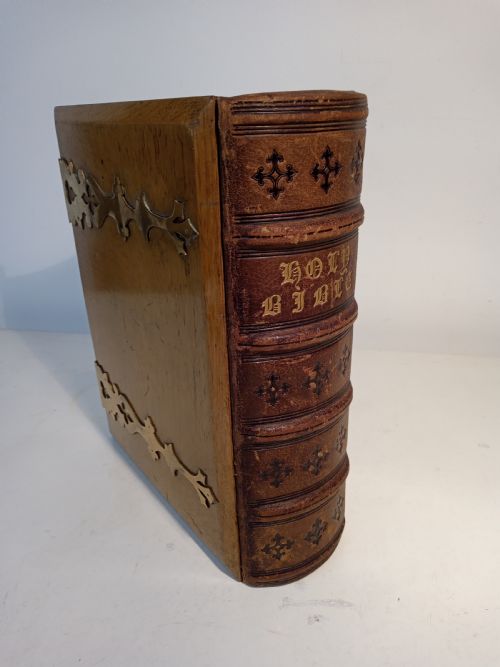
The objects frequently originate from church settings, carrying the patina of decades of ecclesiastical use within Scottish and broader British parishes. Alongside carved wooden furniture, the selections occasionally include contemporary antiquarian books and solid brass reading stands that match the ecclesiastical aesthetic.
How they were made
Makers utilised heavy timbers, predominantly oak and general wood, carving deep architectural tracery, pointed arches, and heraldic motifs directly into the solid grain. The primary structural components rely on traditional joinery methods suited to large ecclesiastical furnishings that needed to bear heavy folio volumes.
Metalwork appears in robust brass and iron elements, particularly in the creation of winged eagle forms and structural supports for reading desks. These mixed media constructions combine the warmth of carved timber with the crisp detail of cast and polished brass.
Gothic Revival Pulpit Retail Price Guide 2026
Typical asking prices for gothic revival pulpit among the pieces listed under this phrase on Sellingantiques today, from the lower quarter to the upper quarter. They describe what is for sale here now, not the wider market.
Several wooden eagles keep a steadfast watch over empty pews.
What varies in quality
The depth and animation of the carving set exceptional examples apart from simpler utilitarian pieces, particularly in the rendering of plumage on wooden and brass eagles. Master carvers captured anatomical tension and expressive detail in the wings and head, whereas lesser items rely on formulaic, shallow incisions.
Proportion and architectural integrity dictate the visual success of the piece, with superior items maintaining balanced proportions despite their heavy materials. The choice of timber grain and the crispness of the Gothic mouldings further distinguish workshop output across the Victorian era.
The Gothic Revival Pulpit Glossary
- Gothic Revival
- An architectural and decorative style that revived medieval forms, including pointed arches, quatrefoils, and heavy tracery, popular throughout the nineteenth century. This movement dominated church building and ecclesiastical fittings of the period.
- Lectern
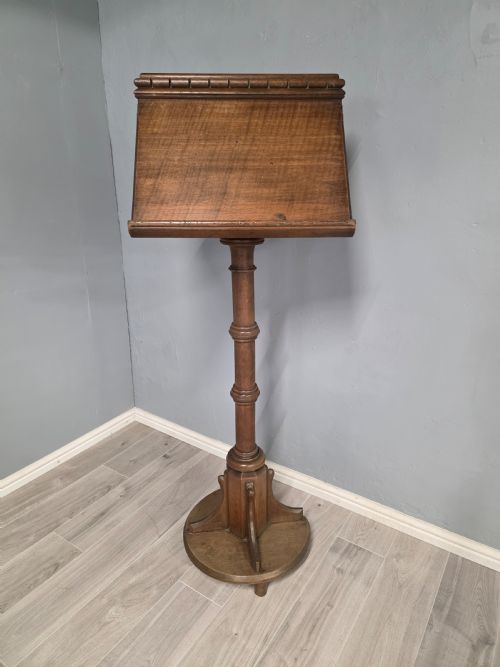
- A tall stand with a slanted top to hold a book for reading aloud, commonly shaped as an eagle in nineteenth-century churches. These stands served both liturgical functions and practical reading needs.
- Ecclesiastical
- Relating to the Christian Church or its clergy, describing items manufactured specifically for use within a place of worship. Such pieces carry distinct historical provenance linked to parish history.
- Tracery
- Openwork ornamentation in stone or wood, characterised by intersecting ribs and geometric patterns typical of Gothic architecture. It provides both structural support and decorative enrichment on panels.
Gothic Revival Pulpit: Frequently Asked Questions
What is a gothic revival pulpit?
A gothic revival pulpit is a raised stand used for preaching in a church, though listings often include related ecclesiastical lecterns and reading desks from the nineteenth century.
These pieces borrow heavily from medieval architectural styles, featuring pointed arches and carved ornamentation.
How were church lecterns used?
Church lecterns were positioned in the chancel or nave to support large Bibles and service books during religious readings and sermons.
The raised design and angled desk ensured the speaker could project their voice and read clearly to the congregation.
Why are eagles common on lecterns?
The eagle symbolises Saint John the Evangelist and represents the spread of the Gospel message across the earth.
Victorian craftsmen frequently cast or carved these birds with outstretched wings to act as the reading desk.
How do I date these pieces?
Dating relies on examining the timber, the style of the Gothic ornamentation, and historical records linked to specific churches.
Most surviving examples originate from the Victorian era between eighteen fifty and nineteen ten.