



Gothic Revival Pricket
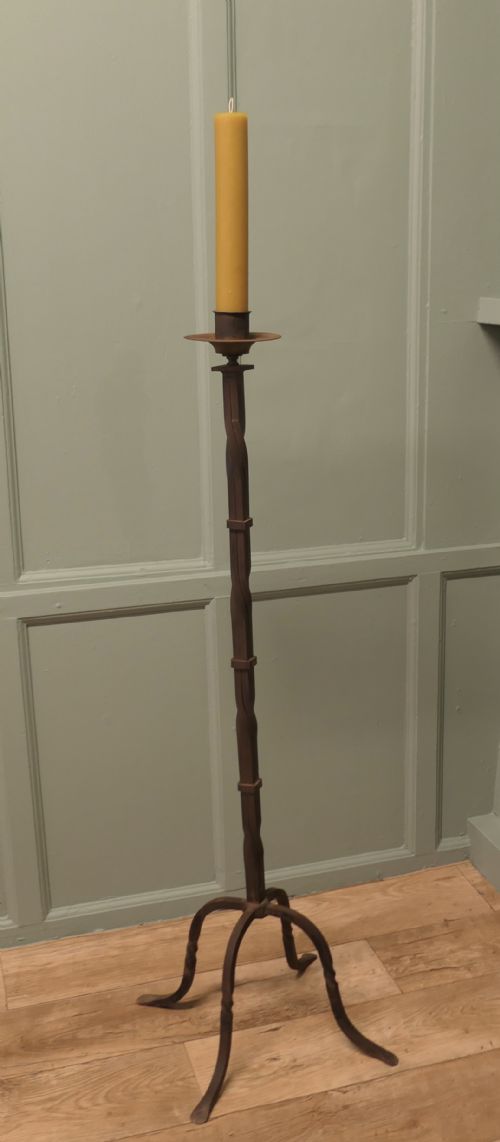
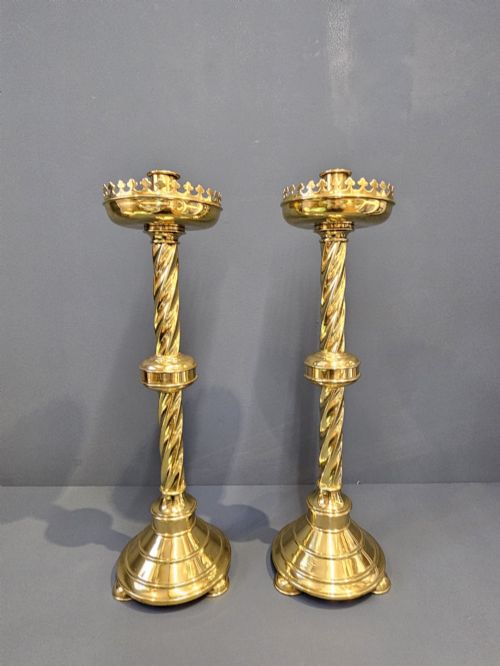
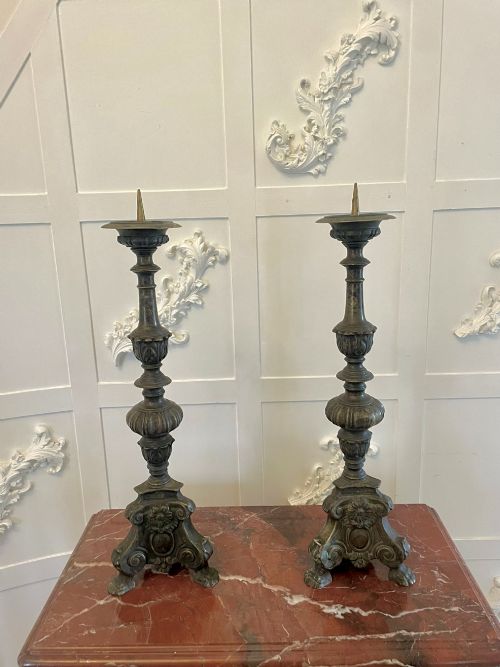
These gothic revival pricket sticks are tall ecclesiastical candle holders built to hold large altar candles.
Gothic Revival Pricket
When you search for gothic revival pricket items, you are looking at ecclesiastical candle holders and altar lamps designed with medieval architectural motifs. These pieces serve liturgical and decorative functions, originating primarily from the nineteenth century alongside earlier eighteenth-century examples.
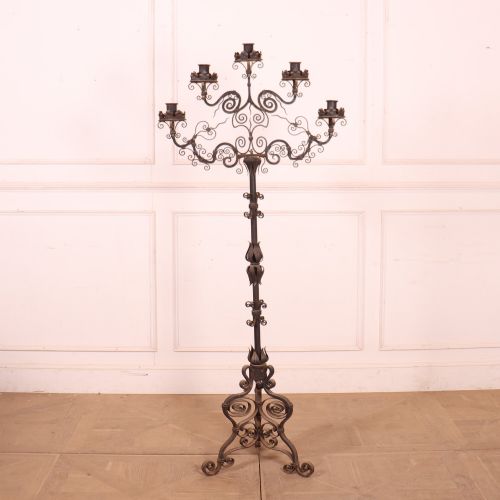
The selection ranges from domestic adaptations like converted candlestick lamps to substantial church floor candelabras and altar candlesticks. Styles span strict Victorian Gothic Revival designs, French nineteenth-century interpretations, and occasional Amsterdam School variants.
How they were made
Makers utilised heavy casting techniques for the structural components, pouring molten brass, bronze, and gilt metal into complex moulds. Wrought iron also appears in taller floor-standing supports, shaped through traditional blacksmithing methods to bear considerable weight.
Surface finishing involved mercury gilding, plating, or polishing to achieve rich metallic sheens on gilt brass and copper elements. Decorative detailing relied on applied chasing, piercing, and structural turnings that mimic stone tracery and architectural colonnades.
Gothic Revival Pricket Retail Price Guide 2026
Typical asking prices for gothic revival pricket among the pieces listed under this phrase on Sellingantiques today, from the lower quarter to the upper quarter. They describe what is for sale here now, not the wider market.
Some nineteenth-century makers hid tiny liturgical symbols inside the drip pans of their altar candlesticks.
What varies in quality
The mass and gauge of the metal separate robust altar pieces from lighter domestic items, with heavier castings providing the necessary stability for tall floor and table stands. Material choice dictates longevity, where solid bronze and thick brass retain crispness in their cast ornament.
Fidelity to architectural proportions and the depth of chased detail distinguish finer workshop output from mass-produced ecclesiastical hardware. The integration of structural components like the central stem and drip pan reflects the maker's competence.
The Gothic Revival Pricket Glossary
- Pricket
- A sharp metal spike atop a candlestick designed to impale and secure the base of a thick candle. This form predates the common socket candlestick and remains standard for altar use.
- Gothic Revival
- An architectural and decorative style drawing inspiration from medieval ecclesiastical design, featuring pointed arches, trefoils, and heavy vertical lines. It dominated nineteenth-century church furnishings.
- Ecclesiastical
- Pertaining to the Christian church and its liturgy, describing items specifically manufactured for use within religious buildings rather than domestic settings.
- Altar Candlestick
- A large candle holder placed upon or near an altar during religious services, frequently produced in matched pairs for symmetry.
- Gilt Brass
- Brass that has been treated with a thin layer of gold or gold-coloured finish to simulate solid precious metal and resist tarnishing.
Gothic Revival Pricket: Frequently Asked Questions
How do I clean brass pricket candlesticks?
Dust gently with a soft dry cloth to remove surface particles without disturbing the underlying metal finish.
Avoid abrasive polishes that strip historical patination and wear away thin gilt layers on antique surfaces.
Can I use modern candles on these prickets?
Standard modern pillar candles do not fit securely onto a spiked pricket without prior preparation or drilling.
Traditional candles designed with a recessed base allow the metal spike to hold the wax firmly in place.
Are floor standing prickets stable on carpets?
Tall floor candle holders require a firm, level surface to prevent tipping due to their significant top-weight.
Placement on thick carpets can introduce a slight wobble, making hard flooring a safer option for display.
How do I date a gothic revival candlestick?
Examine the casting seams, tool marks, and overall wear patterns on the underside of the base.
Nineteenth-century pieces often exhibit sand-casting textures and material compositions distinct from modern reproductions.