

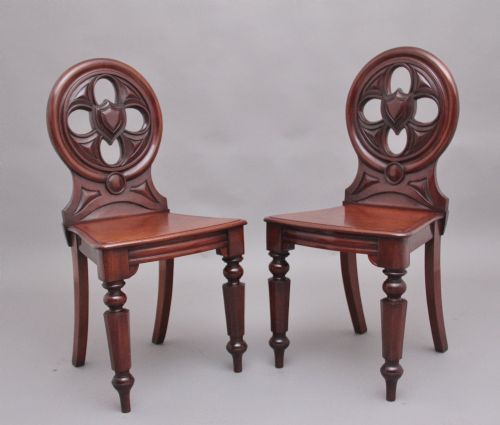
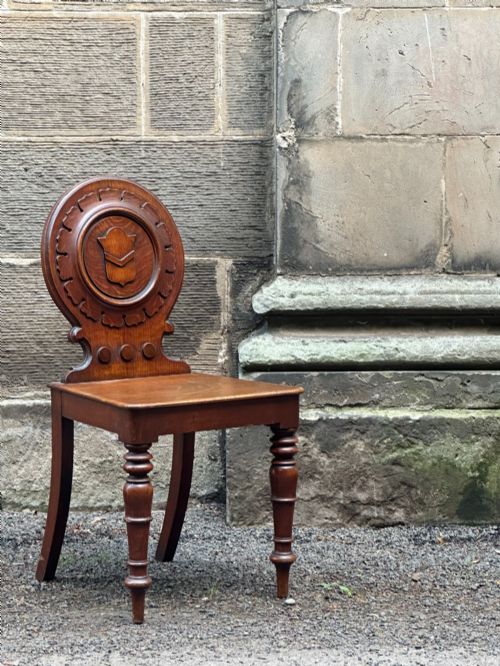


Gothic Revival Hallway Seat
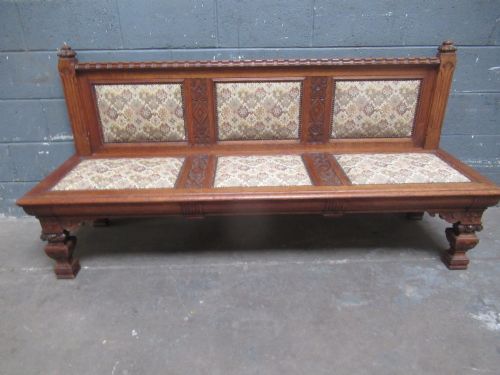
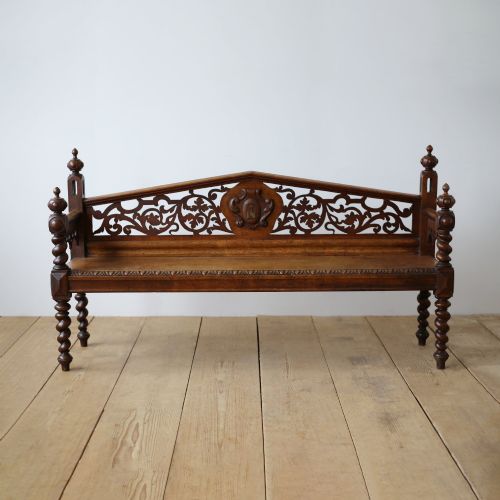
A gothic revival hallway seat brings architectural presence and robust timber construction straight from the nineteenth century into an entrance.
Gothic Revival Hallway Seat
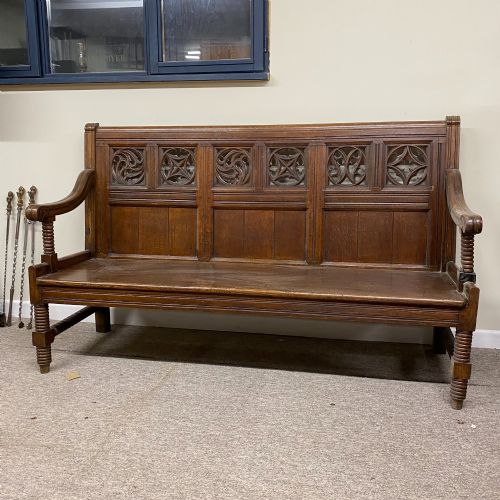
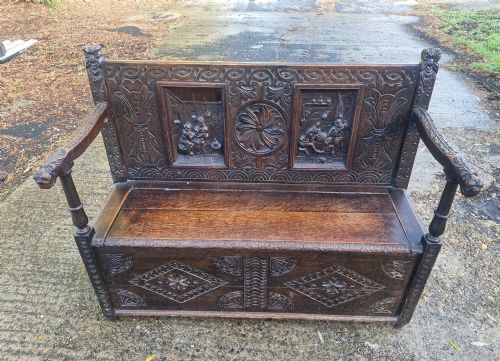
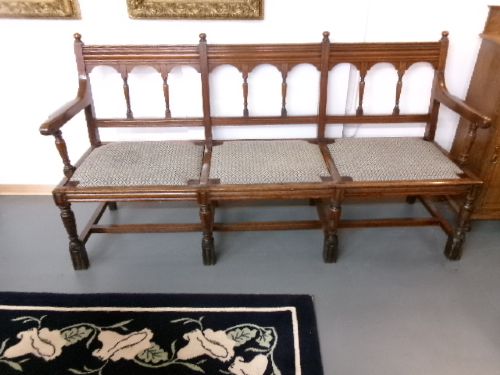
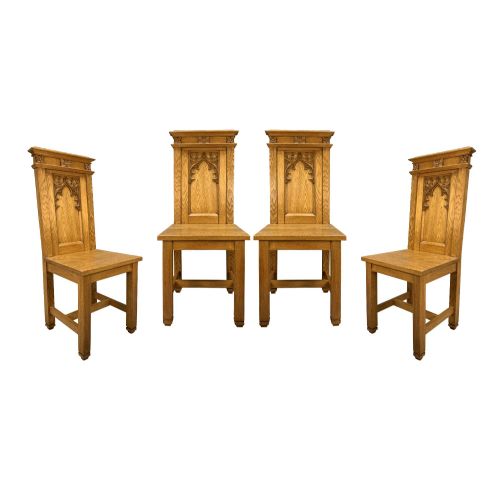
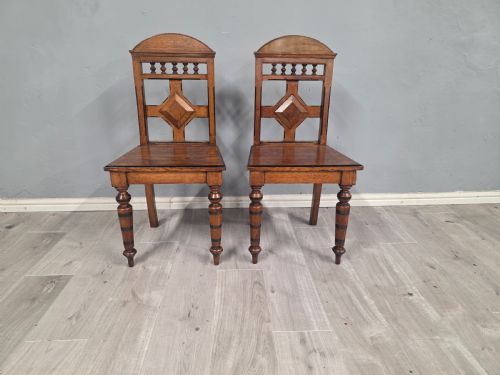
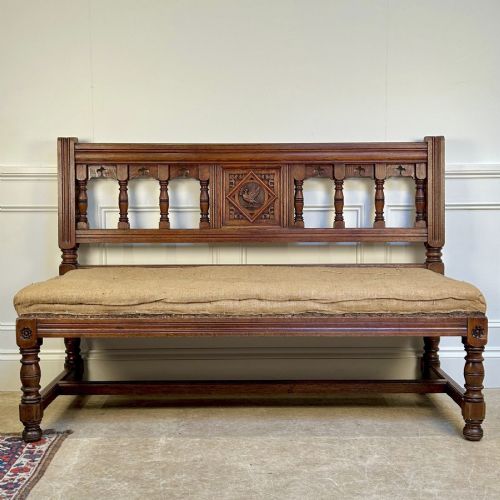
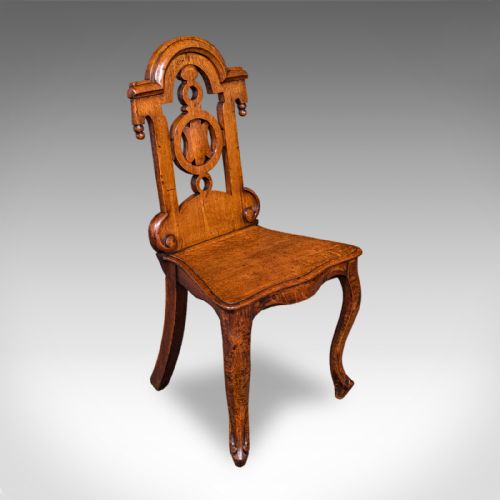
When you search for a gothic revival hallway seat, you are looking at substantial entrance furniture rooted primarily in the Victorian era, spanning forms from single hall chairs to long benches, settles, and monks benches. The versions you are most likely to meet on this page are carved wooden examples, predominantly constructed from oak or pitch pine, echoing medieval ecclesiastical and domestic architecture.
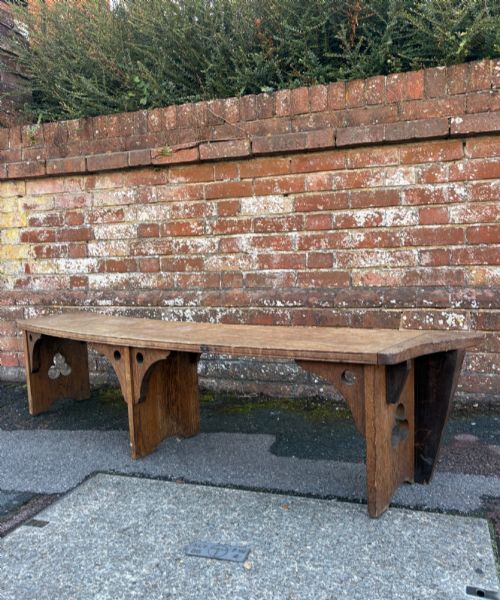
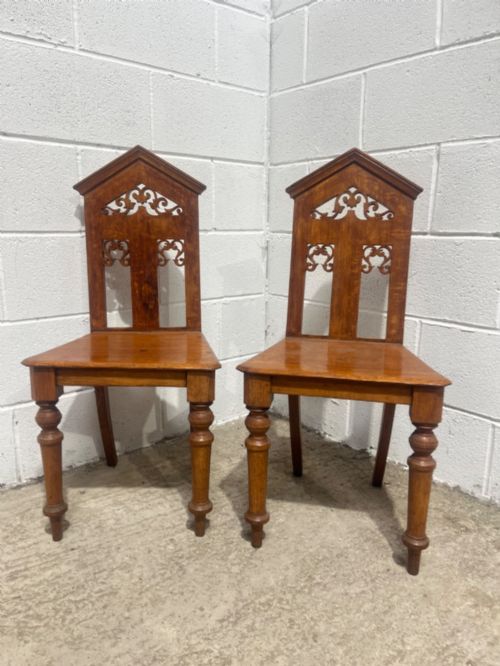
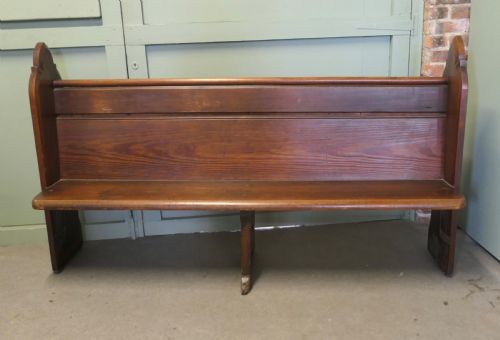
The selection here encompasses paired hall chairs alongside longer forms such as church pews, settles with high panelled backs, and curved benches featuring trefoil carved supports. These pieces served practical functions in reception areas, country houses, and public spaces, designed to make a formal impression on visitors before they entered the main rooms of the house.
Originating across the nineteenth century and into the early twentieth century, these seats draw on stylistic influences including Jacobean revival, Renaissance revival, and Arts and Crafts interpretations of Gothic design. Makers such as Gillows contributed to this tradition, producing disciplined oak seating that combined structural rigidity with pointed arches, tracery, and carved detail.
Materials and Construction
Timbers dominate these pieces, with English oak, solid oak, and pitch pine chosen for their durability, grain, and capacity to hold deep, crisp carving. Mahogany, walnut, fruitwood, and elm also appear in the record, providing varied tonal depths and surface textures across different regional workshops and maker traditions.
Joinery relied on traditional framing techniques to support heavy traffic in halls and reception areas, incorporating pegged mortise and tenon joints for structural stability. Carving was executed by hand directly into the timber, bringing out decorative motifs such as trefoils and Green Man imagery without relying on applied veneers.
Gothic Revival Hallway Seat Retail Price Guide 2026
Typical asking prices for gothic revival hallway seat among the pieces listed under this phrase on Sellingantiques today, from the lower quarter to the upper quarter. They describe what is for sale here now, not the wider market.
Listings feature oak, pitch pine, mahogany, walnut, fruitwood, and elm, anchored primarily in the Victorian period alongside Arts and Crafts and Renaissance revival styles.
Distinctions in Quality
The distinction between standard utility seating and finer workshop production lies in the depth and sharpness of the timber carving, alongside the selection of well-figured oak. Pieces attributed to documented makers demonstrate a superior command of proportion, balance, and architectural detailing that elevates them above ordinary vernacular items.
Structural integrity and the retention of original timber surfaces govern the standing of these items, where crisp edges on tracery and sound joinery indicate careful preservation. Lesser examples may exhibit clumsy alterations, replacement panels, or softening of carved details through excessive wear or refinishing.
Gillows
The Gothic Revival Hallway Seat Glossary
- Settle
- A wooden bench with a high solid back, solid wooden arms, and often a storage box beneath the seat. It was designed to keep draughts away from people sitting near entranceways or hearths.
- Trefoil
- A three-lobed decorative ornament resembling a clover leaf, frequently pierced or carved into the backs and supports of Gothic Revival seating.
- Green Man
- A sculptural motif depicting a human face emerging from or entwined with foliage and vines, common in nineteenth-century architectural carving.
- Pew
- A long wooden bench with a back, historically found in churches but adapted for domestic hallways and country house reception rooms during the Victorian period.
- Tracery
- Openwork ornamentation in stone or wood, consisting of intersecting ribs that form geometric patterns characteristic of Gothic architecture.
Gothic Revival Hallway Seat: Frequently Asked Questions
What is a gothic revival hallway seat?
A gothic revival hallway seat is a piece of nineteenth-century wooden furniture designed for entrances, incorporating architectural motifs like pointed arches and tracery.
These items range from single hall chairs to large settles and pews, built primarily in oak and pitch pine to create a striking first impression in a home.
How were these seats used?
They were placed in hallways and reception rooms to provide temporary seating for visitors waiting to be announced.
Many designs also offered practical storage beneath the seat or high backs to shield occupants from draughts in large entrance halls.
How do I date a Victorian hall bench?
Dating relies on examining the timber species, construction methods, and stylistic cues such as specific revival movements overlapping in the nineteenth century.
Earlier pieces from the mid-nineteenth century often display crisper hand-carving in solid English oak, while later examples incorporate broader industrial techniques or distinct Arts and Crafts influences.
Where should I place one in my home?
These seats suit large entrance halls, boot rooms, or wide corridors where their architectural presence can be appreciated against plain walls.
Pairing a bench or set of chairs with complementary timber furniture helps ground the space while maintaining the functional purpose the pieces served historically.