



Gothic Revival Desk Seat
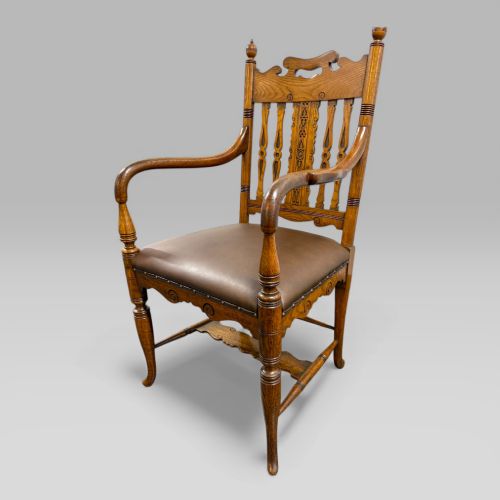
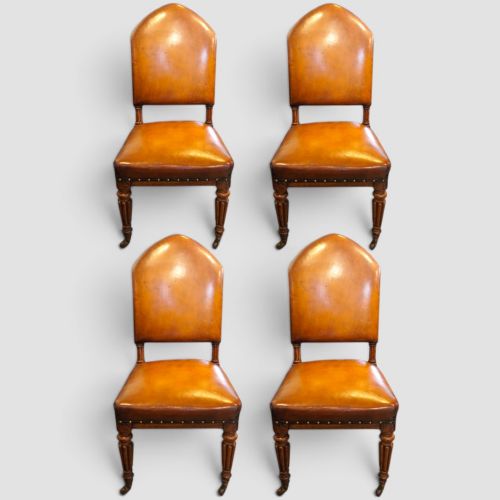
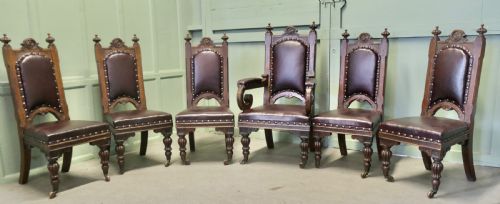
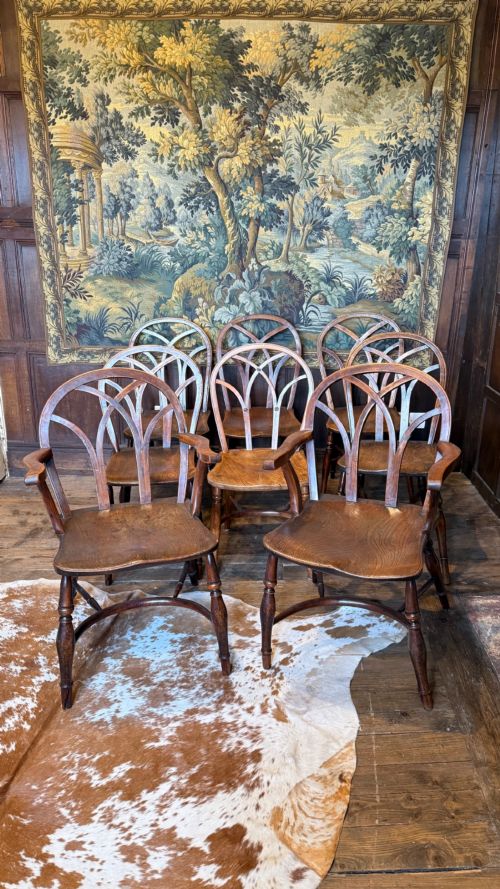
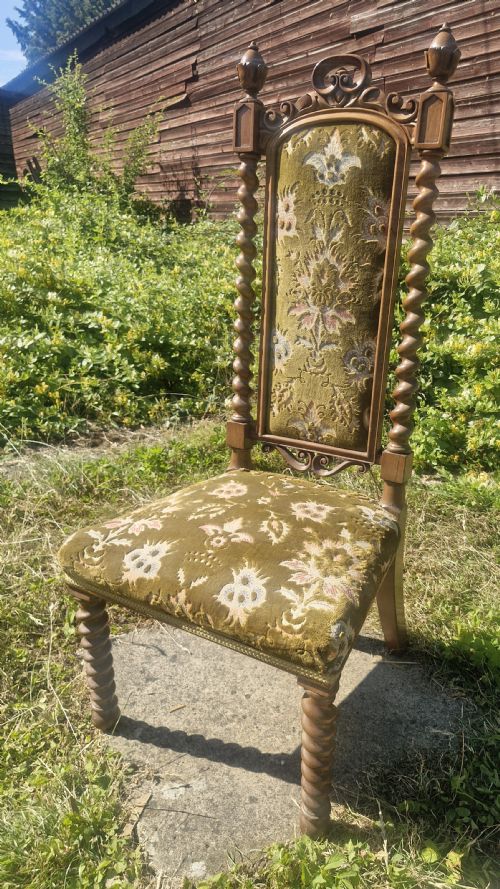
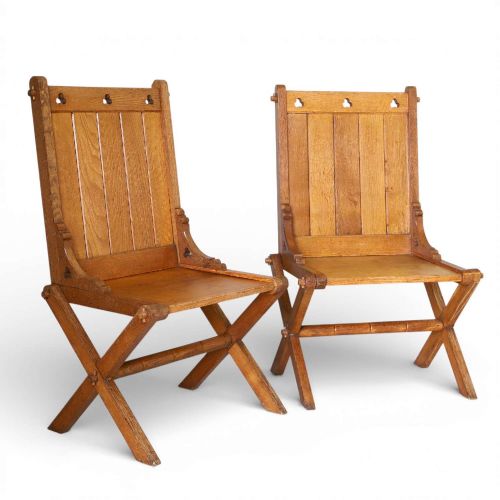
These gothic revival desk seat examples unite serious architectural timber frames with functional workspace comfort, offering a distinctive antique form for the study.
Gothic Revival Desk Seat
A gothic revival desk seat brings nineteenth-century architectural woodwork directly into the modern study, drawing on Victorian periods from eighteen-fifty to nineteen-thirty. Buyers encounter various seating configurations here, including revolving desk chairs, swivel models, and library armchairs designed with substantial proportions. Oak forms predominate, alongside occasional walnut, rosewood, and mahogany alternatives.
The aesthetic borrows heavily from medieval church and cathedral design, translating pointed arches, trefoil details, and high carved backs into functional furniture. While many pieces emerge from the broader Victorian era, related styles such as Arts and Crafts, Renaissance Revival, and Sheraton Revival occasionally appear among the listings. These seats serve equally well as dedicated desk chairs or commanding accent pieces in a traditional room.
Judging the range
Quality separates mass-produced utility seating from pieces bearing distinct stylistic attribution or master craftsmanship. The depth and crispness of the wood carving signal the maker's skill, particularly on high backs and pierced architectural details. Superior examples integrate complex mechanical elements, such as smooth revolving or swivel functions, seamlessly into heavy timber frames.
The choice of primary timber and secondary woods dictates the longevity and visual richness of the chair. Golden oak, figured walnut, and solid rosewood command greater interest than plain secondary timbers. Original leather upholstery and intact brass fittings elevate a piece above those requiring modern replacement materials.
Gothic Revival Desk Seat Retail Price Guide 2026
Typical asking prices for gothic revival desk seat among the pieces listed under this phrase on Sellingantiques today, from the lower quarter to the upper quarter. They describe what is for sale here now, not the wider market.
Several prayer chairs appear alongside desk seats, proving that nineteenth-century scholars needed divine intervention just as much as we do.
Gillows·Bruce James Talbert·Charles Bevan
The Gothic Revival Desk Seat Glossary
- Gothic Revival
- A nineteenth-century design movement inspired by medieval architecture, featuring pointed arches, trefoils, and heavy carved woodwork. This style transforms structural motifs from stone buildings into domestic furniture.
- Glastonbury Chair
- A specific nineteenth-century folding armchair design with a sloping back and X-frame base, frequently constructed in oak. It takes direct inspiration from medieval church seating.
- Curule
- An ancient chair shape featuring curved X-shaped legs that cross to form a supportive base. Renaissance Revival and Victorian makers adopted this form for authoritative armchairs.
- Puginesque
- A design style influenced by the architectural theories of Augustus Pugin, champion of the Gothic Revival. It prioritises structural truth and authentic medieval ornament.
- Revolving Desk Chair
- A seat fitted with a central pivot mechanism allowing rotation above a stable base. Nineteenth-century versions often combine heavy carved oak frames with early swivel hardware.
Gothic Revival Desk Seat: Frequently Asked Questions
What defines a gothic revival desk seat?
These seats combine nineteenth-century workspace utility with medieval architectural motifs such as pointed arches, carved trefoils, and heavy timber frames. They range from revolving library chairs to sturdy armchairs built in oak or walnut.
Most pieces date from the Victorian era, utilising dense hardwoods and often featuring leather upholstery suited for a study.
How do I care for antique leather upholstery?
Keep leather seats away from direct sunlight and heat sources to prevent the material from drying out or cracking over time. Gentle cleaning with appropriate leather balms preserves the suppleness of the original surface.
Inspect the buttoning and stitching periodically to ensure the underlying padding remains properly secured within the wooden frame.
Are these chairs comfortable for daily work?
Many nineteenth-century library and desk chairs were designed with generous proportions and supportive high backs for extended periods of reading or writing. Swivel and revolving mechanisms add practical mobility to heavy wooden frames.
Seat heights and depths vary compared to modern office furniture, so checking specific proportions ensures a proper fit for your desk.
How can I tell the period of these chairs?
Examine the timber selection, joinery methods, and secondary woods used in the construction of the frame and undercarriage. Victorian and nineteenth-century pieces often display hand-carved details and specific revival traits like Puginesque or Arts and Crafts influences.
Hardware such as brass swivel mechanisms or castors provides further clues regarding the manufacturing date and workshop origin.