


Gothic Revival Ceiling Fixture
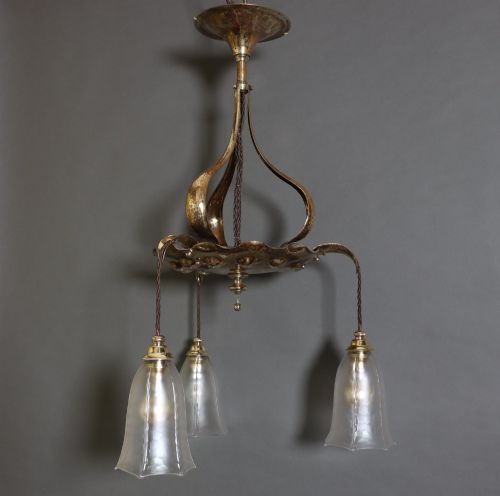
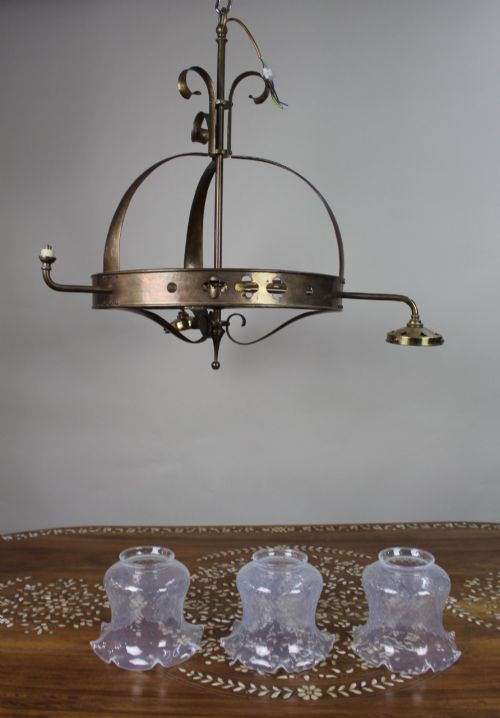
These gothic revival ceiling fixture examples bring historic architectural presence into domestic spaces through robust metalwork and period glass.
Gothic Revival Ceiling Fixture
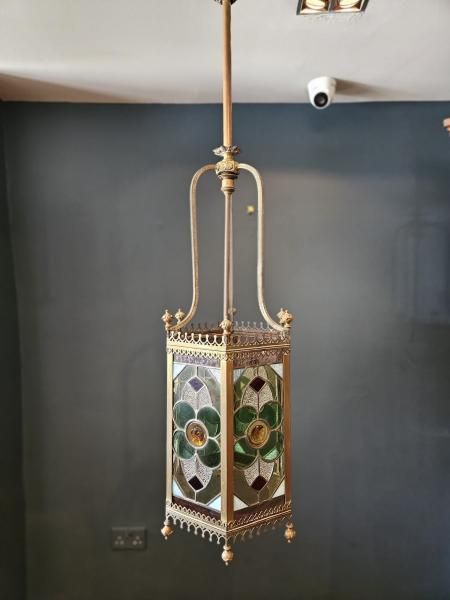
A gothic revival ceiling fixture comprises hanging lights, chandeliers, hall lanterns, and pendant lights rooted in nineteenth-century architectural styles. Pieces take the form of multi-branched gasoliers, gilt brass and bronze candelabra chandeliers, and leaded glass lanterns.
Buyers encounter examples spanning the Victorian and Edwardian eras, alongside related Arts and Crafts interpretations. Materials range from wrought iron and cast iron to brass, copper, and opalescent or coloured glass.
How they were made
Metalwork forms the structural core, utilising cast iron, forged wrought iron, brass, and bronze. Blacksmith-made pieces show hand-finished metal surfaces, while others employ gilt brass or copper components.
Diffusers and shades incorporate glass elements such as opalescent glass, leaded glass, and glass globes. These components work together to diffuse light within architectural lanterns and chandeliers.
Among the metalwork, a green man copper lantern brings a touch of medieval folklore to domestic lighting.
What varies in quality
Quality rests upon the execution of the metalwork and the integration of the glass elements. Heavier cast and forged elements show greater commitment to architectural scale than lighter pressings.
The sophistication of the design execution distinguishes simpler utilitarian lanterns from elaborate multi-branched chandeliers decorated with bronze and gilt brass.
The Gothic Revival Ceiling Fixture Glossary
- Gasolier
- A multi-branched ceiling light originally designed to burn gas. These fixtures often feature heavy brass construction adapted to hold burners.
- Hall lantern
- An enclosed hanging light designed for corridors and entrance halls. They typically utilise framed glass panels to protect the internal light source.
- Opalescent glass
- A milky, semi-translucent glass that diffuses light softly. It appears in shades designed to temper the brightness of early electric or gas bulbs.
- Leaded glass
- Glass pieces joined together with lead cames to form geometric patterns. This technique originates in medieval windows and defines gothic architectural lighting.
Gothic Revival Ceiling Fixture: Frequently Asked Questions
What periods do these fixtures date from?
The pieces span the nineteenth century, including Victorian and Edwardian periods, extending into the nineteen-twenties and thirties.
Designs draw directly upon medieval gothic architecture, reinterpreted through various industrial and decorative movements.
Where were these lights hung originally?
Lanterns and pendant lights typically occupied entrance halls, corridors, and high-ceilinged public spaces.
Chandeliers and gasoliers served as principal illumination sources for main reception rooms and formal interiors.
How do I identify the materials used?
Visible surfaces reveal metals such as brass, bronze, copper, wrought iron, and cast iron.
Glazing takes the form of plain glass globes, coloured glass, opalescent panes, or leaded construction.
Are these fixtures suitable for modern ceilings?
The hanging heights and weights vary considerably between simple pendant lights and large multi-branch chandeliers.
Ceiling fixings must accommodate the substantial weight of cast iron and heavy brass assemblies.