


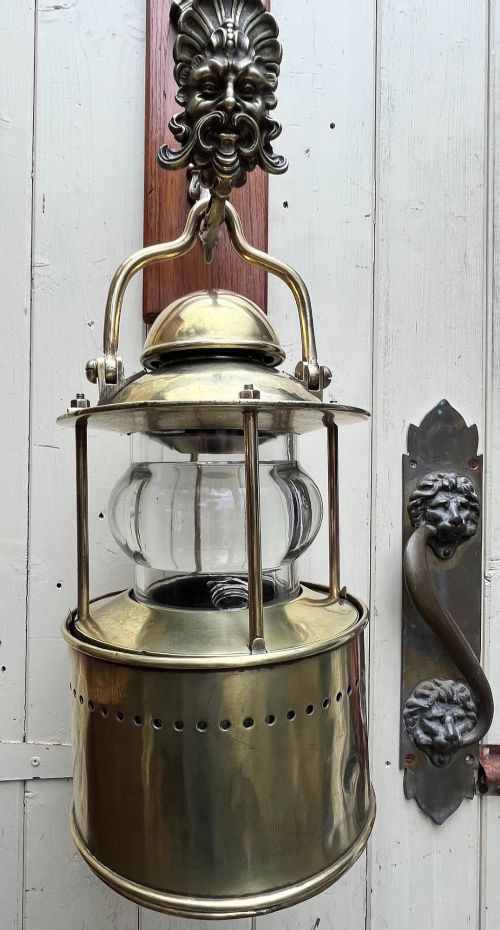


Gothic Porch Lantern
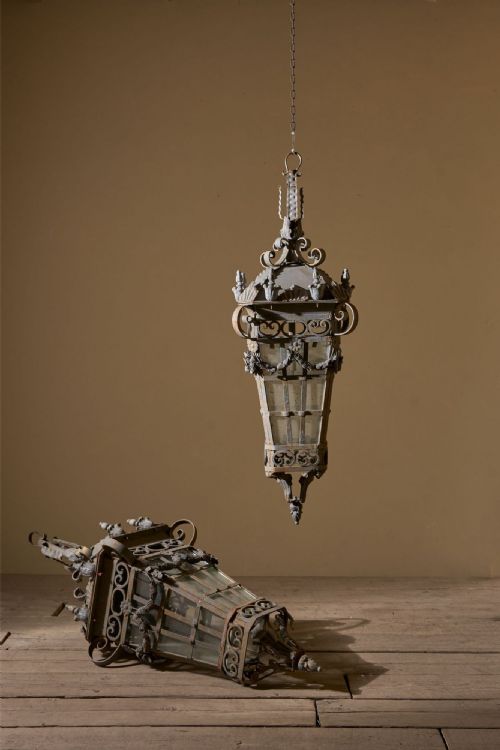
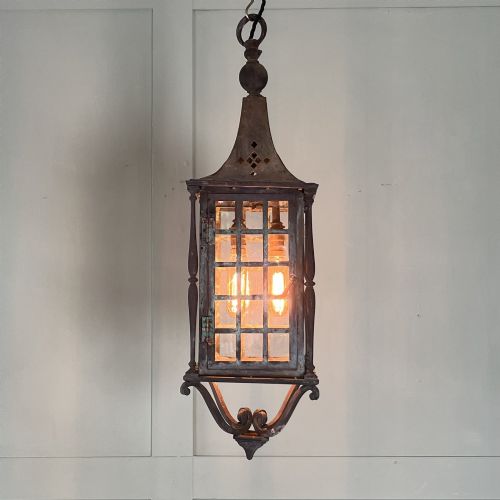
These gothic porch lantern examples bring architectural weight and filtered light to an entrance, forged in heavy metals and leaded glass.
Gothic Porch Lantern
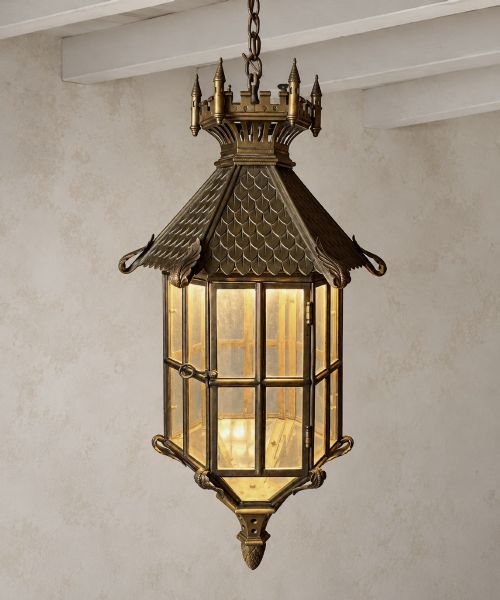
A gothic porch lantern provides substantial illumination outside a main entrance while establishing a strong architectural presence through period metalwork and glass. Collectors seek out these fixtures to anchor an entryway with historical character derived from nineteenth and early twentieth century designs.
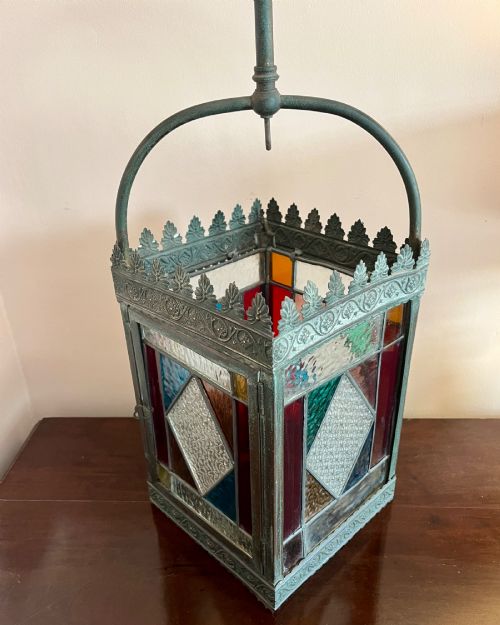
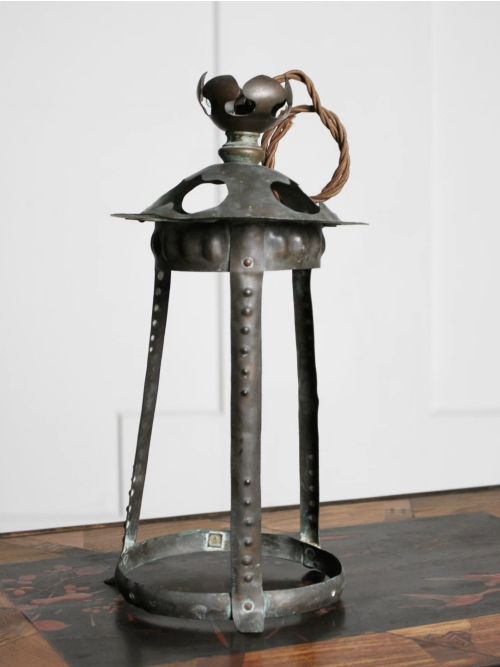
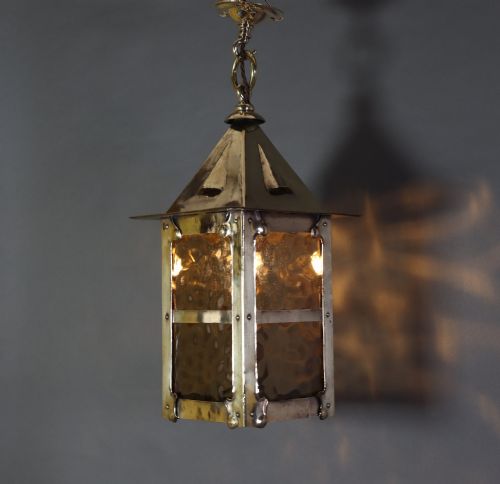
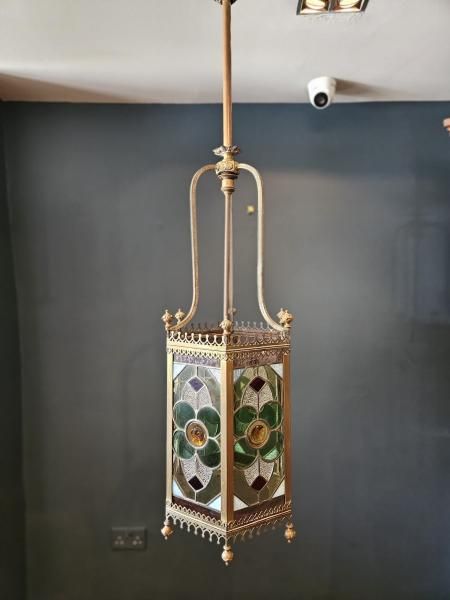
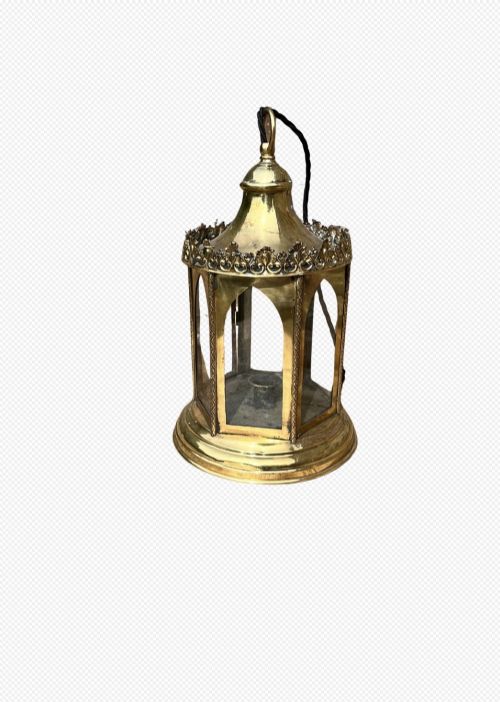
The selections here span variations like the Gothic Revival, Arts and Crafts, and Victorian styles, taking forms from hanging pendants to wall-mounted lanterns. These pieces utilise metals such as brass, copper, bronze, and wrought iron paired with leaded or plain glass panels.
Most examples originate from the Victorian and Edwardian eras, stretching from the late nineteenth century into the 1930s. Buyers frequently encounter French and English interpretations, ranging from hexagonal brass shapes to heavy iron frames.
Materials and Construction Methods
The structural framework relies on durable metals including brass, copper, bronze, wrought iron, and zinc, formed through casting, smithing, and fabrication. Blacksmiths and metalworkers shaped these materials into robust cages and crowns designed to withstand exterior elements.
Panels of glass and leaded glass are fitted into the metal frames to diffuse light from internal bulbs or early oil and gas burners. Details such as castellated crowns, shamrocks, and green man motifs are integrated directly into the metalwork during assembly.
Gothic Porch Lantern Retail Price Guide 2026
Typical asking prices for gothic porch lantern among the pieces listed under this phrase on Sellingantiques today, from the lower quarter to the upper quarter. They describe what is for sale here now, not the wider market.
Listings feature pieces spanning the 1880s through the 1930s, constructed primarily from brass, copper, and wrought iron with glass panels.
Distinguishing Quality in Period Lighting
Subtlety of proportion and weight separate exceptional examples from standard production pieces, particularly in the thickness of the cast bronze or hand-forged iron. Heavier gauge metals and complex geometric or hexagonal forms indicate a higher grade of manufacture.
The execution of decorative elements, from leaded glass joints to applied brass ornamentation, dictates the refinement of the lantern. Original patination and intact structural joinery further distinguish well-preserved examples.
The Gothic Porch Lantern Glossary
- Gothic Revival
- An architectural and decorative style drawing inspiration from medieval forms, pointed arches, and heavy masonry details. It heavily influences the crown work and window tracery patterns seen on these lanterns.
- Arts and Crafts
- A design movement valuing hand-craftsmanship, simple structural honesty, and traditional metalworking techniques. Pieces in this style often display visible rivets and unlacquered copper or brass surfaces.
- Leaded Glass
- Glass panes held together within a framework of lead cames to form intricate windows or lantern panels. This technique allows for geometric patterns and varied light refraction.
- Castellated Crown
- An upper decorative rim shaped like the battlements of a medieval castle. It adds vertical emphasis and architectural drama to the top of the lantern body.
- Hexagonal Form
- A six-sided body construction common in larger hall and porch lanterns. This geometry allows for wider light distribution and balanced visual weight.
Gothic Porch Lantern: Frequently Asked Questions
How do I install a vintage lantern?
Most hanging and wall-mounted pieces require professional rewiring and secure structural bracket mounting to support their heavy metal and glass weight.
Consult an electrician to ensure exterior fittings meet modern safety standards while retaining their period housings.
Are these lanterns suitable for outdoors?
Many of these fixtures originated as exterior porch lights or sheltered entrance lanterns built from weather-resistant copper, bronze, and iron.
Exposure levels should be assessed based on the specific metal finish and degree of sealing around the glass panels.
How do I identify the period?
Dating relies on examining the metal fabrication techniques, screw types, glass quality, and stylistic markers such as Arts and Crafts simplicity or Victorian ornamentation.
Comparing the overall weight and structural assembly helps differentiate nineteenth-century examples from later twentieth-century reproductions.
Can I clean the metal patina?
Original metal surfaces often display decades of oxidation and handling marks that contribute to their historical character.
Aggressive polishing should be avoided to preserve the natural aged tones of the brass, copper, and iron.