


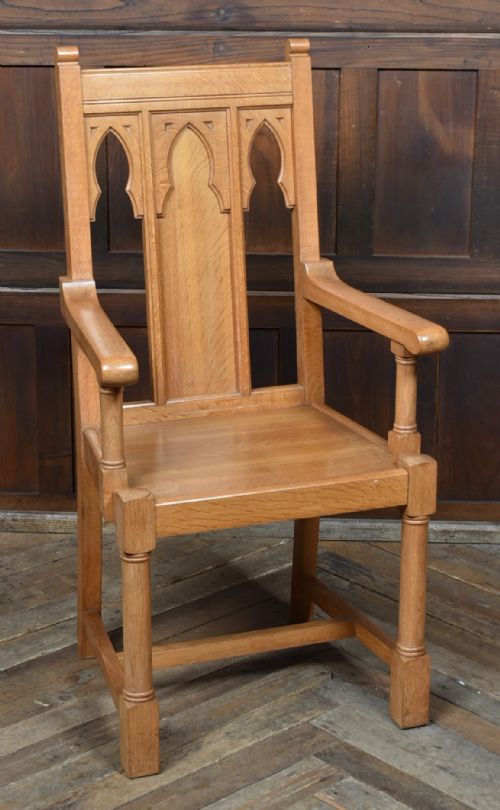

Gothic Oak Throne
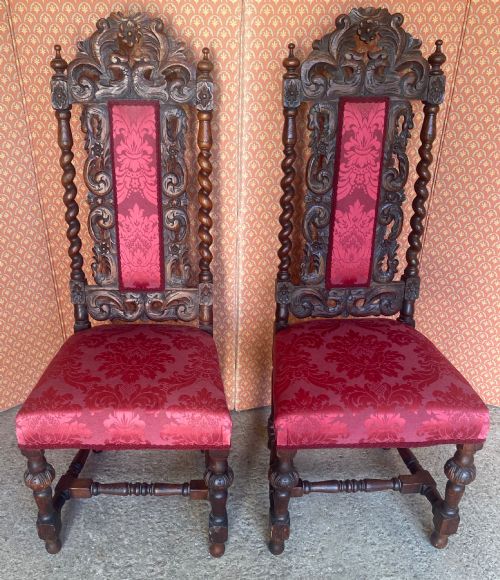
A gothic oak throne brings ecclesiastical scale and historic drama into a room through towering backs and heavy timber framing.
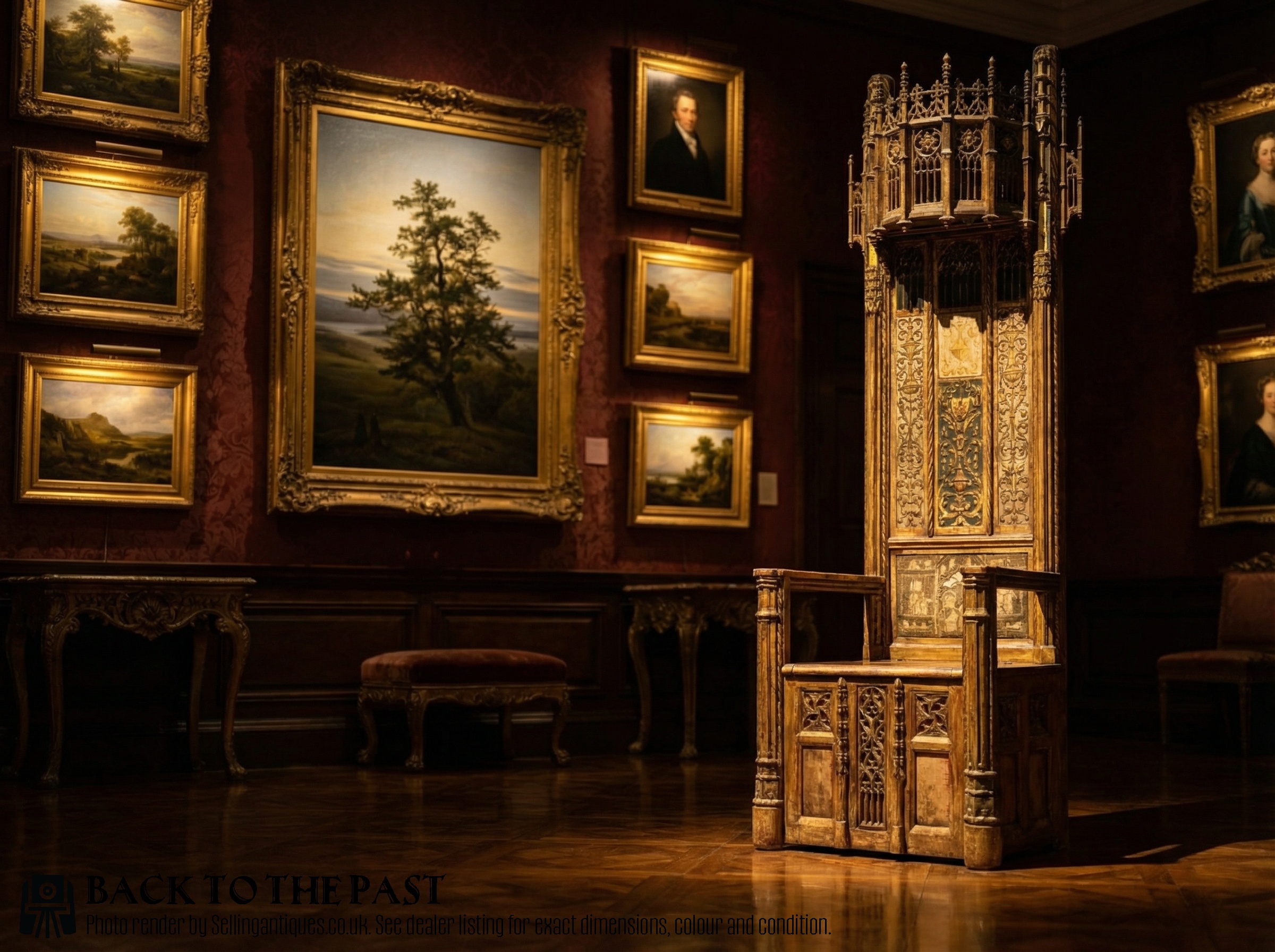
Gothic Oak Throne
A gothic oak throne search encounters substantial seating built to command attention, drawing heavily on ecclesiastical and medieval precedents.
Most pieces met here belong to the nineteenth century and the Victorian era, spanning revivals from the 1860s through to the early decades of the twentieth century.
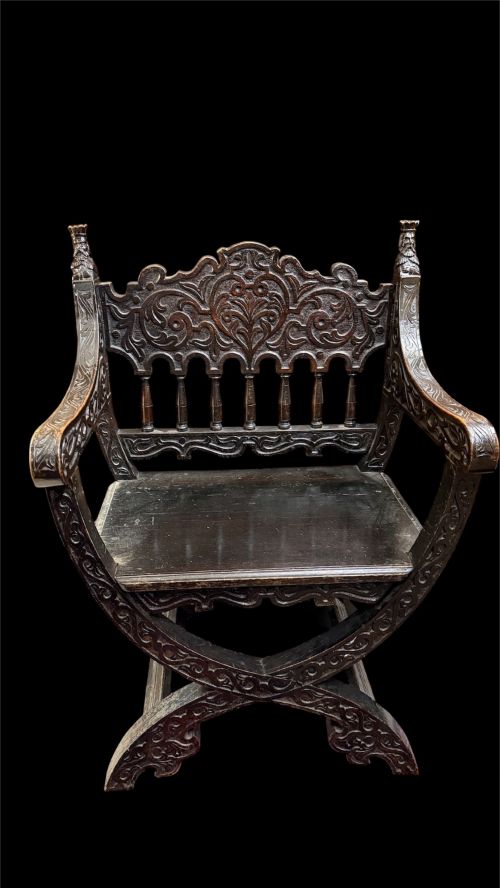
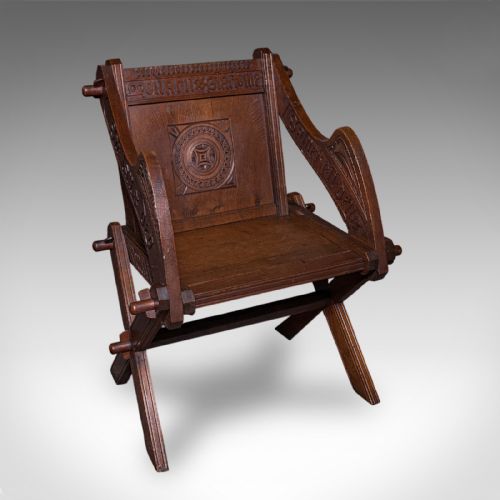
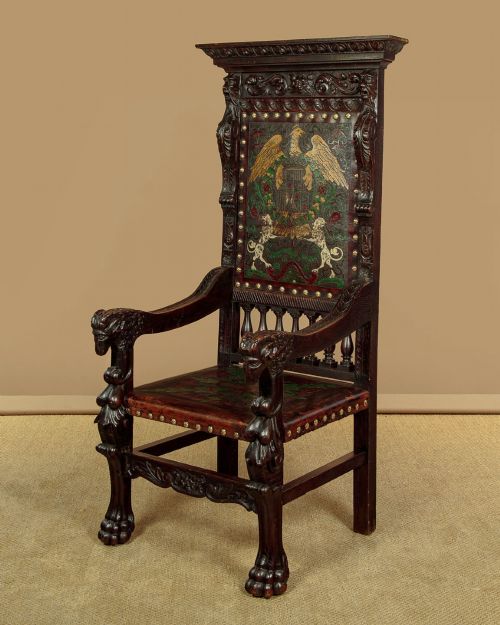
Forms range from high-backed wainscot and Glastonbury chairs to monumental bishop seats and monumental elbow chairs featuring elaborate heraldic or architectural carving.
Materials and Construction
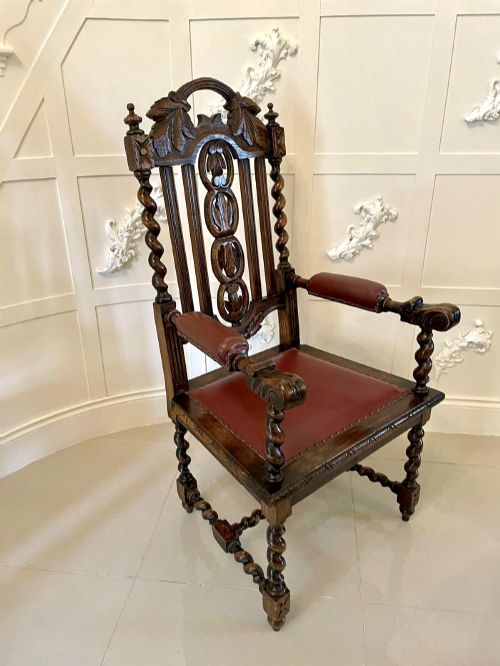
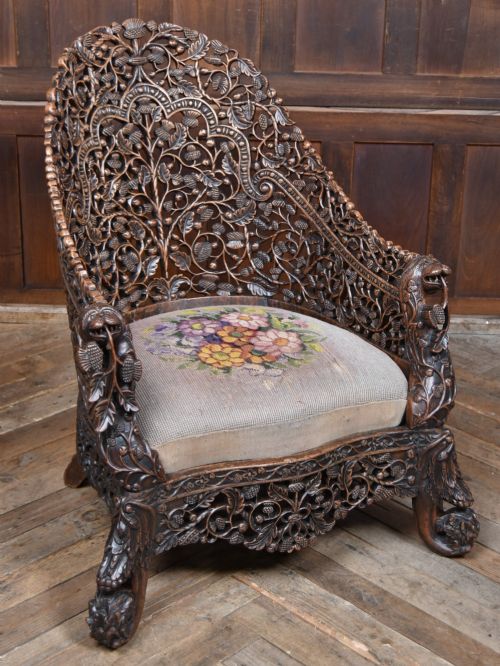
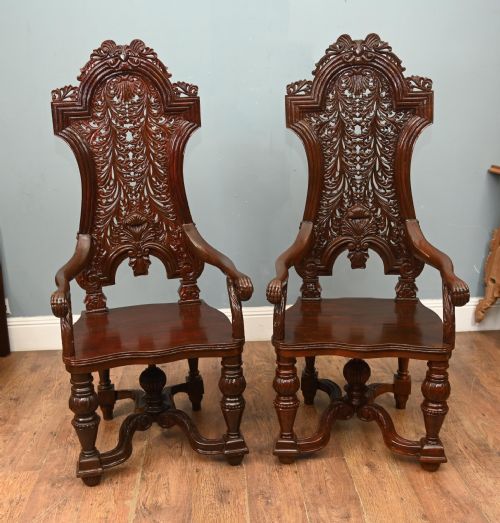
Makers relied primarily on solid oak, utilising its natural strength to support deep relief carving, tracery, and structural panels.
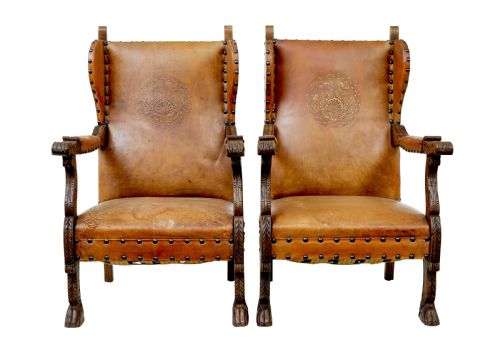
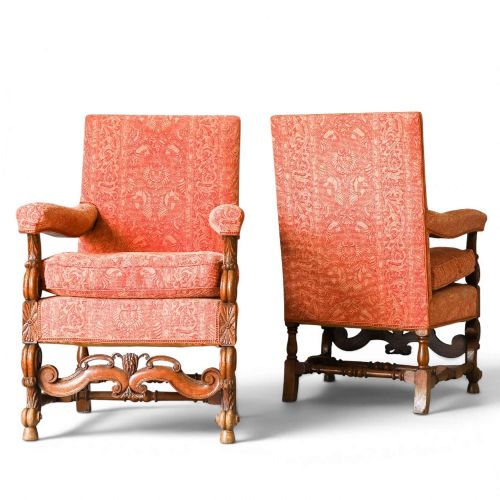
Upholstery elements incorporate embossed leather, tapestry, and buttoned fabric, often secured with brass studding along the timber edges.
Watch closely for carved wooden hounds peering out from the armrests of nineteenth-century hunting chairs.
The Measure of Craft
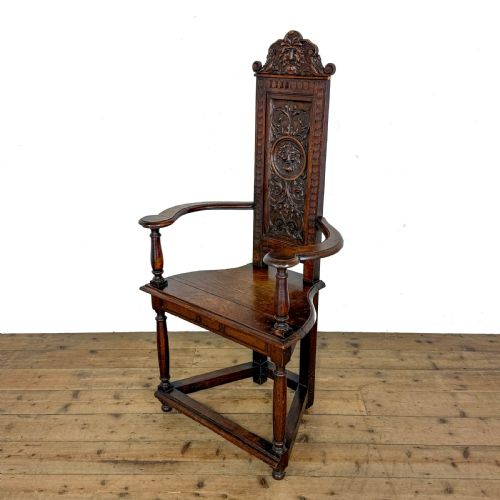
Depth and crispness of the hand carving separate standard production from exhibition pieces, where figures like hounds or Green Men emerge with distinct anatomical detail.
Proportion and timber selection dictate distinction, as denser golden oak and balanced structural symmetry reveal the ambition of the original workshop.
The Gothic Oak Throne Glossary
- Wainscot chair
- A heavy wooden armchair of sixteenth-century origin, characterised by a panelled back and solid seat.
- Glastonbury chair
- A portable X-frame folding chair with a sloping panel back and flat arms, associated with medieval church furniture.
- Caquetoire
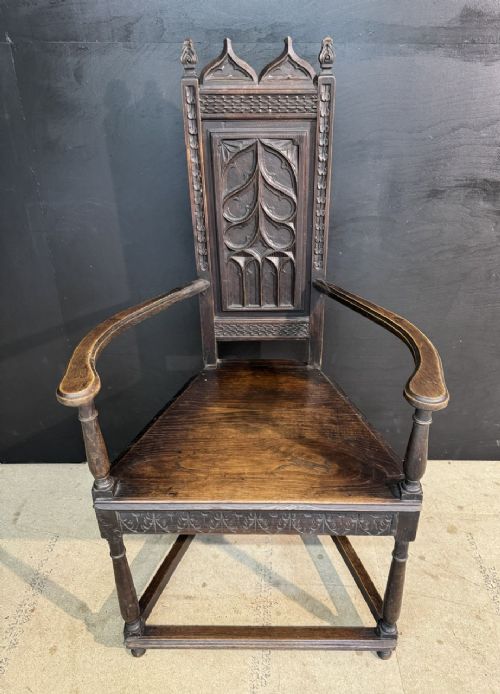
- A sixteenth-century style of conversational armchair featuring a narrow body designed to accommodate voluminous contemporary dress.
- Tracery
- Architectural stonework ornamentation adapted by cabinet makers into pierced wooden screens and chair back panels.
- Green Man
- A sculptural motif depicting a human face disgorged from foliage, frequently found in nineteenth-century revival carving.
Gothic Oak Throne: Frequently Asked Questions
Where were these chairs placed?
These imposing seats typically anchored the halls, libraries, or studies of nineteenth-century country houses rather than everyday parlours.
Their monumental scale and ecclesiastical detailing suited spaces designed to impress visitors with historical lineage and gravitas.
How do I identify a revival piece?
Nineteenth-century revival examples display the mechanical saw marks and standardised joinery typical of Victorian workshops alongside medieval motifs.
Comparing the timber patination and construction methods against genuine medieval fragments reveals the nineteenth-century date of manufacture.
Can I use one as a desk chair?
The rigid upright backs and fixed wooden arms make prolonged desk work challenging without additional cushioning.
They function best as statement accent seating in hallways or as reading chairs where posture is naturally constrained.
What defines the Gothic style here?
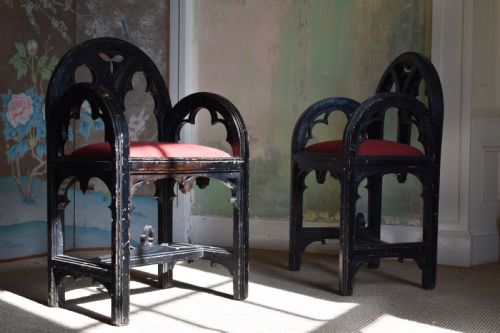
The aesthetic relies on pointed archways, trefoils, linenfold panelling, and vertical emphasis borrowed from medieval architecture.
Cabinet makers translated stone cathedral elements directly into heavy timber frames and high relief carvings.