
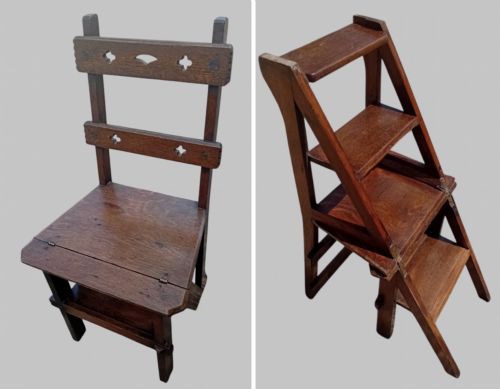


Gothic Oak Library Chair
A gothic oak library chair brings heavy architectural timber and serious historicism into a room, designed for scholars who valued both posture and presence.
Gothic Oak Library Chair
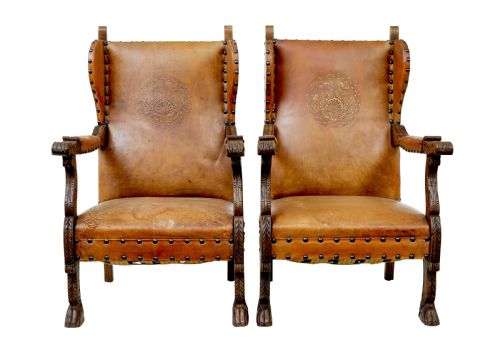
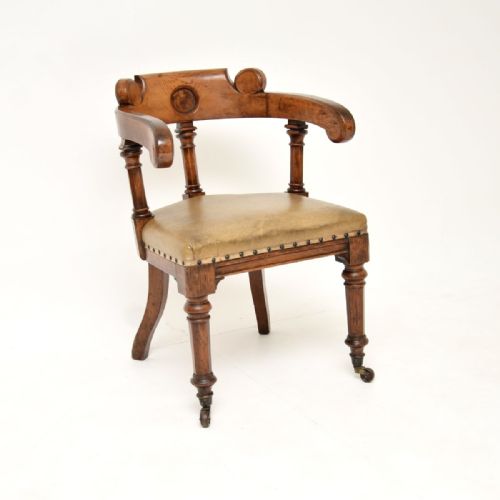
A gothic oak library chair combines heavy timber construction with medieval architectural motifs such as pointed arches, quatrefoils, and tracery. These seats were built for private studies, country houses, and institutional reading rooms during the nineteenth century.
The version most commonly met on this page dates from the Victorian period, often bearing the influence of the Gothic Revival or Arts and Crafts movements. Examples range from simple desk chairs to imposing throne chairs and clever metamorphic library steps that fold out flat.
Makers drew inspiration from earlier centuries, resulting in pieces styled after Jacobean, Elizabethan, and medieval woodwork. They served heavy domestic or institutional use, constructed to anchor a room rather than tuck away unnoticed.
How they were made
Cabinet makers relied primarily on solid oak, frequently golden or dark-waxed, to handle the deep chip carving, linenfold panels, and structural framework required by the gothic style. Brass studs, iron fixings, and exposed joinery provided both mechanical strength and decorative contrast.
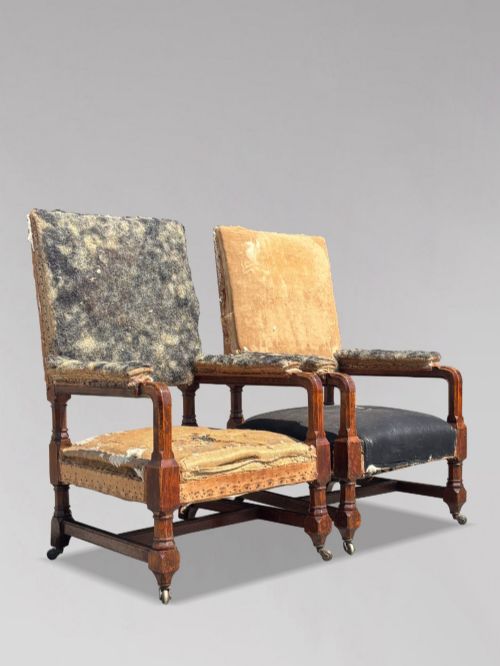
Upholstery materials included embossed leather, buttoned hides, plain fabric, and hessian, stretched over horsehair stuffing and secured with heavy brass tacking. Metamorphic library chairs incorporated concealed metal hinges and pivoting pivots to transform a seating unit into a set of library steps.
Listings feature oak combined with leather, brass, hessian, and iron across the nineteenth and twentieth centuries.
What varies in quality
The standard of carving dictates much of the distinction between ordinary workshop production and high-end commissions. Crisp, deeply undercut details on figures such as green men, hounds, or heraldic motifs separate ambitious cabinet work from mechanical factory output.
Timber selection and the integration of moving mechanical elements in metamorphic examples also divide the range. Dense, figured oak paired with well-engineered pivoting hinges maintains structural integrity through centuries of transformation.
Gillows·Bruce James Talbert·A.W.N. Pugin·Charles Bevan·Richard Hicks Bridgens
The Gothic Oak Library Chair Glossary
- Metamorphic chair
- A dual-purpose piece of furniture designed to transform from an armchair into a set of library steps. This clever mechanism allows users to reach high shelves without fetching separate ladders.
- Gothic Revival
- An architectural and decorative movement reviving medieval forms during the nineteenth century. It heavily influences the pointed arches and heavy timber framing seen on these chairs.
- Green man
- A sculptural face carved from foliage or emerging from leaves, frequently found on Victorian decorative woodwork. This motif symbolizes rebirth and spring.
- Cross-frame
- A structural form utilising intersecting diagonal stretchers or legs to support the seat. This configuration distributes weight evenly across heavy wooden joints.
Gothic Oak Library Chair: Frequently Asked Questions
How do metamorphic library chairs work?
These clever dual-purpose pieces use hidden brass hinges and pivoting joints to unfold the backrest and seat into a sturdy set of steps. They were built for accessing high bookshelves in private libraries.
Operating the mechanism requires lifting or sliding the wooden components carefully along their original tracks. They offer a practical space-saving solution for rooms with tall bookcases.
Where should I place a gothic oak library chair?
Their substantial proportions and dark wood tones suit studies, home libraries, or large hallways as statement pieces. They require sufficient floor space to display their carved details without crowding.
Pairing them with a substantial wooden desk or placing them beside a fireplace allows the heavy timber and leather to anchor the room's design.
How do I care for the leather upholstery?
Original leather benefits from gentle cleaning with a damp cloth followed by a neutral wax or leather feed to prevent cracking. Avoid placing the chair near direct heat sources that dry out the hide.
Preserving the surface maintains the character of embossed patterns and buttoned details accumulated over generations of use.
How can I tell a Victorian copy from an older piece?
Most examples originating from this category date to the nineteenth century during the height of the Gothic Revival. Tool marks, timber shrinkage, and assembly methods help distinguish nineteenth-century interpretations from genuine medieval furniture.
Examining the fixings, secondary woods, and wear patterns reveals whether the construction belongs to the Victorian era or later revivals.