
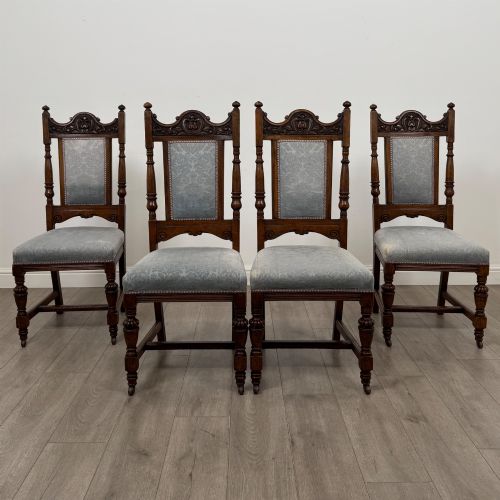
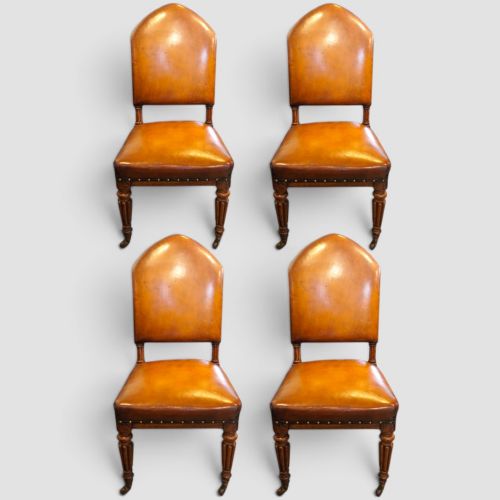
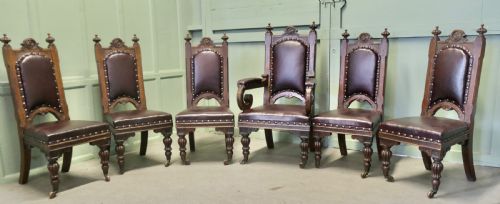
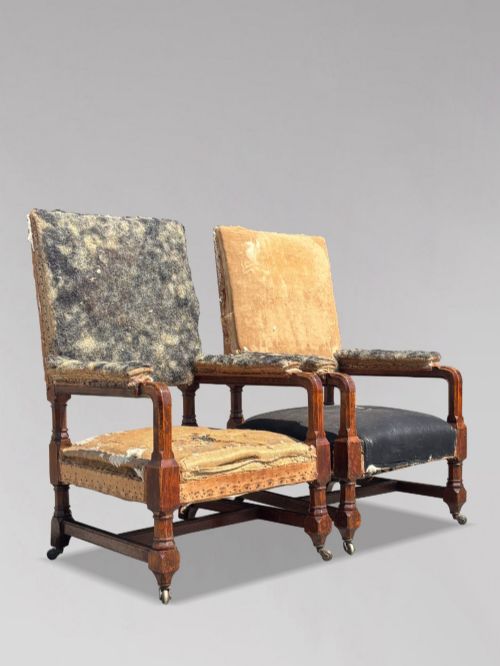


Gothic Oak Desk Chairs
Gothic oak desk chairs bring serious architectural presence to a study through pointed arches and sturdy timber.
Gothic Oak Desk Chairs
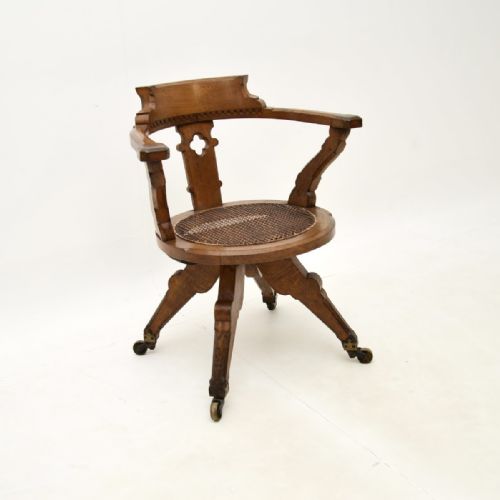
These pieces combine heavy timber frames with architectural motifs typical of the Gothic Revival and Arts and Crafts movements. Most examples date from the nineteenth century, ranging from swivel seats to solid armchairs designed for library and study use.
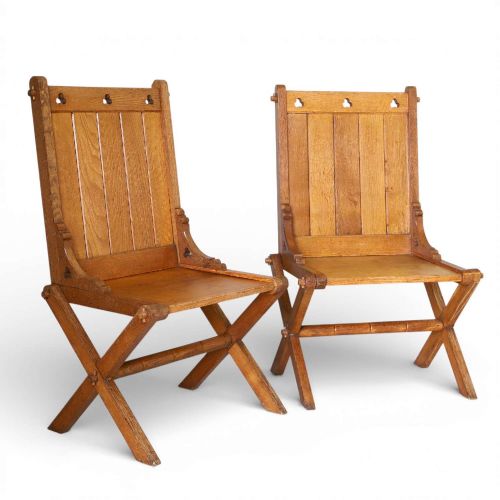
The form often incorporates high backs, carved trefoils, and X-frame structures influenced by historical designs. While many listings feature standard dining or library armchairs, dedicated desk variants include pivoting mechanisms and ergonomic proportions suited for writing.
Makers drew on medieval precedents, producing substantial seating that often utilises golden oak or dark polished timber. Buyers encounter both revolving office models and sturdy elbow chairs built to withstand heavy daily use.
Materials and Construction
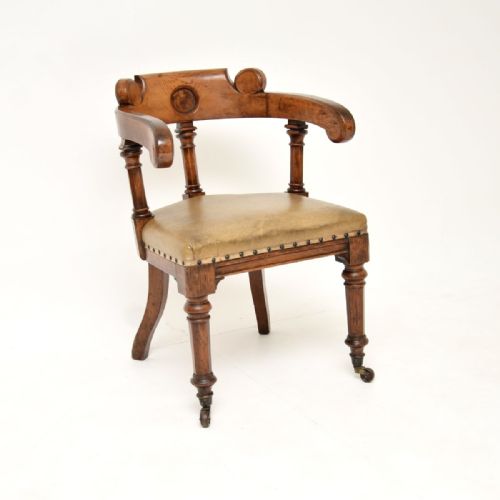
Makers relied principally on solid oak, selected for its density and grain, complemented by brass hardware for swivel mechanisms and castors. Upholstery materials include leather, velvet, and woven fabric, secured with brass studs along the seat rails.
Joinery methods involved traditional mortise and tenon frames, reinforced with deep relief carving and turned supports. Timber surfaces were polished or waxed to highlight the natural figuring of the oak.
Listings span the Victorian era, the Aesthetic Period, and the Arts and Crafts movement, predominantly featuring solid oak and leather.
Judging Quality and Execution
The distinction between standard production and top-tier workshop output lies in the depth and crispness of the timber carving. Superior pieces exhibit well-defined trefoils, pierced tracery, and harmonious proportions rather than mechanical repetition.
Mechanisms on rotating or swivel variants test the quality of original ironwork and brass fittings. Finer examples retain intact leather upholstery and stable frame construction without excessive timber shrinkage.
Gillows·Bruce James Talbert·S&H Jewell·A W N Pugin·Lamb Of Manchester·Charles Bevan
The Gothic Oak Desk Chairs Glossary
- Glastonbury chair
- A folding wooden armchair with an X-frame base and slanted back, popularised during the Gothic Revival. This form derives from ancient ecclesiastical prototypes.
- Trefoil
- A three-lobed decorative ornament resembling a clover leaf, frequently pierced through the back splats of Gothic seating. It forms a staple motif of medieval architecture.
- X-frame
- A structural base formed by intersecting diagonal members that provide stability to armchairs and desk seats. This configuration appears across Renaissance and Gothic Revival pieces.
- Carolean style
- A decorative manner dating from the seventeenth century featuring ornate carved scrollwork and turned legs, which later inspired nineteenth-century revival seating.
Gothic Oak Desk Chairs: Frequently Asked Questions
How do I identify a genuine nineteenth-century desk chair?
Examine the timber patination, joint construction, and the wear patterns on the oak surfaces. Nineteenth-century examples display hand-cut joinery and period specific hardware.
Check for maker stamps or attribution details beneath the seat frame or on the iron swivel mechanism where applicable.
Were these chairs originally made for offices?
Many sturdy oak chairs with swivel bases or revolving actions were built for professional libraries, studies, and administrative rooms. Other robust armchairs served as comfortable seating for reading and writing.
Makers adapted medieval ecclesiastical designs to suit the domestic and professional requirements of the Victorian period.
How should I care for the leather and oak?
Feed the leather periodically with a suitable conservation wax or balm to prevent cracking while preserving the original surface tone. Clean the solid oak timber using a soft cloth and neutral beeswax.
Keep the seating away from direct heat sources and strong sunlight to protect both the wood and upholstery from drying out.