





Gothic Hall Settle
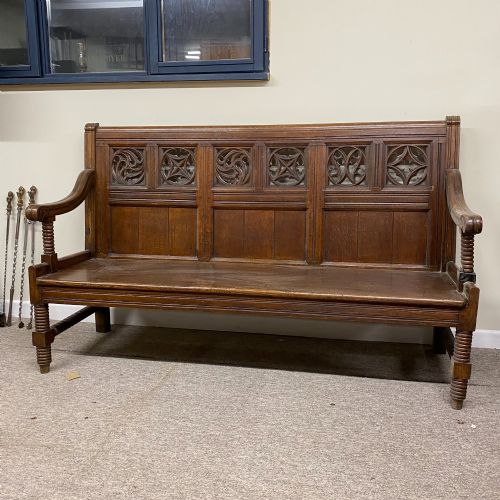
A gothic hall settle brings robust architectural presence and historic ecclesiastical gravity into an entranceway.
Gothic Hall Settle
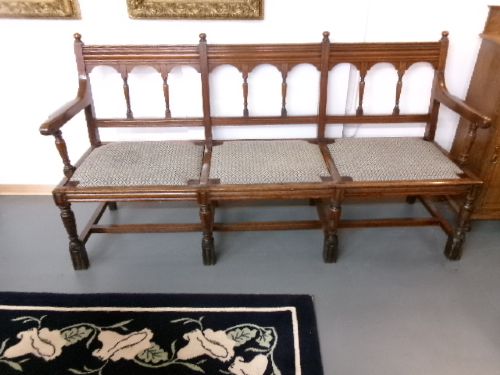
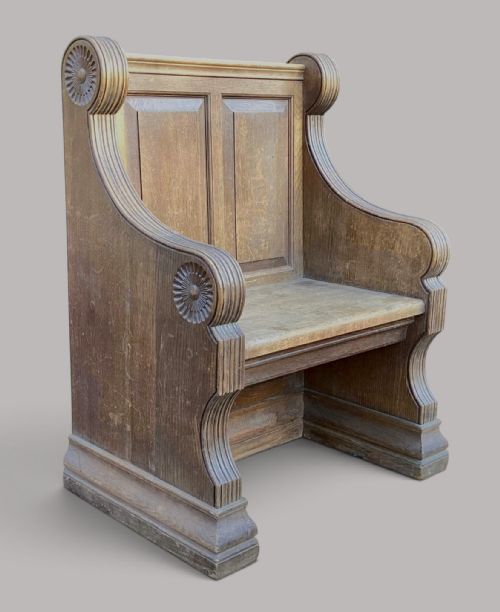
A gothic hall settle is a substantial wooden seating form designed for entranceways and reception halls, drawing heavily upon medieval and architectural motifs. When exploring a selection of these pieces, a buyer is most likely to encounter nineteenth-century interpretations rendered in dark timber.
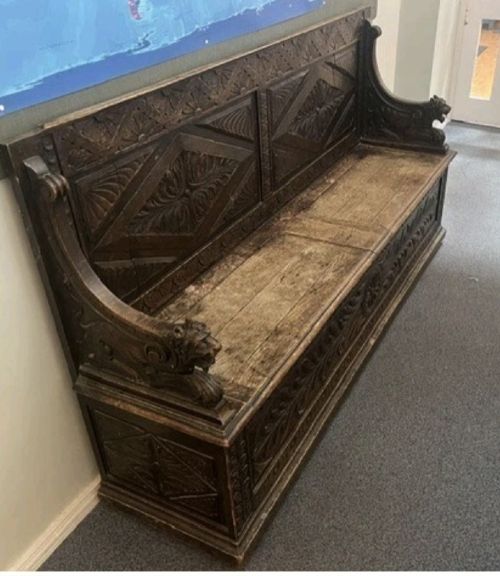
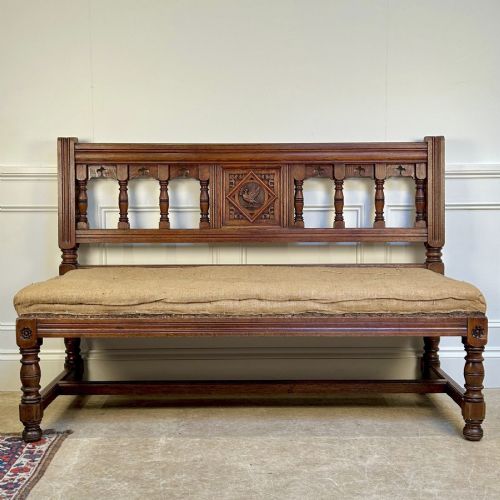
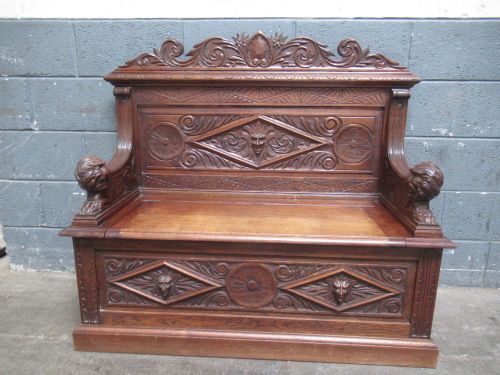
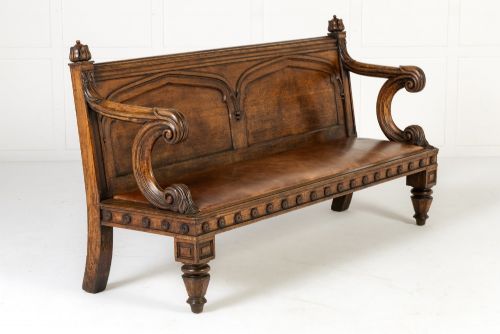
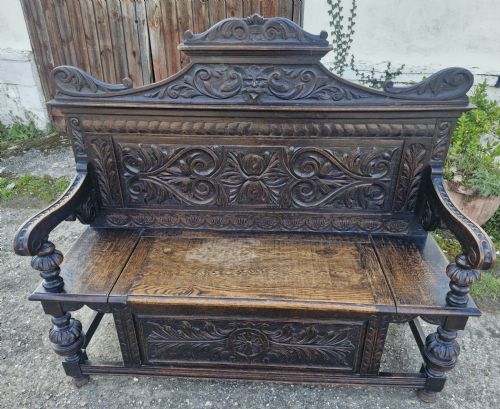
The inventory on this page ranges from simple panelled benches to elaborate seats featuring high backs, lift-up storage compartments, and figural carving. Pieces span from the mid-nineteenth century through to the early twentieth century, incorporating revival styles such as Victorian Gothic, Jacobean, and Reformed Gothic.
These settles function primarily as architectural statements within a hall, often serving double duty as monks benches with conversion tabletops or incorporating enclosed storage beneath the seat. Their origins sit firmly within domestic revivals of historic British and European joinery traditions.
Materials and construction methods
Solid oak serves as the foundational material for the vast majority of these settles, frequently selected for its deep grain and capacity to take heavy, high-relief carving. Workshops also utilised walnut, burr elm, and occasional secondary timbers for specific panels and structural supports.
Joinery relied upon traditional pegged mortise and tenon construction to ensure rigidity across large, high-backed frames. Carvers embellished the structural framework with linenfold panelling, tracery, architectural mouldings, and figurative details such as Green Man masks.
Surface details often include iron hardware, brass accents, and occasionally upholstered elements in leather, fabric, or hessian. The construction prioritises structural permanence and heavy visual weight suited to grand entrance spaces.
Gothic Hall Settle Retail Price Guide 2026
Typical asking prices for gothic hall settle among the pieces listed under this phrase on Sellingantiques today, from the lower quarter to the upper quarter. They describe what is for sale here now, not the wider market.
Listings feature solid oak and walnut construction across nineteenth-century Victorian Gothic revival, Jacobean, and Edwardian aesthetic movements.
Distinctions in craftsmanship
Quality in a gothic hall settle rests upon the depth, crispness, and articulation of the carved ornamentation. Pieces executed by named workshops or master cabinetmakers display proportion and relief work that remain sharp and balanced across the entire architectural facade.
The integrity of the timber selection dictates the overall presence of the bench, with dense, figured oak and stable burr elm creating superior surfaces. Inferior examples may rely on flat, mechanical stamping rather than hand-chiselled depth within the panels and mouldings.
GIllows
The Gothic Hall Settle Glossary
- Settle
- A wooden bench with a high back, solid armrests, and frequently a box base for storage beneath the seat. It historically provided shelter from drafts in large, open halls.
- Monks bench
- A versatile convertible form featuring a hinged back that folds down flat over the armrests to transform the seat into a table. This dual-purpose design gained immense popularity during Victorian revival periods.
- Green Man
- A sculptural architectural motif depicting a human face emerging from or entwined with foliage and vines. It symbolises rebirth and appears frequently in nineteenth-century Gothic revival woodwork.
- Reformed Gothic
- A nineteenth-century design movement promoting simpler, structural honesty and flat-surface ornamentation rather than elaborate medieval imitation. It often combined oak with contrasting timbers or subtle geometric inlays.
- Linenfold
- A style of wood panelling carved in low relief to resemble folded vertical lengths of fabric. It was a staple of medieval joinery revived by nineteenth-century cabinetmakers.
Gothic Hall Settle: Frequently Asked Questions
Where should I place a settle?
These large benches suit spacious entrance halls, wide corridors, or reception rooms where their high architectural backs can anchor the room. They require sufficient floor space to be appreciated fully as freestanding focal points.
Positioning them away from direct heat sources protects the dry historic timber and applied carving from warping or splitting over time.
How do I use a monks bench?
To convert the seat into a table, simply unlatch or tilt the panelled backrest forward until it rests horizontally across the sturdy arm supports. This ingenious mechanism turns a hallway bench into a serviceable table surface.
Ensure any items are cleared from the top before lifting the backrest back into the vertical seating position.
How do I date an oak settle?
Dating relies on examining the tool marks, construction joints, timber oxidation, and the specific revival style employed by the maker. Nineteenth-century interpretations often mix Gothic tracery with Victorian proportions and machine-assisted preparation.
Comparing the carving techniques and panel assembly methods against documented period examples helps confirm whether a piece originates from the Victorian era or a later twentieth-century revival.
How do I care for historic oak?
Maintain the wood by applying appropriate natural waxes sparingly to nourish the dry grain and preserve the deep dark patina. Avoid modern silicone polishes that build up sticky residues on carved surfaces.
Keep the piece away from rapid temperature fluctuations and direct sunlight to safeguard the stability of the solid panels and historic joinery.