

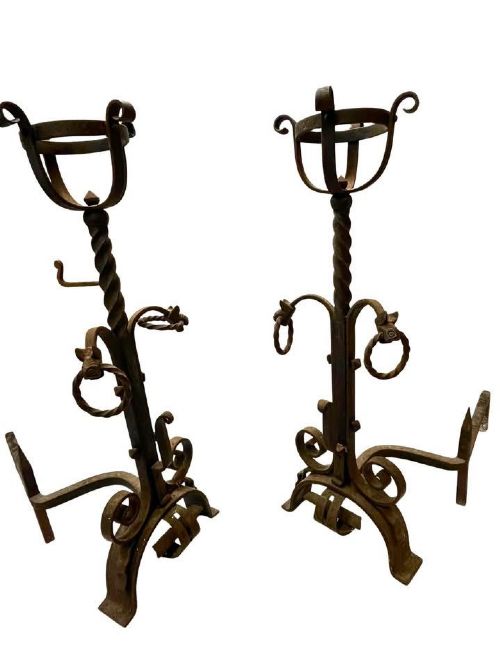


Gothic Fire Basket
A gothic fire basket brings structural ironwork and medieval architectural character directly into the hearth.
Gothic Fire Basket
A gothic fire basket provides an open hearth focal point, combining functional log storage with period architectural motifs. You encounter pieces spanning the Victorian era, the Edwardian period, and the early twentieth century.
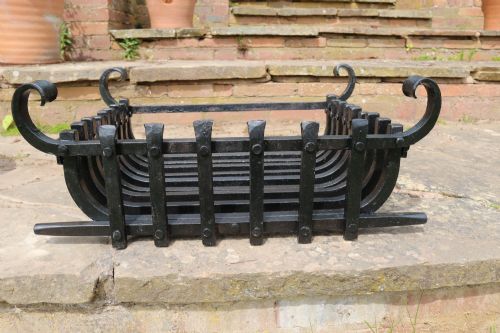
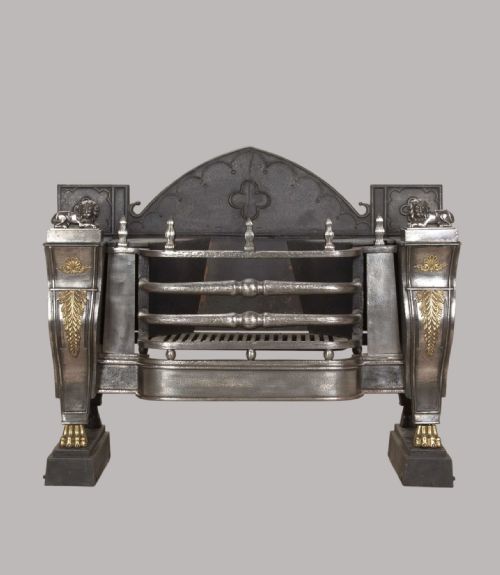
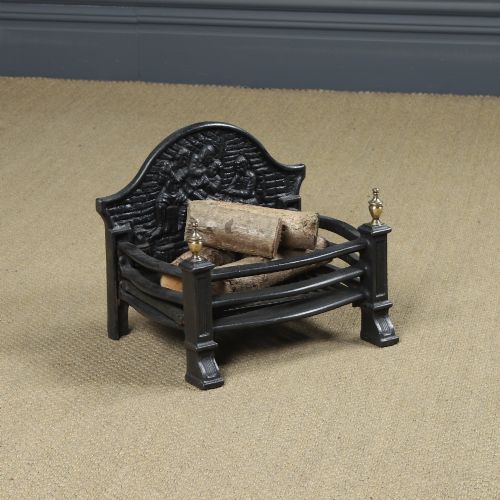
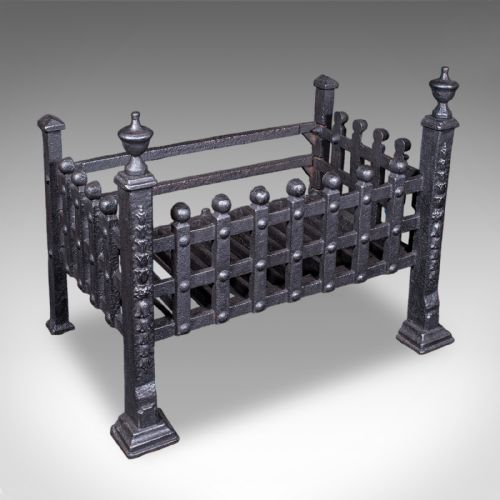
The form appears as freestanding grates, inglenook baskets paired with andirons, and complete fireplace sets with integrated ash pans and decorative backs. Styles range from strict Gothic Revival and medieval interpretations to Arts and Crafts designs.
Most examples originate from English workshops and utilise sturdy metal construction suited for containing coal or wood fires. These grates serve as both practical heating elements and decorative centerpieces for period interiors.
Materials and construction methods
Makers utilised wrought iron and cast iron as the primary structural materials, frequently combining both metals within a single grate to balance rigidity and ornamental detail. Cast iron allowed for heavy decorative backs and motifs, while wrought iron provided flexible strength for bars and fire irons.
Brass elements occasionally appear as highlights on handles, finials, or mounts to contrast with the dark iron surfaces. Firebrick lines the internal chambers of certain grates to insulate the surrounding metal and retain heat effectively.
Forged iron components display hand-worked textures, riveted joints, and traditional blacksmith techniques characteristic of the Arts and Crafts and Gothic Revival movements.
Gothic Fire Basket Retail Price Guide 2026
Typical asking prices for gothic fire basket among the pieces listed under this phrase on Sellingantiques today, from the lower quarter to the upper quarter. They describe what is for sale here now, not the wider market.
Keep an eye out for dragon motifs lurking on Edwardian fire furniture.
Assessing quality in period grates
Quality rests in the weight of the metal and the crispness of the cast or forged architectural detail. Superior examples show purposeful hand-working in wrought iron members and deeply defined medieval or classical motifs rather than soft, mass-produced surface casts.
Proportion and scale distinguish finer grates, particularly those designed for large inglenooks alongside matched andirons. The integration of functional elements like ash pans and decorative backs demonstrates thoughtful design and superior craftsmanship.
The Gothic Fire Basket Glossary
- Fire basket
- A metal container designed to hold logs or coal within an open fireplace, allowing air circulation from beneath.
- Andirons
- Supporting metal fire dogs placed on either side of a hearth, historically used to hold logs or support a fire basket.
- Inglenook
- A large, recessed fireplace space designed to accommodate a substantial fire basket and seating.
- Wrought iron
- Iron that has been heated and shaped with tools by a blacksmith, showing distinctive surface texture.
- Firebrick
- A block of refractory ceramic material utilised to line fireboxes and withstand high temperatures.
Gothic Fire Basket: Frequently Asked Questions
How do I install a fire basket?
Fire baskets simply sit within an existing open fireplace hearth, often paired with matching andirons to elevate the structure.
Ensure the hearth and chimney have been inspected and swept for safe burning before placing the heavy iron grate inside.
Can I burn real wood in these?
Most of these pieces are built from heavy cast and wrought iron designed to contain solid fuel fires.
Check whether the specific grate includes firebrick lining or a sturdy ash pan to manage heat and debris effectively during use.
What is the difference between cast and wrought iron?
Cast iron is poured into moulds to create heavy, rigid forms with detailed decorative patterns and motifs.
Wrought iron is hammered and bent by hand into structural bars and scrolls, showing visible tool marks and fibrous textures.
How do I date a gothic fire basket?
Dating relies on stylistic markers from periods like the Victorian Gothic Revival, Edwardian era, or Arts and Crafts movement.
Construction techniques, such as hand-riveted wrought iron versus later standard fastenings, also help indicate the manufacturing era.