
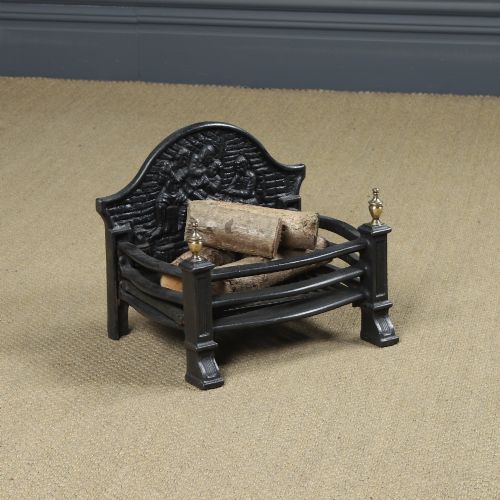
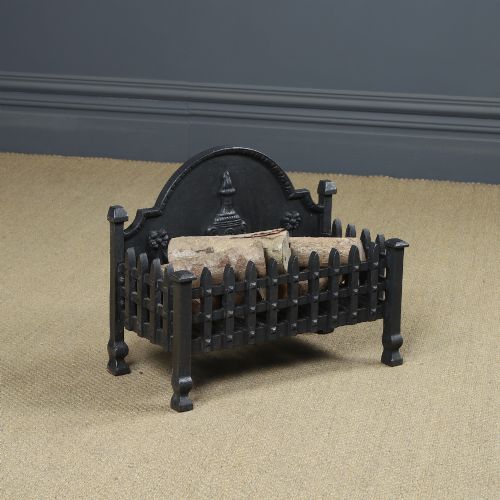
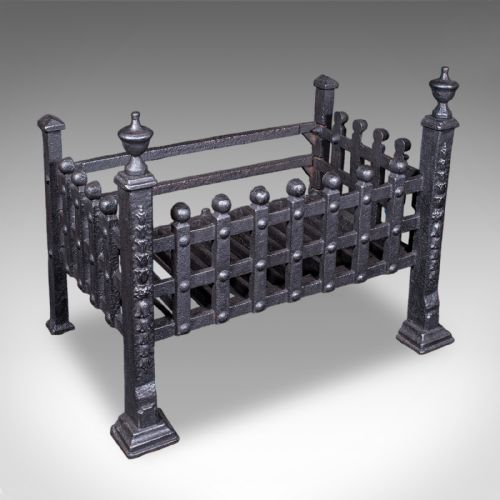
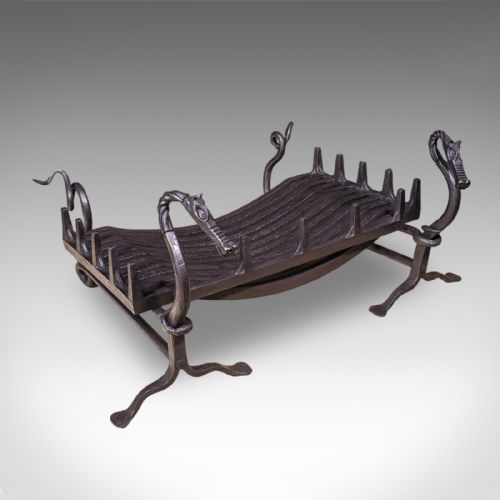
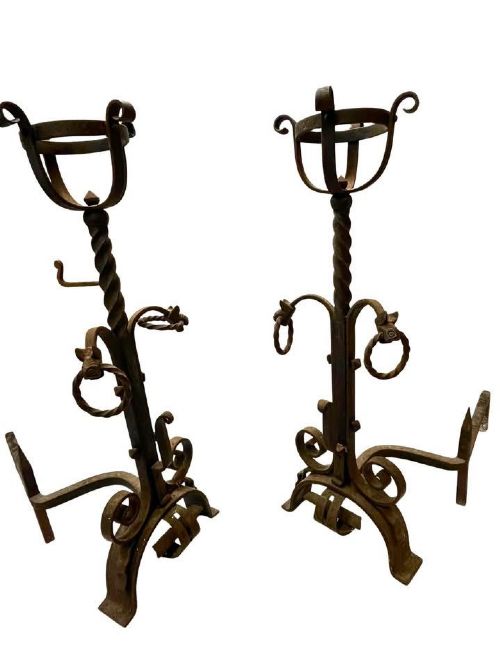


Traditional Iron Fireplace Basket
These traditional iron fireplace basket designs offer heavy metal construction and open grates for coal or wood fires.
Traditional Iron Fireplace Basket
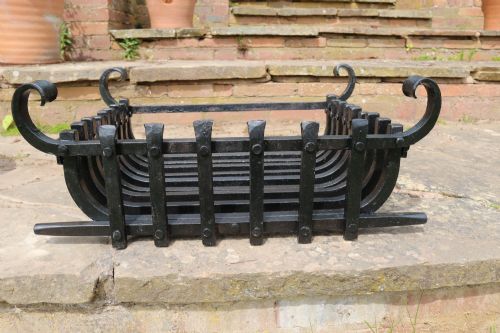
A traditional iron fireplace basket serves as an open hearth container for burning solid fuel, appearing in forms such as hob grates, register grates, and fire baskets paired with andirons. These items span periods from the Georgian and Regency eras through the Victorian, Edwardian, and Arts and Crafts movements.
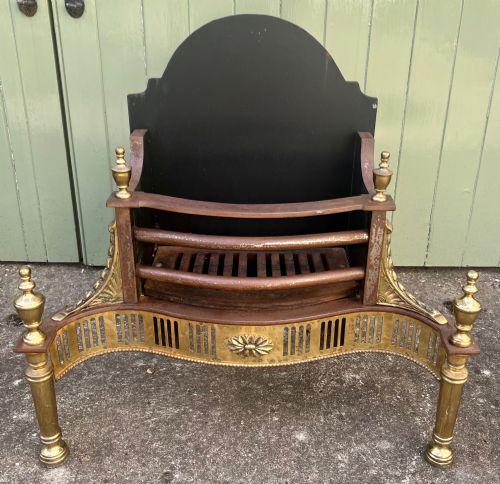
The versions met most frequently on this page combine cast iron bodies with wrought iron elements, occasionally incorporating brass details, firebricks, or accompanying log bins and fireplace sets.
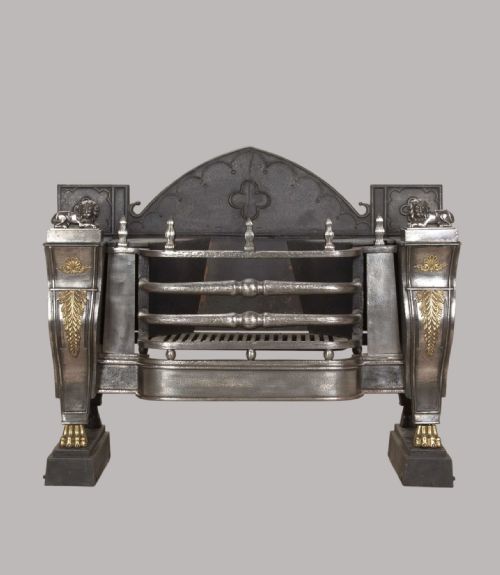
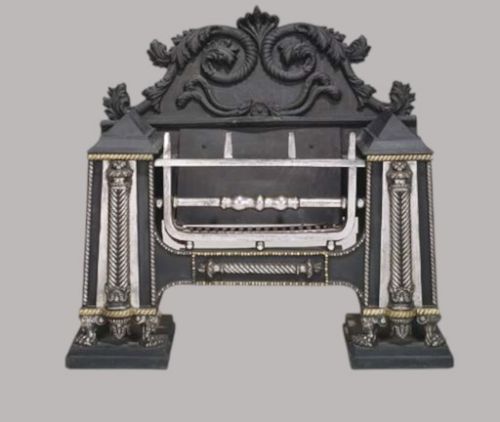
Objects range from small inglenook grates to heavy, large freestanding units styled in Gothic Revival, Neo-Classical, and Adam aesthetics.
Design and weight
Quality separates through the heft of the metalwork and the precision of the casting, where superior examples display sharp decorative relief, thick iron sections, and substantial weight.
The integration of mixed metals, such as cast iron combined with brass mounts or wrought iron scrolls, distinguishes standard utility grates from finer decorative models influenced by Regency and Adam styles.
Listings feature items spanning the Georgian, Regency, Victorian, Edwardian, and Arts and Crafts periods, constructed from cast iron, wrought iron, brass, copper, and oak.
The Traditional Iron Fireplace Basket Glossary
- Hob grate
- A type of fireplace grate featuring raised side plates, or hobs, used for warming kettles or pots.
- Andirons
- Supporting metal bars or fire dogs placed horizontally in a hearth to hold logs above the floor of the fireplace.
- Register grate
- A fireplace grate fitted with a movable plate or damper to control the draught and smoke flow up the chimney.
- Fire back
- A heavy iron plate placed against the back wall of a fireplace to reflect heat forward and protect the masonry.
Traditional Iron Fireplace Basket: Frequently Asked Questions
How do I choose the right size?
Measure the width, depth, and height of your fireplace opening carefully before selecting a basket. Traditional iron fireplace basket units come in various proportions, from small inglenook models to large freestanding grates.
Ensure adequate clearance around the sides and back for proper airflow and safety within the hearth recess.
Can I burn real wood in them?
Most of these traditional iron fireplace basket pieces are designed to hold solid fuels such as coal or logs. Cast and wrought iron withstand high temperatures effectively during normal use.
Check whether your specific basket includes a firebrick lining or sits upon andirons to support your chosen fuel type.
How do I clean cast iron?
Remove ash and debris regularly with a soft brush to prevent moisture retention and corrosion. Avoid harsh chemical cleaners that can strip the dark metal finish.
Apply a light coating of grate polish or specialised oil periodically to maintain the dark appearance of the iron.
How do I identify the period?
Examine the decorative motifs, such as Neo-Classical swags, Gothic Revival pointed arches, or the clean lines typical of Arts and Crafts pieces. Manufacturing techniques also indicate age, with hand-hammered wrought iron differing from later machine-finished components.
Cross-reference stylistic details like brass mounts and overall proportions with documented examples from Georgian, Victorian, and Edwardian eras.