


Gothic Desk Chair
A gothic desk chair brings architectural carving, pointed arches and sturdy timber straight into the study.
Gothic Desk Chair
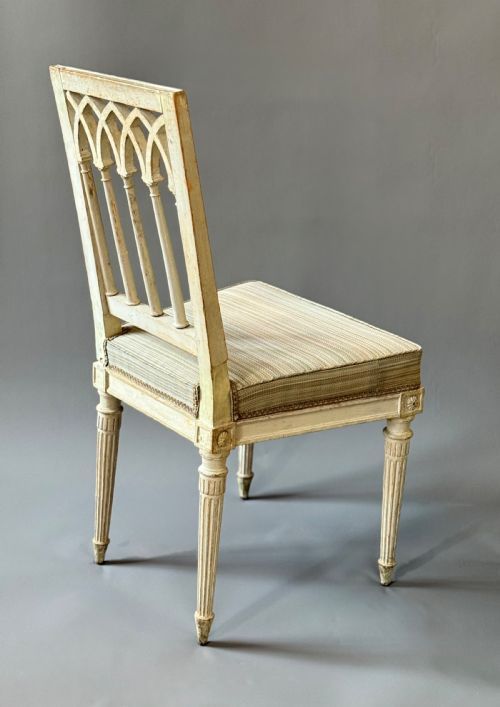
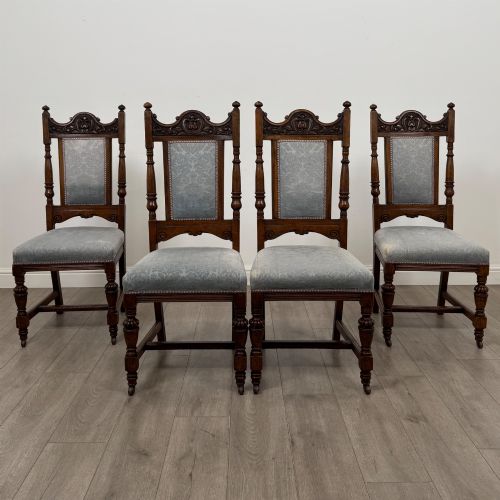
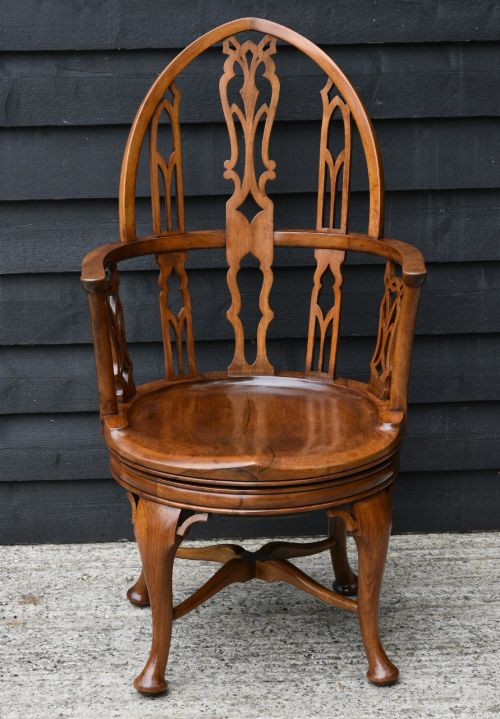
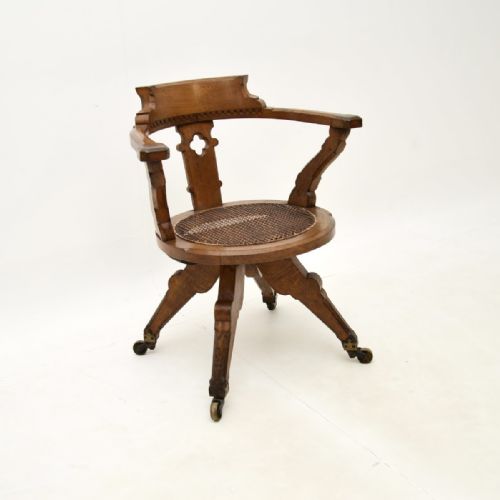
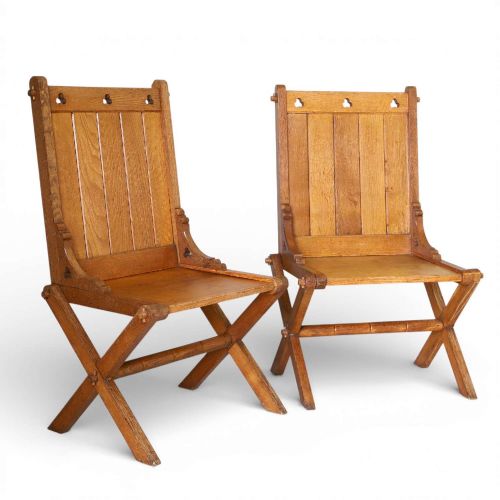
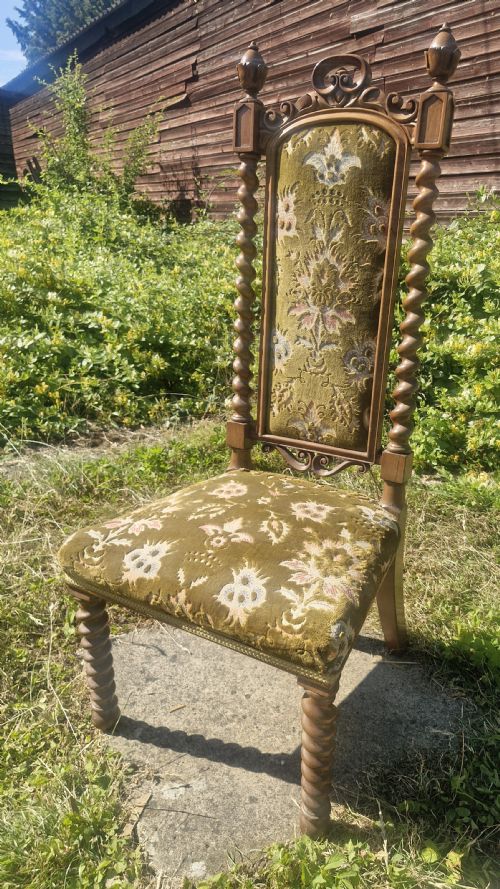
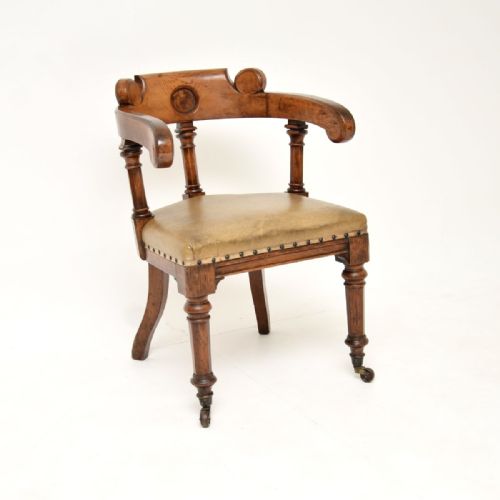
A gothic desk chair combines the heavy architectural detailing of the Gothic Revival with the practical seating needed for a study or office. These pieces often feature high carved backs, trefoil motifs and solid timber construction designed to anchor a room.
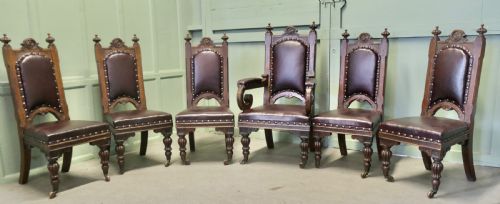
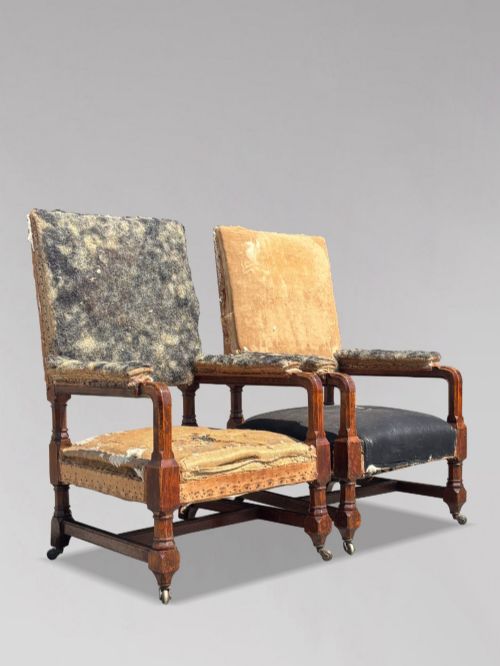
Most examples found here date from the nineteenth century, spanning Victorian interpretations and Arts and Crafts adaptations. Alongside dedicated swivel desk chairs, buyers frequently encounter heavy oak armchairs and library chairs adapted for writing tables.
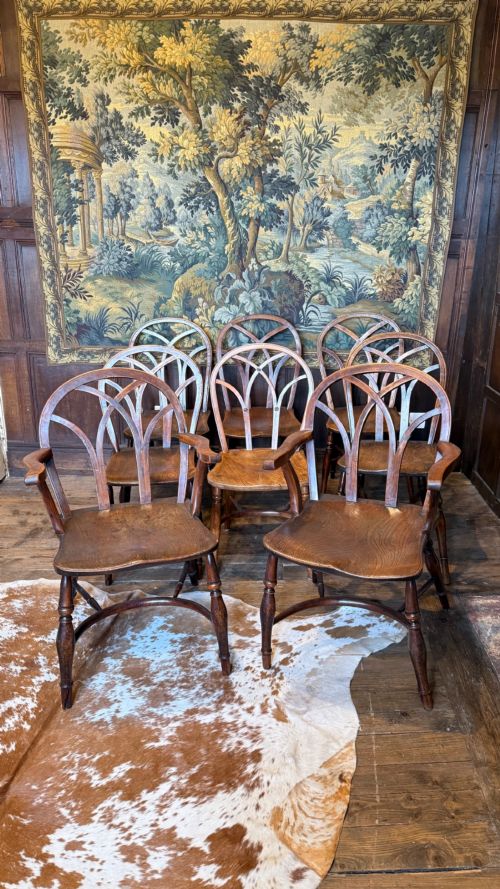
The aesthetic draws heavily on medieval ecclesiastical design, translating pointed arches and tracery into domestic furniture. While many originate in Britain during the Victorian era, variations touch upon Georgian Gothick and later continental revivals.
How they were made
Makers relied primarily on solid oak, walnut and rosewood to achieve the substantial frames characteristic of the style. Timber was heavily carved by hand with linenfold panels, cusped arches and geometric tracery.
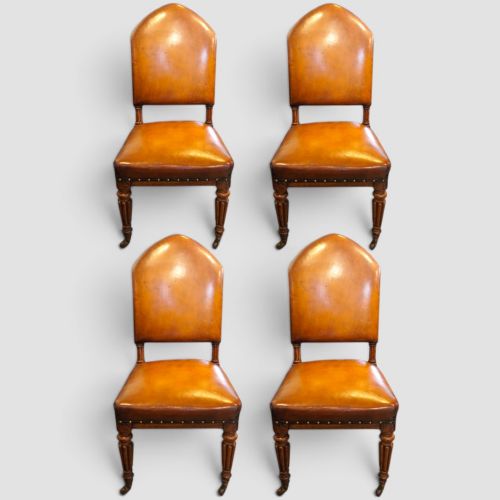
Upholstery typically involved durable leather or rich velvet fastened with brass tacks to high padded seats and backs. Swivel mechanisms on desk variants combined traditional timber joinery with early iron and brass pivoting hardware.
Listings demonstrate that oak is the most frequent timber utilised, accompanied by walnut, rosewood and mahogany across nineteenth-century periods.
What varies in quality
The depth and crispness of the hand carving separate standard commercial production from exceptional pieces designed by notable architects or workshops. Sharp, undercut mouldings indicate skilled execution compared to soft, shallow machine shaping.
Structural integrity depends on the original timber joints and the durability of any added swivel mechanisms. Pieces retaining their heavy leather upholstery alongside robust framing represent the sturdiest tier of surviving examples.
Gillows·Bruce James Talbert·A W N Pugin·Collier and Plucknett·Lamb Of Manchester·Charles Bevan·Ben Gilling·S and H Jewell
The Gothic Desk Chair Glossary
- Gothic Revival
- An architectural and decorative movement reviving medieval forms from the mid-eighteenth century onwards. It dominates the ornamentation seen on nineteenth-century seating.
- Trefoil
- A graphic ornament composed of three overlapping rings or lobes resembling clover leaves. It appears frequently in the pierced woodwork of chair backs.
- Glastonbury chair
- A low-backed wooden armchair with an X-frame structure based on a medieval ecclesiastical design. Examples often incorporate inscribed text or sacred motifs.
- Curule chair
- An ancient Roman magistrate form featuring intersecting curved legs forming an X-shape. The style returned to favour during the Renaissance Revival and nineteenth-century revivals.
- Tracery
- Architectural stonework framework supporting glass in windows, translated here into intricate wooden fretwork on chair backs. It forms the primary visual rhythm of the style.
Gothic Desk Chair: Frequently Asked Questions
Are these chairs comfortable for daily use?
Many models feature generous proportions and supportive high backs designed for long hours at a desk. Leather or upholstered inserts provide adequate padding for modern workspace requirements.
Heavier wooden seats without padding offer firm posture support typical of nineteenth-century office seating. Adding a subtle loose cushion easily adjusts the seating height and comfort.
What timber was most commonly used?
Oak remains the predominant wood found in these listings, prized for its strength and historical association with medieval architecture. Walnut and rosewood also appear frequently on finer library armchairs and aesthetic movement pieces.
Dark polishes and ebonised finishes were frequently applied to match the serious tone of Victorian libraries. Natural grain variations show through clearer finishes on Arts and Crafts examples.
How do I date a nineteenth-century piece?
Stylistic clues such as the transition from early Georgian Gothick whimsy to strict Victorian archaeological revival help narrow down the period. Hardware types, screw heads and the style of secondary timbers underneath provide further chronological evidence.
Makers' stamps or paper labels preserved on the frame offer the most precise dating. Construction methods shift from hand-cut joinery to early factory production as the nineteenth century progresses.