
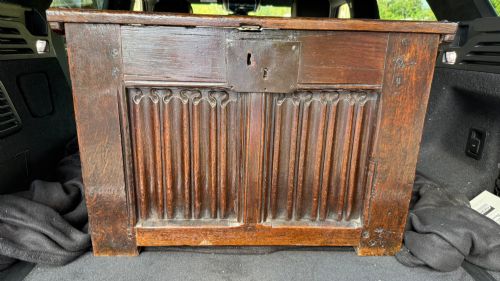
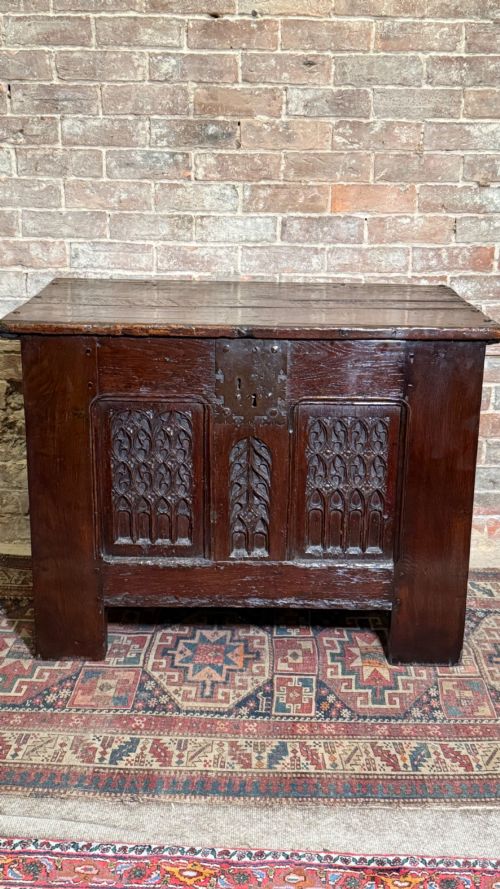
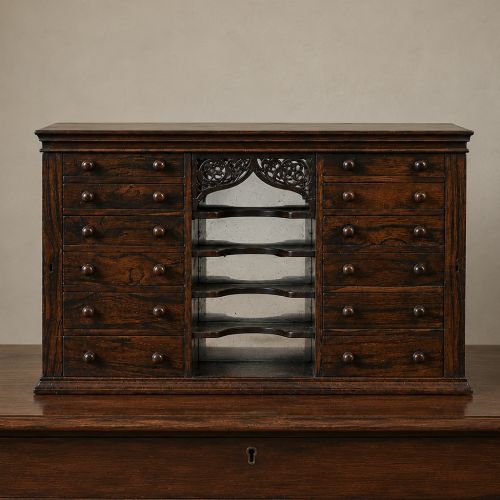
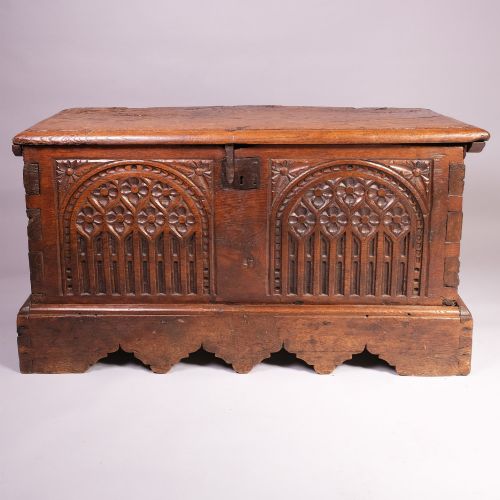




Gothic Carved Wooden Chest
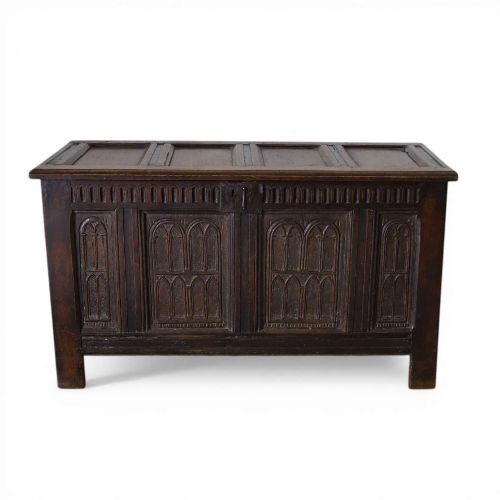
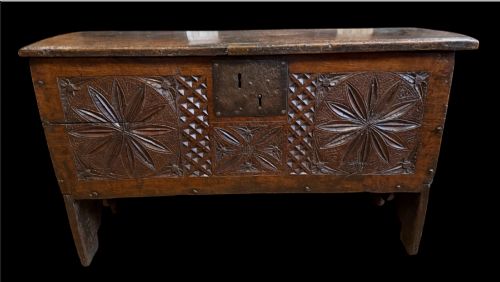
A gothic carved wooden chest is a heavy storage piece built from oak or chestnut, offering medieval character and rugged construction.
Gothic Carved Wooden Chest
When you search for a gothic carved wooden chest, you encounter robust storage furniture spanning centuries from the pre-16th century era through to Victorian revivals. The listings here include plank coffers, cathedral chests, and ecclesiastical pieces that reflect medieval and Tudor design traditions.
The most common examples on this page are constructed from oak, often featuring traditional linenfold panelling, chip carving, or tracery. These pieces range from simple plank construction to elaborate ironbound Westphalian coffers and Spanish ecclesiastical chests.
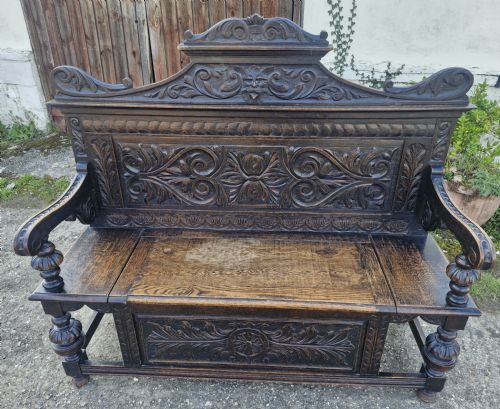
Beyond standard coffers, the selection includes related forms such as hall benches, deed boxes, and collectors cabinets sharing gothic revival and Tudor stylistic traits. Their origins stretch across England, France, Spain, Italy, and Germany, displaying regional variations in timber and ornamentation.
How they were made
The primary structural timber across these pieces is oak, supplemented by chestnut, elm, and walnut. Artisans utilised sturdy plank construction and pegged frame-and-panel techniques to build bodies capable of withstanding centuries of use.
Decoration relied heavily on hand carving directly into the dense wood, producing linenfold patterns, tracery, and figurative motifs such as Green Man carvings. Wrought iron strapwork, hinges, and heavy locks were frequently added for reinforcement and security.
What varies in quality
Quality in these chests rests upon the integrity of the original timber and the crispness of the hand carving. Pieces retaining their original wrought ironwork, hinges, and structural boards command greater appreciation than those with extensive later replacements.
Proportion and depth of relief in the gothic tracery or linenfold panels dictate the visual merit of the piece. Early examples demonstrating uncompromised structural survival from the sixteenth century or earlier stand apart from later nineteenth-century revival interpretations.
Jack Grimble
The Gothic Carved Wooden Chest Glossary
- Coffer
- A heavy wooden chest used for storing valuables, documents, or clothes. These often feature flat lids and sturdy plank or framed construction.
- Linenfold
- A style of wood carving that mimics folded linen fabric, commonly found on Tudor and sixteenth-century panels. This technique gives flat wooden surfaces a textured, textile-like appearance.
- Tracery
- Openwork or patterned stonework ornamentation translated into wood carving, typical of gothic architecture and furniture. It provides geometric elegance to panel fronts and friezes.
- Plank chest
- A primitive form of box constructed from thick boards joined with dovetails, pins, or iron straps. These represent some of the earliest surviving storage furniture.
- Cassone
- A rich Italian chest or coffer traditionally used for wedding gifts and dowries. These often display elaborate carving, gilding, or painted decoration.
Gothic Carved Wooden Chest: Frequently Asked Questions
How old is a gothic carved wooden chest?
These pieces range widely in age, spanning from pre-16th century medieval examples to 19th-century Gothic revival interpretations.
Determining the exact age requires examining the construction techniques, tool marks, timber shrinkage, and style of the carving.
What were these chests used for originally?
Historically, large coffers stored valuable household goods, textiles, church vestments, and important documents securely.
Their heavy lids and iron locks protected contents from theft, moisture, and pests in medieval and Tudor households.
How do I tell an early chest from a revival piece?
Early pieces display hand-riven timber, primitive joinery without modern fasteners, and authentic wear patterns consistent with centuries of age.
Revival pieces from the Victorian era often use machine-sawn boards and cleaner interior surfaces while imitating medieval motifs.
How do I care for antique oak furniture?
Keep wooden chests away from direct heat sources and dramatic humidity shifts to prevent the timber from splitting.
Apply traditional beeswax occasionally to nourish the dry oak and maintain a soft, protective surface sheen.