





Gothic Carved Prayer Chair
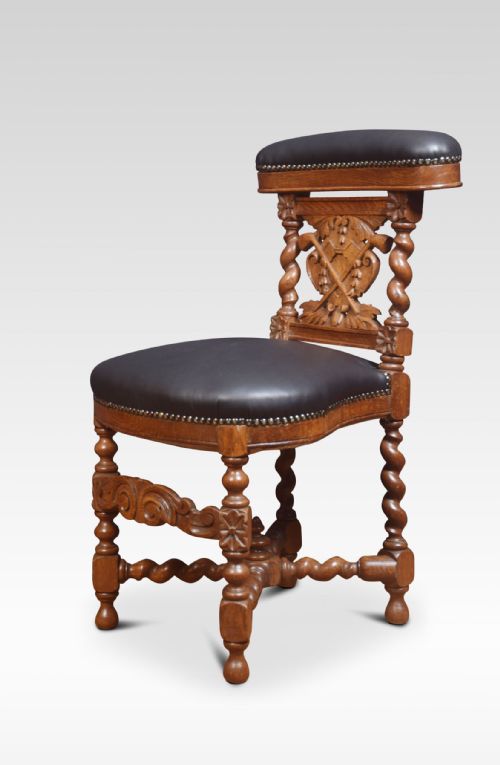
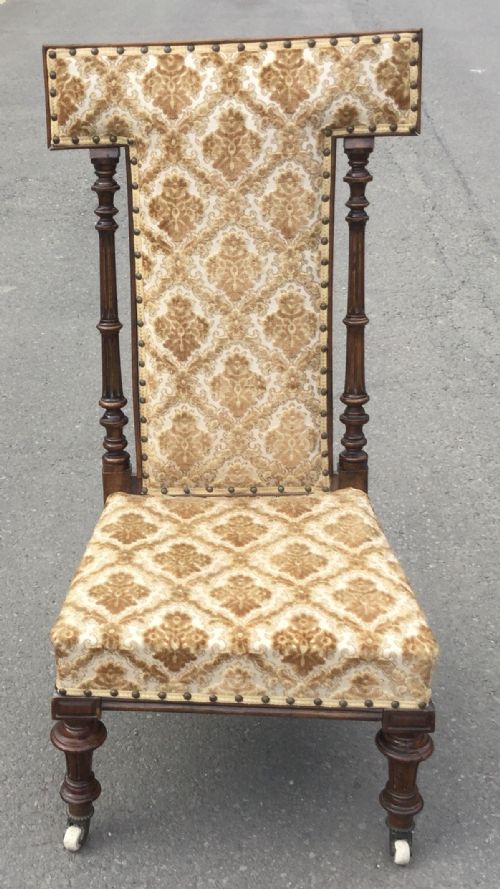
These gothic carved prayer chair examples are devotional seats designed for private worship, offering carved woodwork and upholstered kneelers.
Gothic Carved Prayer Chair
A gothic carved prayer chair is primarily designed for private devotion, combining a low seat with an upper rest for kneeling or leaning during prayer. The form encompasses specialised devotional seats, often referenced in listings as prie-dieu chairs, alongside related ecclesiastical and occasional forms.
Most examples encountered on this page date from the nineteenth century, spanning Victorian and Regency periods. Makers and manufacturers of the time drew heavily upon Gothic Revival and Jacobean Revival aesthetics to create these devotional pieces.
Variations in form include side chairs, accent chairs, and specific kneelers equipped with fretted tops or engraved plaques. Woods such as oak, mahogany, rosewood, and ebonised timber dominate the construction, frequently paired with plush upholstery.
Materials and Construction
Construction relies upon traditional cabinet timbers such as oak, mahogany, and rosewood, sometimes finished with ebonised treatments or intricate hand-carving. Craftspeople utilised dense hardwoods to support the slender, upright profiles characteristic of devotional seating.
Upholstery materials range from velvet and fabric to tapestry fabric, providing padded support for the upper rest and seat. Details like barley twist supports, fretted woodwork tops, and engraved brass plaques demonstrate nineteenth-century workshop techniques.
Gothic Carved Prayer Chair Retail Price Guide 2026
Typical asking prices for gothic carved prayer chair among the pieces listed under this phrase on Sellingantiques today, from the lower quarter to the upper quarter. They describe what is for sale here now, not the wider market.
Factors That Determine Quality
Quality rests upon the crispness and depth of the timber carving, particularly around the crests, frames, and uprights. Pieces exhibiting refined hand-carved details or documented maker attribution stand apart from simpler vernacular production.
The choice of primary wood and the integrity of the frame construction dictate structural longevity. Selection of period-appropriate textiles, such as quality velvet or tapestry fabric, complements the joinery and completes the piece.
R Whytock of Edinburgh·Angerstein
The Gothic Carved Prayer Chair Glossary
- Prie-dieu
- A French term meaning pray-God, describing a devotional chair featuring a low seat and an upper shelf or rail for kneeling.
- Barley twist
- A carved wooden furniture leg or support shaped in a helical spiral resembling twisted barley.
- Gothic Revival
- An architectural and decorative style popular in the nineteenth century that revived medieval Gothic forms, pointed arches, and heavy ornamentation.
- Ebonised
- Wood finished with a dark stain or paint to imitate ebony.
- Fretted
- Wood ornamentation pierced with decorative openwork patterns.
Gothic Carved Prayer Chair: Frequently Asked Questions
What is a prayer chair?
A prayer chair is a devotional seat built with a low seat and an upper rail, designed for kneeling and private worship.
These pieces emerged strongly during the nineteenth century, drawing heavily on Gothic Revival styles for domestic and ecclesiastical interiors.
Where were these chairs used?
They were primarily used for private devotional practices within domestic bedrooms, studies, or private chapels.
Ecclesiastical versions were also produced for church settings, sometimes accompanied by engraved dedication plaques.
What woods are common?
Common timbers include oak, mahogany, and rosewood, alongside ebonised wood finishes.
Cabinet makers selected these dense hardwoods to withstand the upright proportions and detailed carving required by Gothic Revival designs.