


Gothic Carved Desk Chair
A gothic carved desk chair brings architectural weight and heavy timber to a study, rooted primarily in Victorian interpretations of medieval design.
Gothic Carved Desk Chair
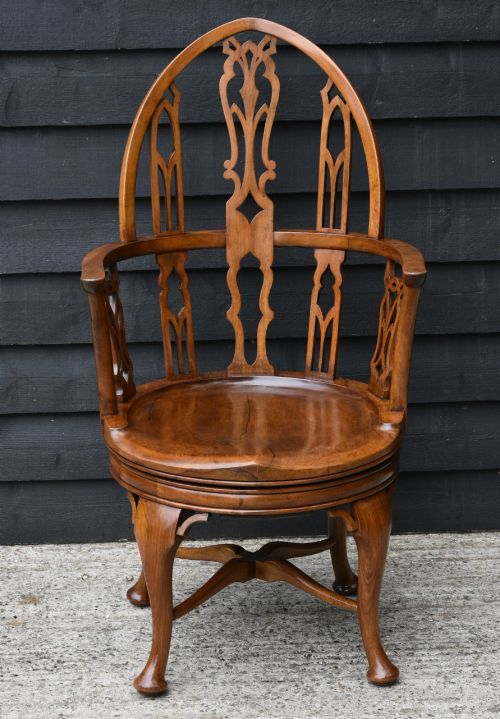
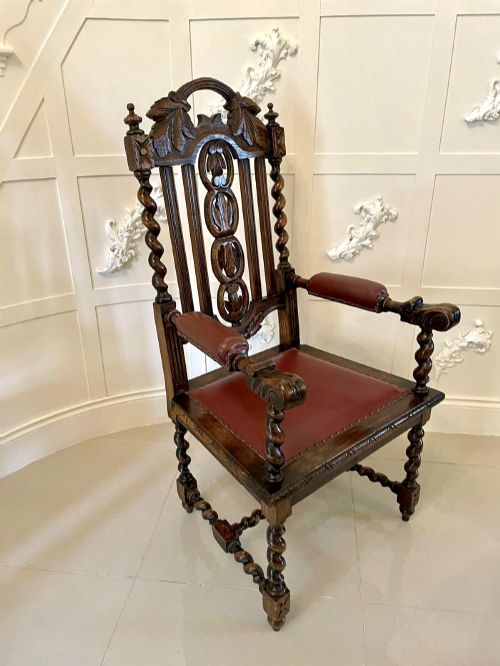
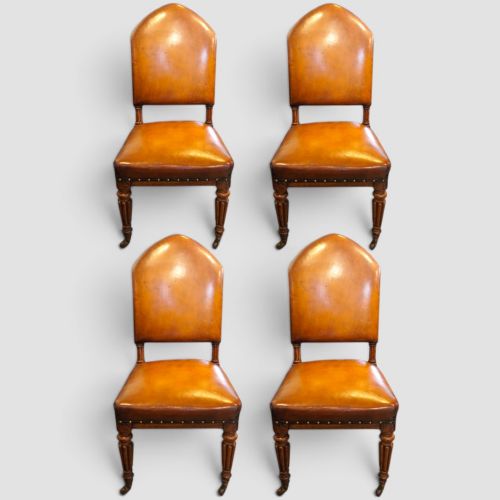
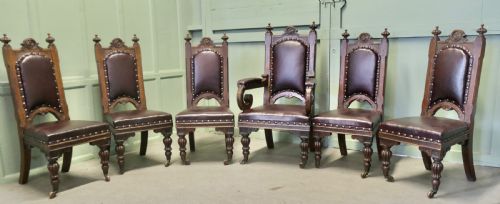
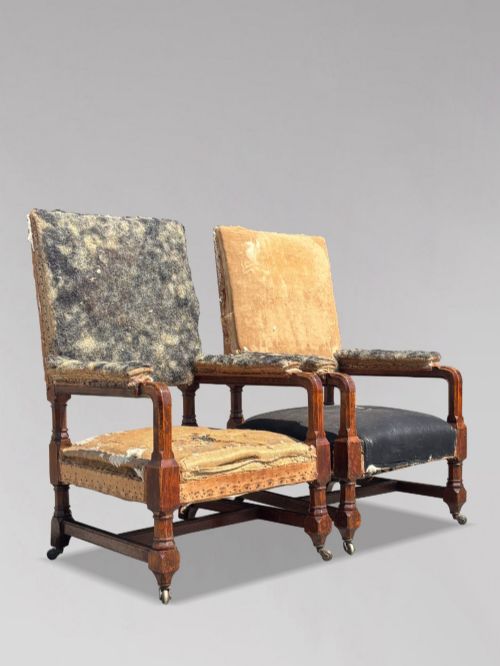
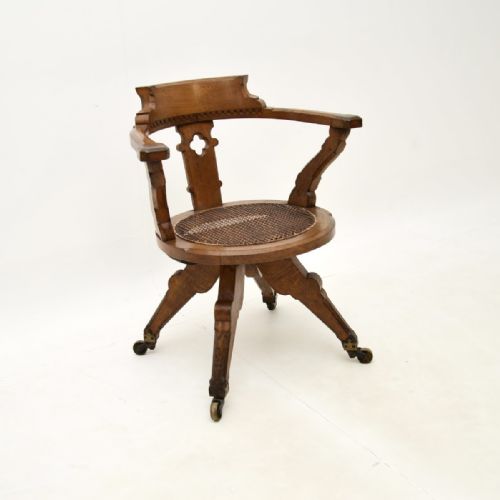
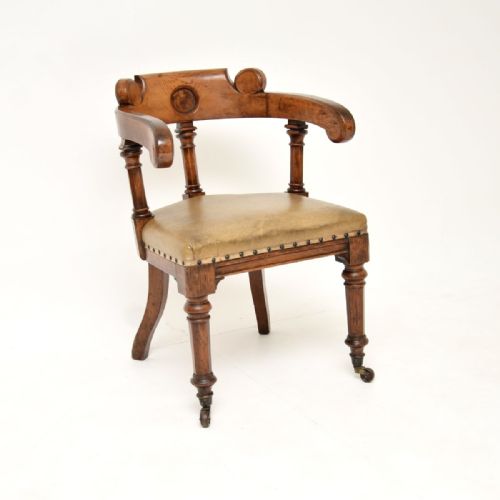
A gothic carved desk chair is an architectural seating piece designed for study or office work, incorporating medieval motifs into 19th Century forms. You will most frequently encounter solid oak examples from the Victorian period featuring swivel mechanisms or fixed frames.
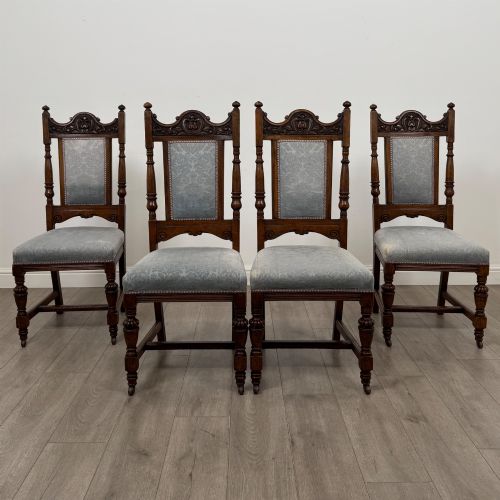
The selections span from revolving library chairs with leather upholstery to high-back armchairs built during the 1850s, 1860s, 1870s and 1880s. These pieces merge the heavier proportions of revival styles with functional desk seating.
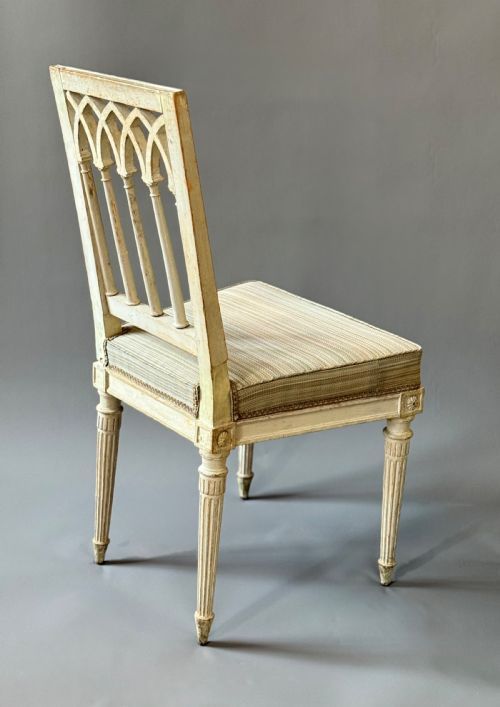
Makers and designers of the period drew upon architectural details such as trefoils and pointed arches, translating stone church masonry into domestic timber furniture.
How They Were Made
Joinery relies heavily on solid oak, walnut and rosewood, carved by hand to render deep relief panels, tracery and linenfold patterns. Timber selection prioritised dense hardwoods capable of supporting complex structural carving without splitting.
Upholstered elements utilise leather, velvet and traditional textiles, secured with brass tacks along the seat edges. Revolving desk chairs incorporate early iron and brass swivel mechanisms beneath the wooden seat frame to allow rotation.
Listings feature oak, walnut and rosewood combined with leather, velvet and brass across the Victorian period.
What Varies in Quality
Quality rests in the crispness of the hand-carved ornament and the depth of the timber selection. Superior examples display sharp undercutting on trefoils and linenfold panels, whereas lesser pieces rely on shallow machine routing or simpler applied mouldings.
The integrity of the rotating mechanism and the thickness of the solid oak or walnut frame separate utilitarian office seating from exhibition-grade library furniture. Finer models integrate structural joinery that conceals iron swivel components while maintaining generous proportions.
Gillows·Bruce James Talbert·S&H Jewell·A. W. N. Pugin·Lamb Of Manchester·Charles Bevan
The Gothic Carved Desk Chair Glossary
- Gothic Revival
- An architectural and decorative style popular during the 19th Century that revived medieval forms, pointed arches and structural motifs. It dominated ecclesiastical and domestic design under designers such as Pugin.
- Trefoil
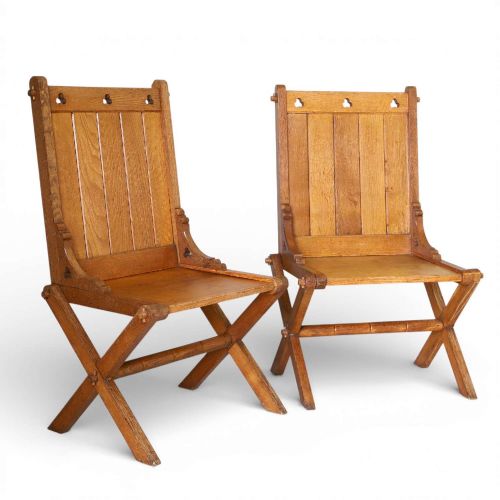
- A graphic ornament composed of three overlapping rings or foils, commonly seen carved into the backs of gothic chairs. This motif mimics stone window tracery found in medieval architecture.
- Swivel Desk Chair
- A seating form fitted with a central revolving pivot beneath the seat, allowing the user to turn. In 19th Century variants, these often combined wooden frames with brass or iron mechanisms.
- Linenfold
- A style of wood carving that imitates folded fabric, frequently used on the vertical panels of backs and underframes. It forms a standard decorative element in gothic revival furniture.
- Curule
- An X-framed chair design derived from classical Roman magistrate seats, sometimes incorporated into revival seating. This structural form provides lateral stability without heavy side stretchers.
Gothic Carved Desk Chair: Frequently Asked Questions
How do I identify a true period gothic desk chair?
Examine the timber shrinkage, the depth of the hand-carving, and the construction methods used in the underframe. Period pieces from the Victorian era display genuine hand tool marks and patination on the oak or walnut surfaces.
Look closely at the joinery and the integration of any swivel mechanism. Nineteenth-century examples employ heavy iron or brass pivots that differ significantly from modern replacement hardware.
Were these chairs originally made for offices?
Many were commissioned for home libraries, studies, and private boardrooms rather than commercial administrative offices. Their generous proportions and heavy ornamentation reflect domestic status and scholarly pursuits.
Swivel variants allowed scholars and gentlemen to reach surrounding bookcases without standing up. This made them practical working furniture despite their imposing architectural appearance.
How do I care for the leather and wood?
Maintain the timber by applying a traditional beeswax to nourish the dry grain and protect the carved surfaces. Avoid placing the chair near direct heat sources that can cause the solid oak or walnut to split.
Treat original leather seats with neutral leather balms to prevent cracking while preserving the historic surface. Gentle cleaning is essential to protect the brass tacks and surrounding carved details.
What is a Glastonbury chair?
A Glastonbury chair is a specific type of X-framed wooden seat with a sloping panel back and flat armrests. Based on an ancient relic, this form was widely reproduced during the Gothic Revival.
They assemble through interlocking wooden members without requiring complex metal fixings. The style remains distinct for its architectural silhouette and trefoil details.