




Gothic Arch Side Chairs
Gothic arch side chairs bring structural pointed arches and ecclesiastical silhouettes directly into domestic seating across the 18th, 19th, and early 20th centuries.
Gothic Arch Side Chairs
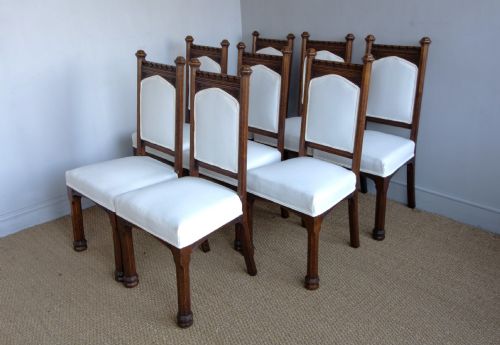
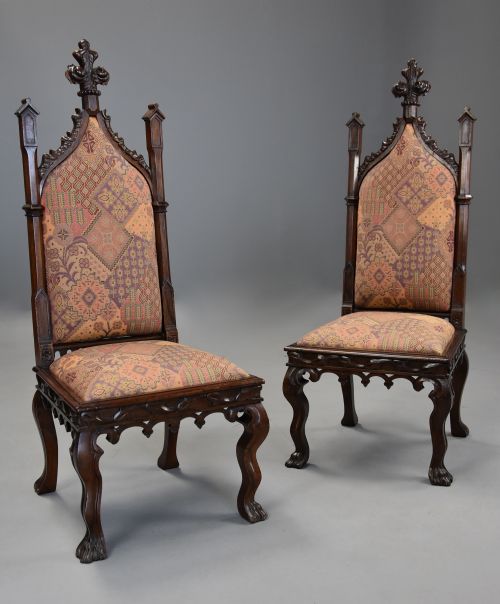
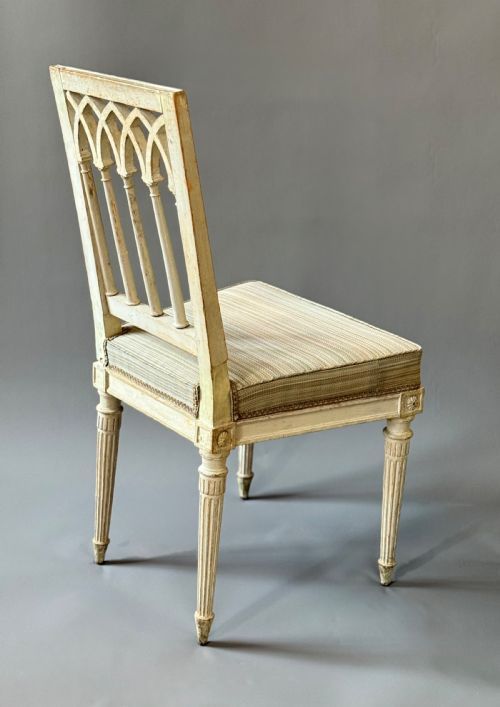
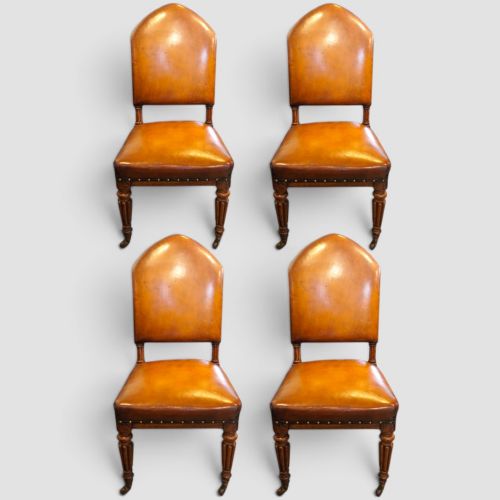
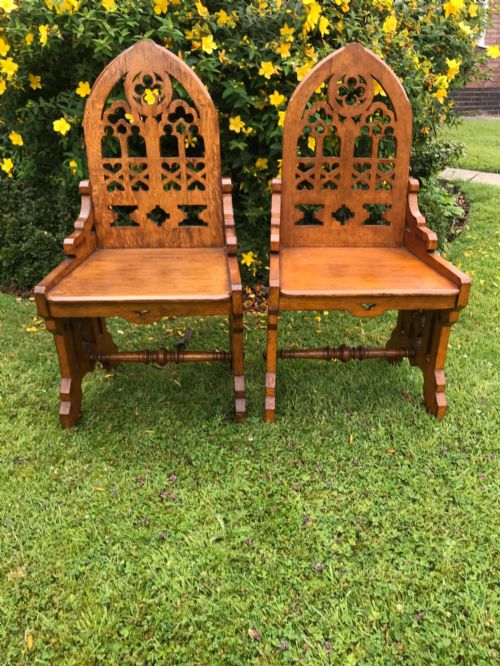
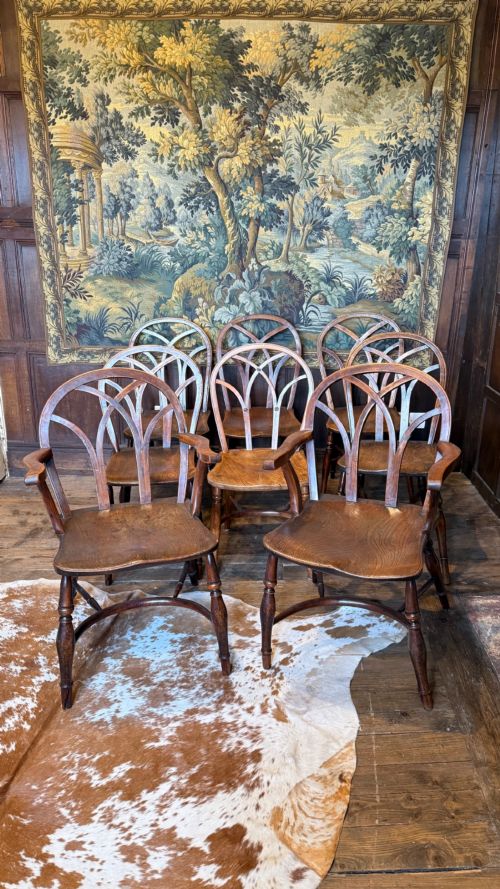
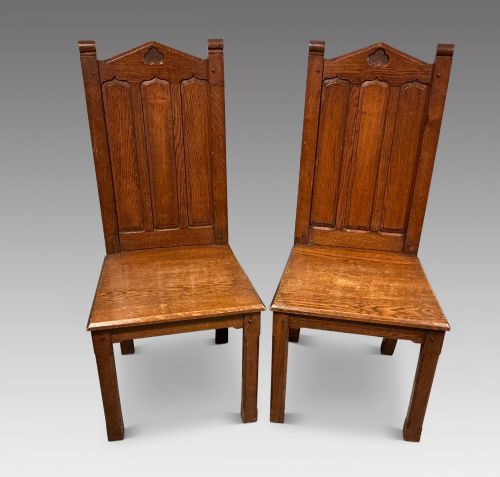
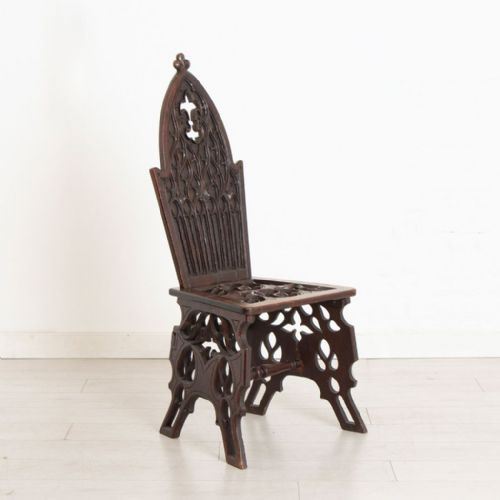
When you search for gothic arch side chairs, you encounter seating defined by pointed lancet arches, trefoils, and deep vertical splats. The evidence shows these pieces span from Georgian Gothick designs through to Victorian Gothic Revival and Edwardian church iterations. Hall chairs and dining chairs dominate the forms currently available to buyers.
Most examples you meet on this page date from the 19th century, constructed primarily in oak, mahogany, and rosewood. Makers adapted medieval architectural motifs for domestic reception rooms, halls, and dining spaces. You will find single chairs, pairs, and sets varying from rustic pitch pine to polished cabinet woods.
What varies in quality
The choice of timber heavily divides the range, moving from utilitarian pitch pine and painted pine up to heavily figured rosewood and dense Scottish or English oak. Selection of materials dictates how sharply the carved tracery holds its edges over generations.
Depth of carving and structural crispness separate standard workshop output from pieces bearing maker attribution or London cabinetmaker stamps. Superior examples display carefully balanced proportions in the back splats and precise execution of the pointed arch motifs.
Channel Islands craftsmen occasionally carved ecclesiastical arches into distant rosewood seats, bringing cathedral geometry to island hallways.
Gillows of Lancaster·W.A. Willcocks
The Gothic Arch Side Chairs Glossary
- Gothic Revival
- An architectural and decorative style drawing on medieval forms, prominent throughout the 19th century. It reinterprets cathedral windows and pointed arches for domestic furniture.
- Tracery
- The stonework ornamentation in Gothic windows, adapted by furniture makers for wooden chair backs. It creates openwork patterns of intersecting ribs.
- Hall Chair
- A wooden seat intended for an entrance hall or reception space, usually featuring a solid timber seat and a decorative back. These pieces prioritise upright posture and architectural display.
- Gothick
- An 18th-century precursor to the 19th-century revival, often associated with Georgian interpretations of medieval design. It appears in lighter mahogany forms before heavy Victorian industrialisation.
- Lancet Arch
- A pointed arch characterised by a sharply acute angle at the apex, commonly seen in early English Gothic architecture. Furniture makers replicated this geometry in chair splats.
Gothic Arch Side Chairs: Frequently Asked Questions
Where were gothic arch side chairs used?
These chairs served primarily in entrance halls, formal dining rooms, and ecclesiastical settings like churches and reception rooms. Their upright backs and architectural profiles suited transitional spaces where guests were received.
Domestic versions in mahogany and oak furnished polite Victorian and Georgian interiors, while simpler pine and oak variants equipped churches and institutional buildings.
How do I date a gothic arch chair?
Dating relies on timber selection, construction methods, and stylistic shifts between Georgian Gothick, Victorian Gothic Revival, and Edwardian periods. Georgian pieces often utilise lighter mahogany with subtle arched top rails, whereas Victorian examples favour heavier oak with deep linenfold or trefoil carving.
Examining the underside, joinery marks, and secondary woods helps narrow the decade of production. Labeled pieces or stamped maker marks provide definitive chronological anchors.
Are these chairs comfortable for daily dining?
Most hall chairs and early side chairs feature solid wood seats designed for upright posture rather than prolonged lounging. Sets intended for dining often incorporate padded leather or fabric seat inserts for added comfort.
Buyers planning daily use around a dining table should check seat heights and depth proportions against modern standards.
What is the difference between hall chairs and dining chairs?
Hall chairs typically feature solid wooden seats, rigid upright backs, and prominent crests intended for display in entrance spaces. Dining chairs are designed as sets and frequently include upholstered leather or textile pads for extended seating.
The evidence shows both forms employing the same architectural pointed arch vocabulary, but their original domestic functions dictate their construction.