





Goldscheider Ceramics
Goldscheider ceramics are sculptural figures and busts offering remarkable figurative detail and presence for any room.
Goldscheider Ceramics
Goldscheider ceramics encompass figurative sculpture, busts, and animal figures created across several distinct eras.
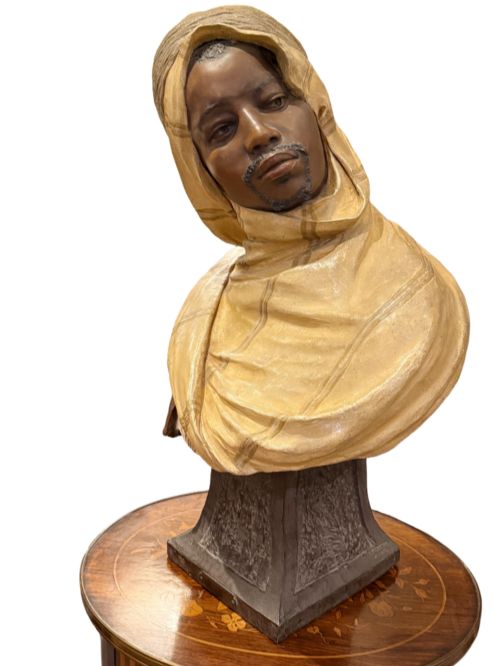
The pieces on this page span the late nineteenth century into the early twentieth century, showing strong Art Nouveau and Orientalist character.
A buyer examining these listings will frequently encounter terracotta figures, earthenware works, and life-size animal sculptures.
Materials and Manufacture
The makers utilised terracotta and earthenware as the primary base materials for shaping these expressive figurative works.
Surface decoration involved applied pigment, paint, and glazed ceramic finishes, alongside specialised bronzed slip cast techniques.
Goldscheider Ceramics Retail Price Guide 2026
Typical asking prices for goldscheider ceramics among the pieces listed under this phrase on Sellingantiques today, from the lower quarter to the upper quarter. They describe what is for sale here now, not the wider market.
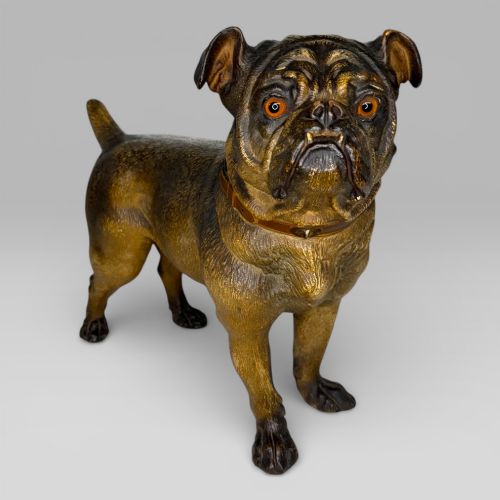
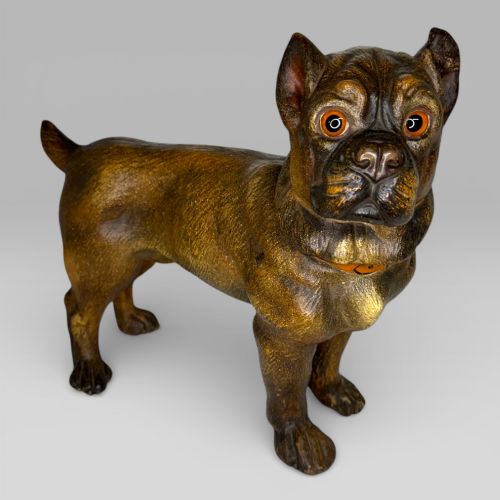
Life-size terracotta pugs stand ready to guard the hallway.
Assessing Quality and Execution
Quality rests upon the crispness of the modelling in the terracotta or earthenware and the subtlety applied to polychrome pigments.
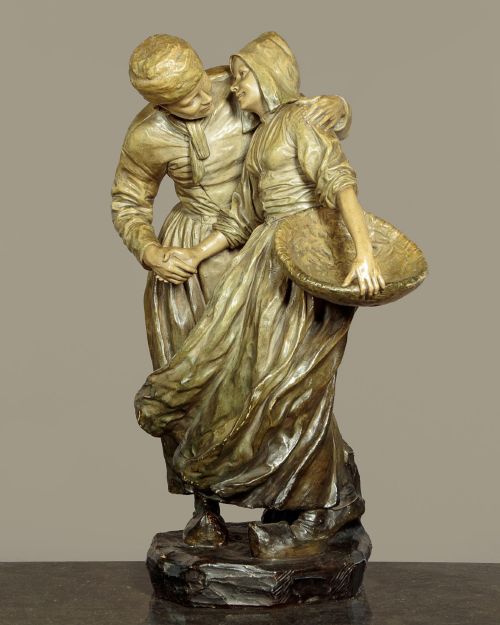
Larger life-size sculptures and detailed figure groups demonstrate a higher ambition in design than standard smaller figurines.
Friedrich Goldscheider·Frederic Goldscheider
The Goldscheider Ceramics Glossary
- Terracotta
- Fired clay used extensively for sculptural modelling. It provides a robust and porous body suitable for detailed surface carving.
- Earthenware
- Porous pottery fired at lower temperatures. It forms the base for many glazed and painted figural works.
- Slip cast
- A manufacturing method where liquid clay is poured into a plaster mould. This technique allows for consistent reproduction of complex shapes.
Goldscheider Ceramics: Frequently Asked Questions
What periods do these pieces date from?
The works span from the late nineteenth century through to the early decades of the twentieth century.
Production aligns with periods such as the Victorian era, Art Nouveau, and Classical Revival.
How were these ceramic sculptures finished?
Makers employed various surface treatments including hand-applied pigment, paint, and specialised bronzed finishes.
Some examples also feature glazed ceramic surfaces to highlight drapery and details.
What subjects are most common?
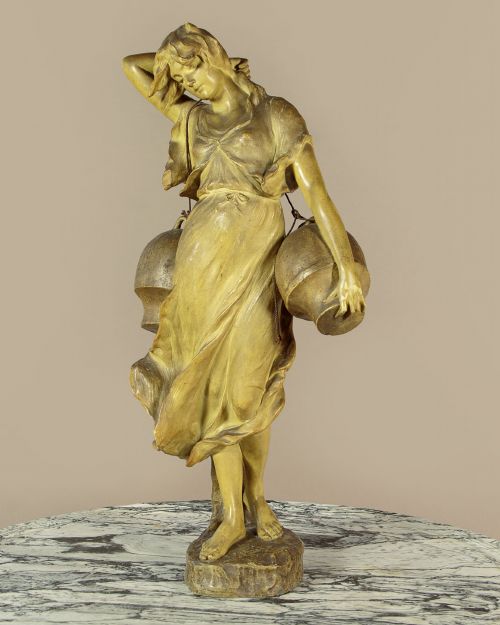
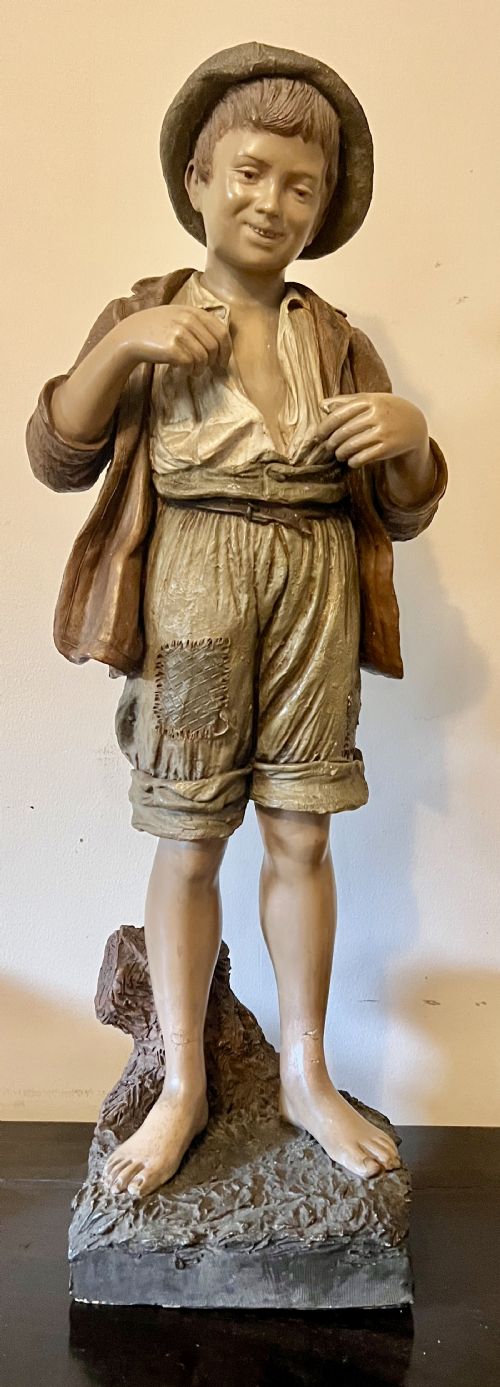
Common subjects include figurative sculptures of young men and women, water carriers, and country maidens.
Life-size animal sculptures, particularly pugs and puppies, also appear within the selection.
Where were these ceramics produced?
Production is centered in Vienna, Austria, which served as a major hub for decorative ceramics.
Works from this origin reflect distinct regional stylistic movements including Orientalism.