

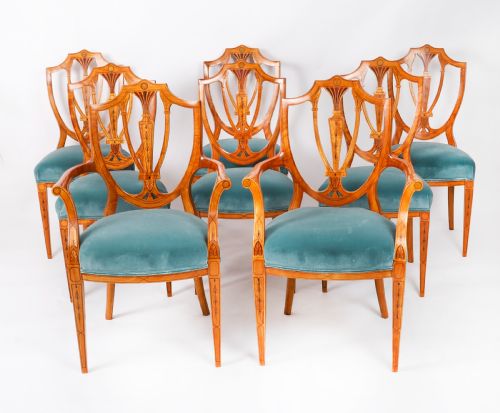


Golden Satinwood Chairs
These golden satinwood chairs bring warmth and elegant grain to a room, offering refined seating shaped by centuries of cabinet-making skill.
Golden Satinwood Chairs
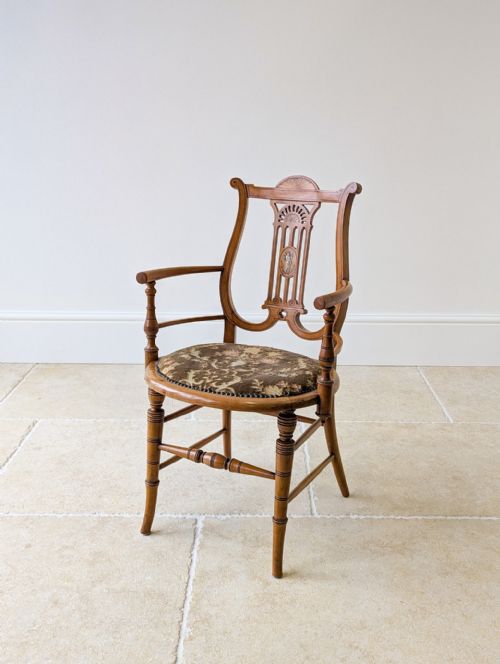
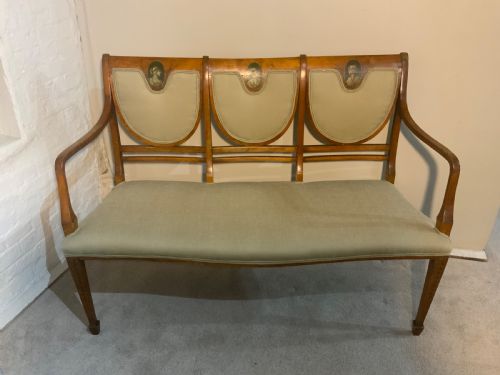
When you search for golden satinwood chairs, you encounter seating fashioned from a light, lustrous timber that catches the light wonderfully. The selections span several distinct eras, bringing polished surfaces and sophisticated forms into domestic spaces.
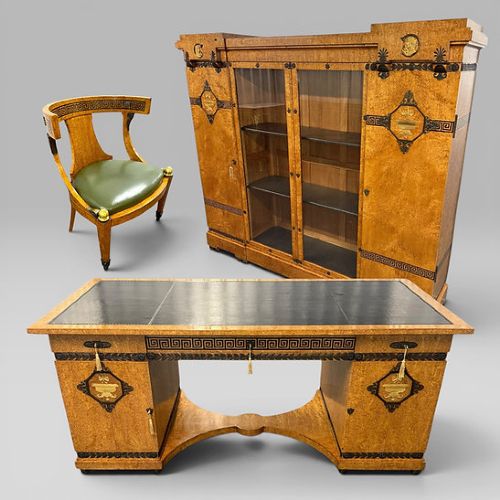
You are most likely to meet pieces originating from the nineteenth and early twentieth centuries on this page. These encompass formal dining chairs, comfortable armchairs, and specialised desk chairs displaying refined decorative details.
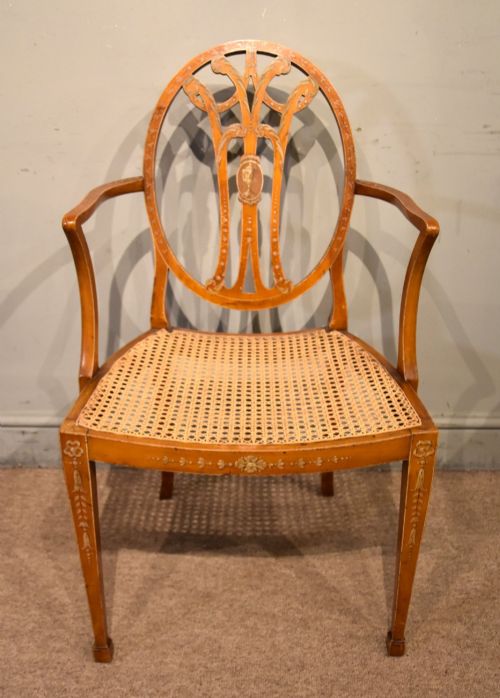
The styles range from crisp Regency and Sheraton Revival designs to ornate French Neoclassical and Chinoiserie interpretations. Makers utilised contrasting wood inlay, paintwork, and fine caning to enhance the natural radiance of the timber.
How they were made
Cabinet-makers constructed these chairs using dense, close-grained satinwood, often pairing the primary timber with birchwood, brass, bronze, and glass embellishments. Artisans applied precise wood inlay techniques to create contrasting borders and decorative motifs upon the frames.
Upholstery methods varied widely according to the period and function of the seating, incorporating traditional fabric coverings, supple leather, and woven cane panels. Painted surface decoration also appears on specific pieces, introducing delicate motifs directly onto the wood.
Golden Satinwood Chairs Retail Price Guide 2026
Typical asking prices for golden satinwood chairs among the pieces listed under this phrase on Sellingantiques today, from the lower quarter to the upper quarter. They describe what is for sale here now, not the wider market.
Some desk chairs hide their swivel mechanics beneath upholstery so discreetly that unsuspecting sitters receive an unexpected spin.
What varies in quality
The standard of a piece rests upon the crispness of its carving and the dexterity displayed in any inlaid wood details. Superior examples maintain structural integrity while exhibiting a deeply figured timber grain that glows beneath the polish.
Mercier Frères·Cowtan & Sons
The Golden Satinwood Chairs Glossary
- Satinwood
- A hard, yellowish timber prized for its natural sheen and smooth texture. It takes a high polish and serves as the primary surface for fine eighteenth and nineteenth-century cabinet-making.
- Inlay
- A decorative technique where contrasting pieces of wood or other materials are inserted into recesses carved into the base timber. This creates flat, ornate patterns across the surface.
- Caning
- A woven lattice made from peeled rattan plant stems used to form lightweight, flexible seat panels. It appears frequently on lighter chair designs from the Edwardian era onwards.
- Lyre-back
- A chair backrest shaped to resemble the ancient musical instrument, often featuring brass wire strings. This motif gained particular popularity during the Regency and Sheraton Revival periods.
Golden Satinwood Chairs: Frequently Asked Questions
Are these chairs suitable for daily dining use?
Most antique dining chairs provide sturdy support, though delicate antique frames benefit from mindful handling during everyday meals. Protective felt pads on the feet prevent undue friction against modern flooring.
Heavier armchair variants and office sets are built for prolonged sitting, making them practical choices for studies and living spaces.
How do I care for satinwood furniture?
Keep satinwood surfaces away from direct sunlight and strong heat sources to prevent the timber from drying out or fading. Gentle dusting with a dry, soft cloth maintains the natural lustre without requiring harsh polishes.
Condition the wood occasionally using a quality microcrystalline wax to protect the polished finish against moisture.
How can I tell a Regency chair from a Victorian revival piece?
Regency pieces typically display restrained classical lines with architectural proportions inspired by ancient Greece and Rome. They rely on clean timber grain and subtle brass mounts rather than heavy ornamentation.
Victorian revival pieces, such as Sheraton Revival items, often mix historical motifs with denser decorative flourishes and more varied inlay patterns.
What is the difference between an armchair and a desk chair?
Armchairs are designed primarily for relaxation in drawing rooms or parlours, featuring lower seats and wider upholstered arms. They prioritise comfort and aesthetic presence within social spaces.
Desk chairs are engineered for functional workspace seating, often incorporating swivelling mechanisms, adjustable heights, or supportive upright backs suited for writing.