



Gold Wood Settee
A gold wood settee brings genuine French elegance and period grandeur to a room, offering both comfortable seating and striking decorative presence.
Gold Wood Settee
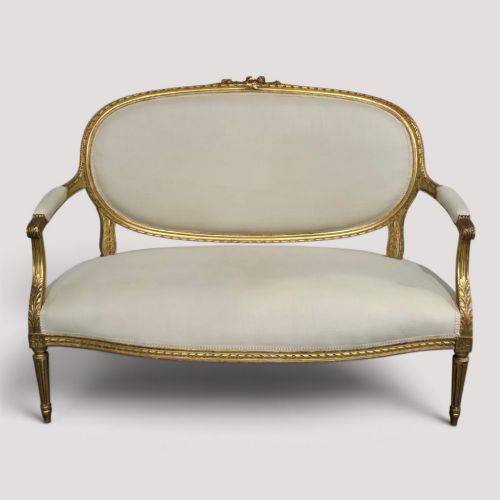
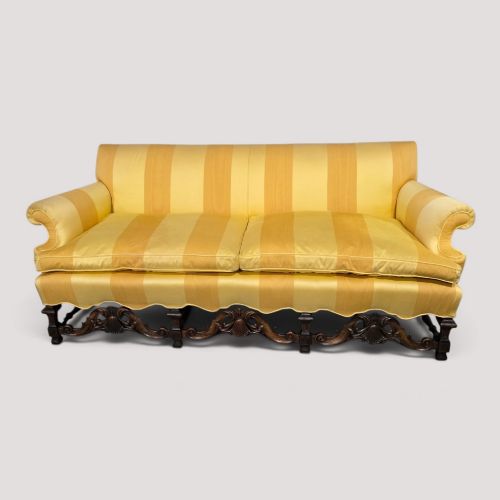
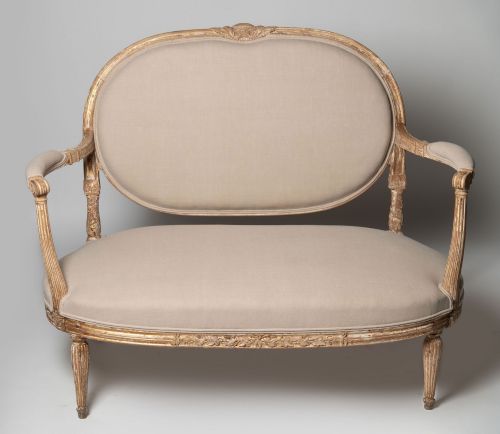
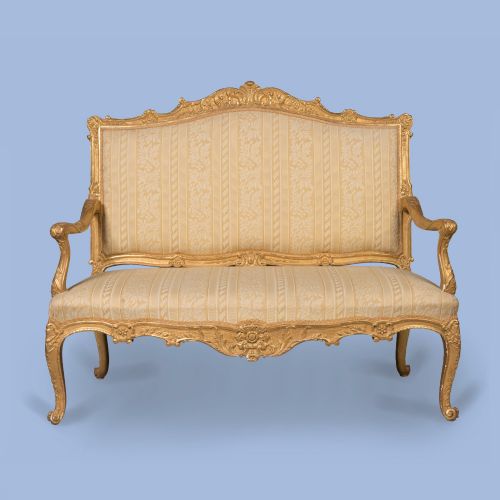
When you search for a gold wood settee, you are looking at substantial antique seating that bridges functional comfort and decorative display. The pieces on this page span from the nineteenth century into the early twentieth century, taking the form of sofas, canapés, salon suites, and settees.
You will encounter distinct stylistic revivals in these pieces, particularly Louis XV and Louis XVI manners alongside Victorian and Baroque influences. French pieces dominate the selection, often presenting carved wooden frames finished with gilt or paint.
The materials of these seats combine carved timber frames with various textile upholstery options. Whether you examine a small two-seat French sofa or a larger English nineteenth-century giltwood settee, each object represents a specific historical design period.
What varies in quality
The standard of carving and the crispness of the applied gilding separate finer examples from simpler production. Master carvers produced deeply articulated foliage and scrollwork that retained sharp definition beneath the gold leaf.
Proportion and the integrity of the underlying timber frame determine the structural success of the settee. Pieces that maintain balanced lines and robust joinery throughout the arms, legs, and backrest represent the higher tiers of period craftsmanship.
Gold Wood Settee Retail Price Guide 2026
Typical asking prices for gold wood settee among the pieces listed under this phrase on Sellingantiques today, from the lower quarter to the upper quarter. They describe what is for sale here now, not the wider market.
Some nineteenth-century makers evidently believed that if a sofa frame was not entirely covered in gold, it simply had not tried hard enough.
The Gold Wood Settee Glossary
- Giltwood
- Timber that has been coated with gold leaf or a gold-coloured finish. This surface treatment gives the frames their characteristic metallic sheen and decorative brilliance.
- Canapé
- A traditional French term for an upholstered sofa or settee. These pieces typically feature exposed carved wooden frames and open arms.
- Louis XVI Style
- A neoclassical design aesthetic characterised by straight tapered legs, geometric symmetry, and classical ornamentation. It contrasts with the more flowing, asymmetrical curves of the earlier Louis XV manner.
- Salon Suite
- A matched set of seating furniture designed for a formal drawing room. Such suites often include a central settee accompanied by matching armchairs.
Gold Wood Settee: Frequently Asked Questions
Where should I place a gold wood settee?
These settees work wonderfully as statement pieces in a living room, drawing room, or grand hallway. Their decorative frames demand a setting where they can be viewed from multiple angles.
Position the settee away from direct sunlight to protect the fragile textile upholstery and the delicate gilded surfaces from fading over time.
How do I care for the gilded wooden frame?
Dust the carved wooden frame gently with a soft, dry cloth to prevent the accumulation of dirt. Avoid using chemical cleaners, polishes, or water, as moisture can lift the gold leaf and damage the underlying preparation layers.
Professional conservators should handle any structural repairs or restoration of the gilded surface to preserve the historical integrity of the piece.
How do I distinguish Louis XV from Louis XVI styles?
Louis XV style pieces, often associated with Rococo revival, feature flowing asymmetrical curves, cabriole legs, and naturalistic floral carvings. The overall silhouette is organic and sweeping.
Louis XVI style furniture moves toward neoclassical restraint, displaying straight tapered legs, fluted columns, and geometric or rectilinear symmetry in the frame construction.
Can I use a period settee for everyday seating?
These antique settees are structurally robust, but they require considerate use due to their age and delicate frames. Avoid overloading the seating capacity beyond the original design limits.
Sitting gently and avoiding rough treatment will ensure the vintage upholstery and historical joinery remain intact for years to come.