
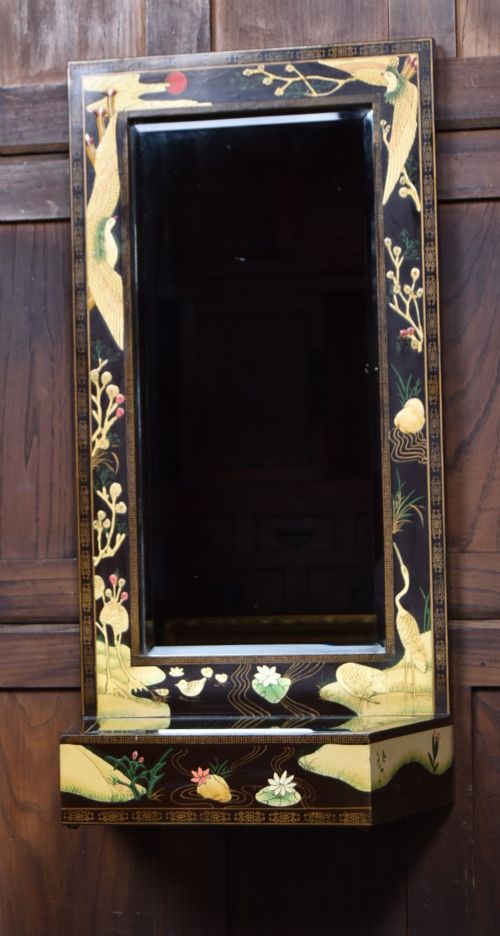
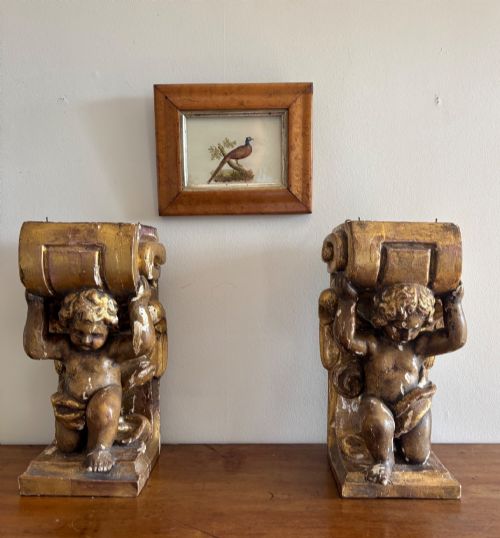
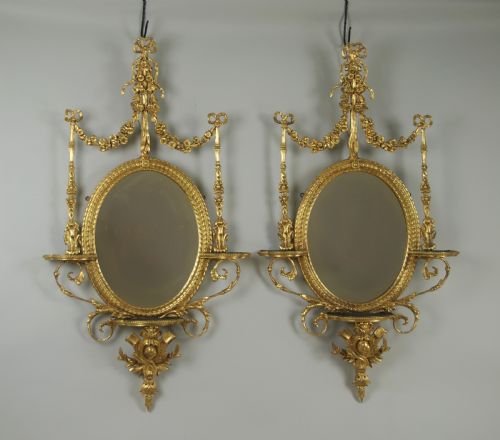
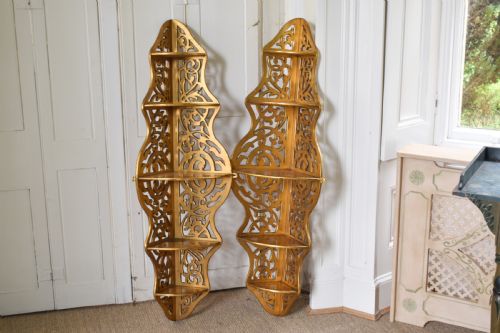


Gold Wall Shelf
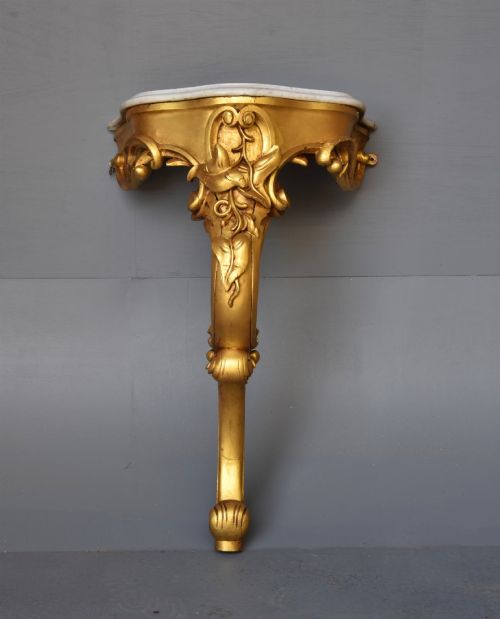
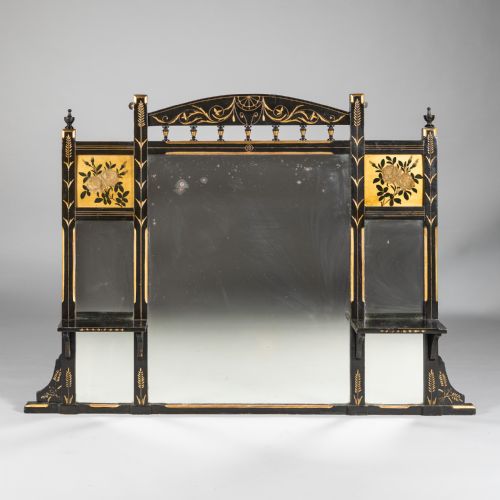
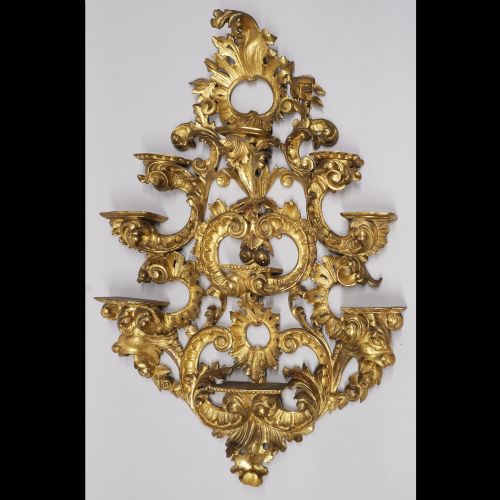
A gold wall shelf brings light and decorative ledge space to a room, spanning ornate 18th-century Italian carvings and Victorian giltwood creations.
Gold Wall Shelf
When searching for a gold wall shelf, collectors encounter a diverse selection of wall-mounted ledges, brackets, and mirrored display units finished in gilt. These items primarily originate from the 19th century, with notable examples stretching back to the 18th century and forward into the 1920s.
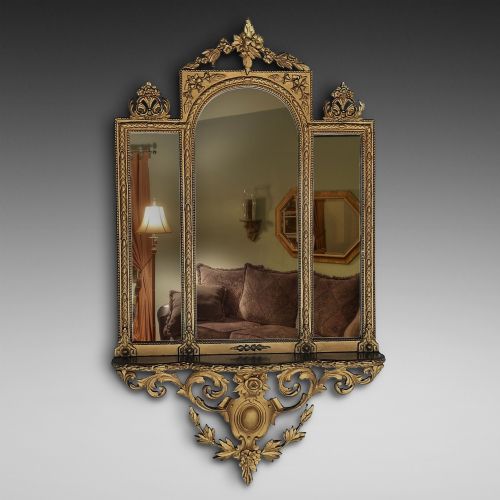
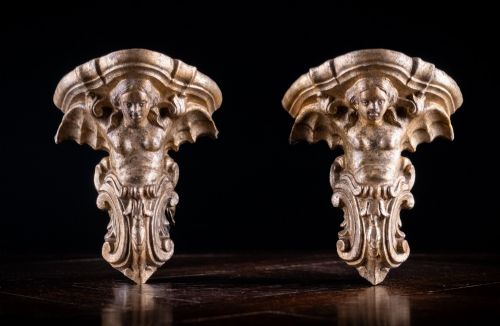
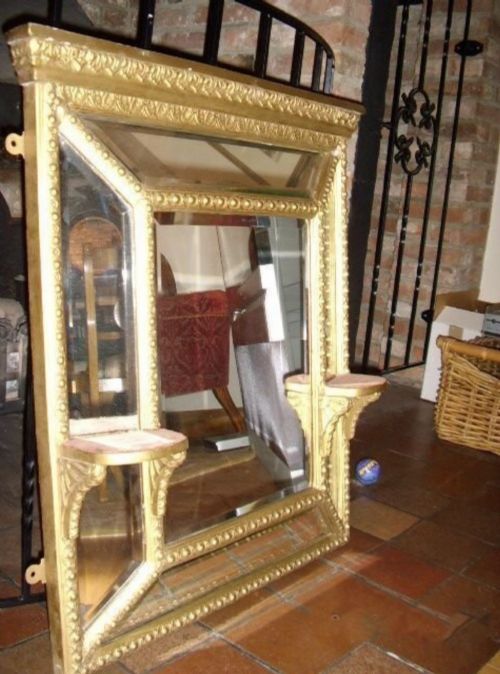
The objects take many forms, including carved giltwood brackets designed for ornaments, mirrored console tables, and overmantel mirrors fitted with small display ledges. Italian, French, and English workshops dominate the origins, ranging from formal Neoclassical designs to exuberant Rococo Revival curves.
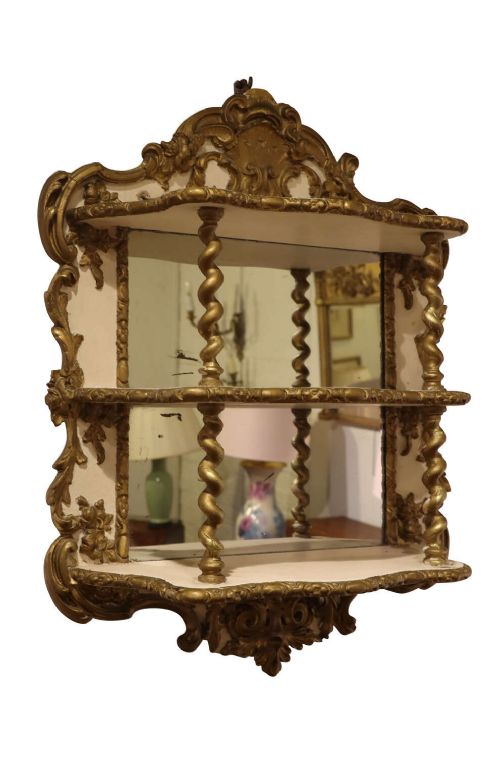
Victorian variations frequently combine carved wood and gesso with integrated shelves, creating compact stages for small sculptures or clocks. Buyers are most likely to meet pieces finished in bright gold leaf or gilt paint, often paired with glass plates or marble tops.
Materials and Construction
Makers built the structural cores of these objects from solid wood, terracotta, or cast brass before applying decorative finishes. Carvers shaped intricate foliage and scrolls into wood or moulded plaster and gesso over a wooden base to receive the gilding.
Surface brilliance relies on the application of fine gold leaf or liquid gold paint onto a prepared ground. Brass components and ormolu elements were cast, chased, and polished to achieve metallic contrast, frequently alongside ebonised wood or mirror glass.
The listings span the 18th, 19th, and early 20th centuries, uniting French, Italian, and English aesthetic traditions.
Indicators of Quality
Quality rests in the depth and sharpness of the hand-carved detail, where crisp undercut foliage outshines soft, moulded plaster substitutes. The finesse of the gilding application, showing subtle burnishing and natural ageing rather than flat modern paint, dictates visual presence.
Structural integrity depends on how cleanly the joints hold the weight of a projecting shelf and whether the original glass plates and gesso layers remain intact without heavy restoration.
Strahan of Dublin·Henri Dasson
The Gold Wall Shelf Glossary
- Giltwood
- Wood that has been coated with gold leaf or powder using a sizing adhesive. This finish provides the characteristic metallic gleam seen on period frames and wall furnishings.
- Gesso
- A plaster mixture applied to wood surfaces as a smooth base for gilding and carving. Skilled artisans could impress intricate relief patterns into the wet gesso before applying gold leaf.
- Wall Bracket
- A decorative projecting support fixed to a wall to hold an object such as a clock, vase, or bust. Many examples incorporate a small display shelf at the summit.
- Overmantel Mirror
- A large mirror designed to hang specifically above a fireplace mantelpiece. Several period examples include integrated gold wall shelves or display brackets on their frames.
Gold Wall Shelf: Frequently Asked Questions
How do I hang a heavy gold wall shelf safely?
These pieces require direct fixing into masonry or secure wall studs rather than relying solely on plasterboard anchors due to their substantial carved wood and mirror weight.
Utilising appropriate load-bearing brackets or the original hanging points ensures the piece remains stable against the wall surface.
What rooms suit a gilt wall bracket best?
Drawing rooms, hallways, and formal dining spaces provide traditional settings where reflective gilt surfaces can catch and amplify natural daylight.
They serve as functional display points for small bronzes, pocket watches, or porcelain figurines without consuming floor space.
How do I clean antique giltwood safely?
Dusting requires only a very soft, dry artist's brush to lift particles from deep crevices without disturbing fragile gold leaf or aged gesso layers.
Moisture and chemical cleaning agents must be avoided entirely, as water dissolves historical water-gilding preparations.
How can I tell Victorian gilt from 18th-century work?
Eighteenth-century items often feature deeply hand-carved wooden substrates with layered chalk grounds, whereas Victorian pieces frequently employ moulded gesso over simpler timber frames.
Stylistic cues also guide the eye, with 18th-century work leaning toward restrained asymmetry while Victorian pieces favour heavier Rococo Revival or Aesthetic Movement forms.