



Gold Velvet Seat
A gold velvet seat brings warmth and tactile richness to a room, ranging from grand French giltwood sofas to sturdy Victorian armchairs.
Gold Velvet Seat
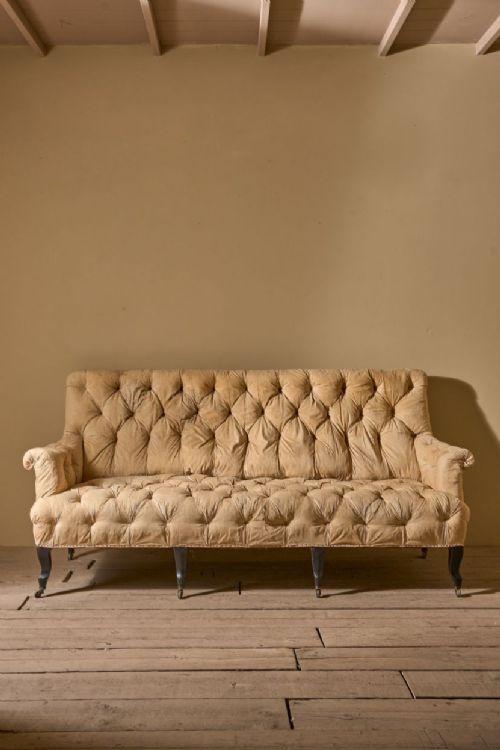
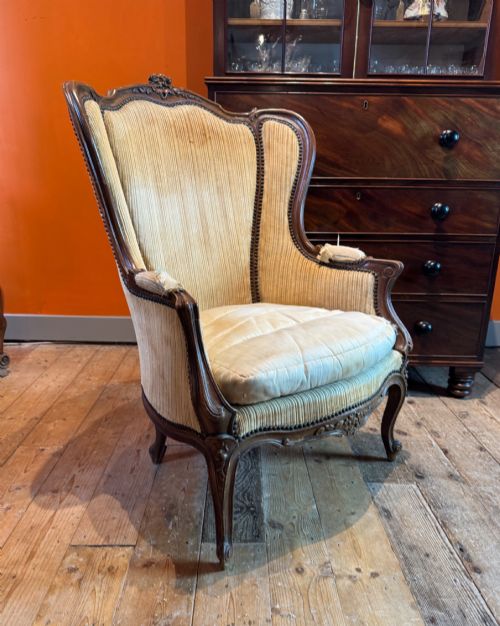
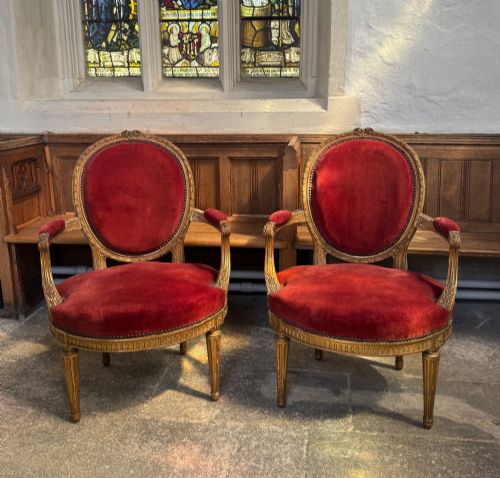
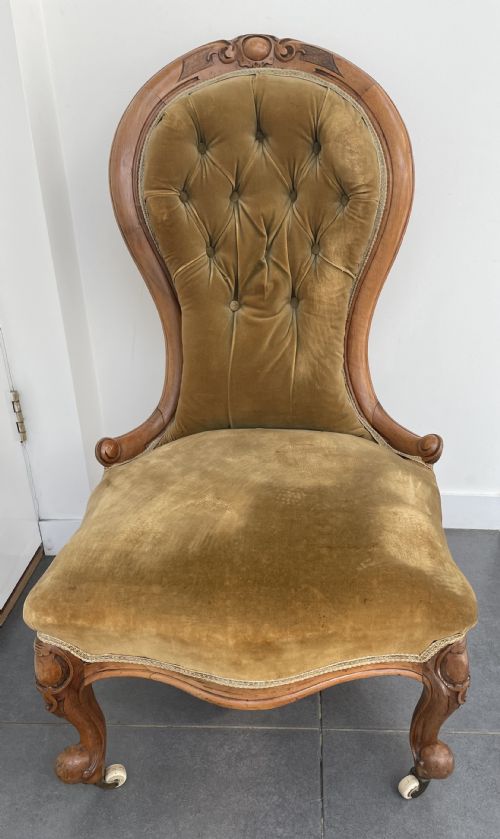
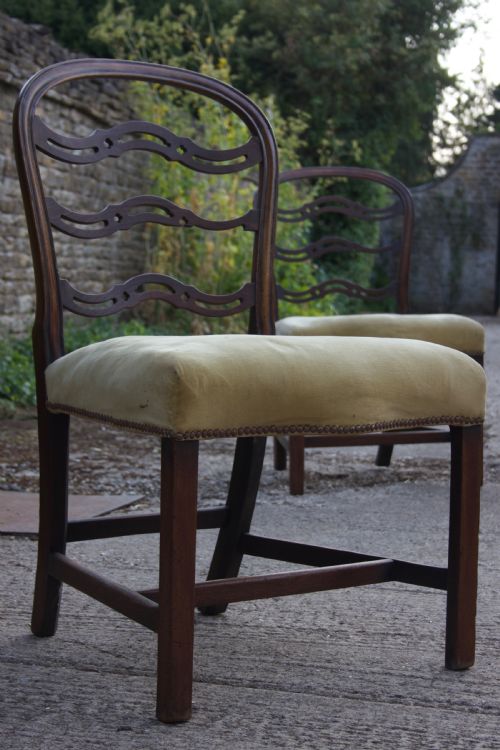
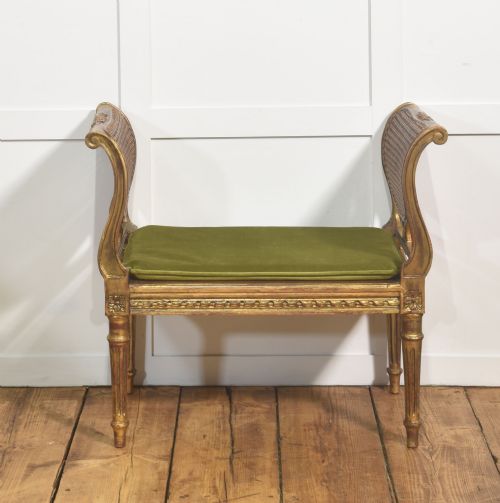
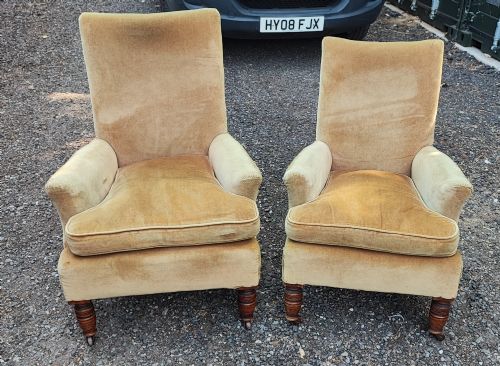
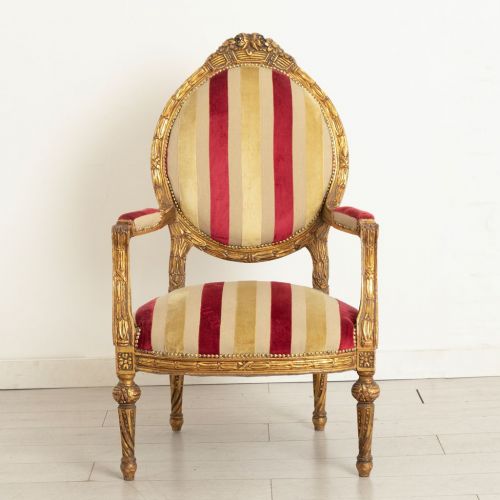
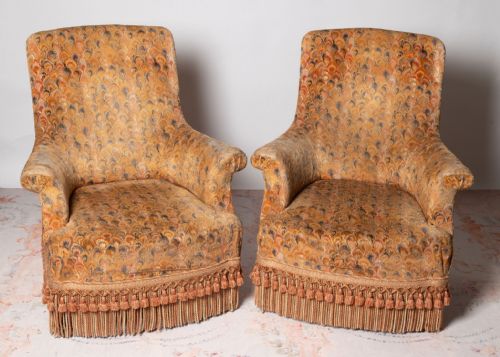
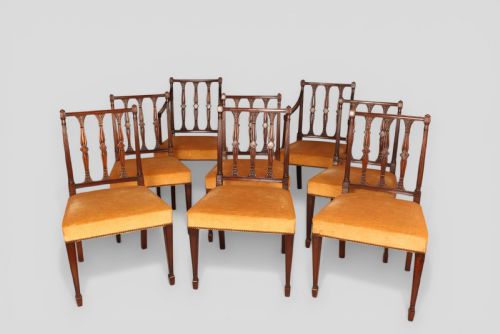
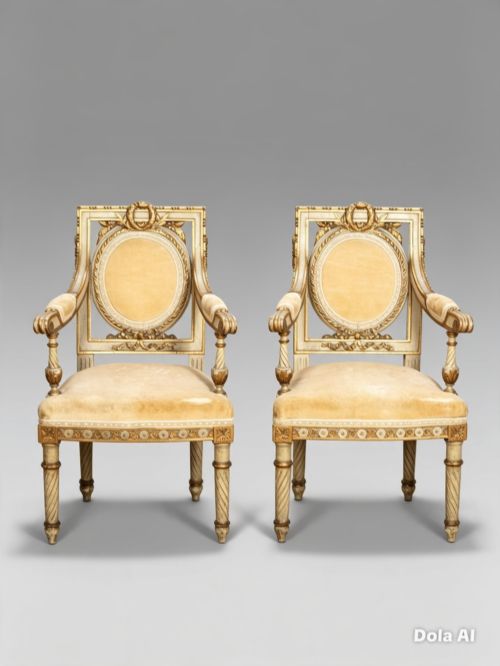
A gold velvet seat encompasses a wide variety of seating forms, including armchairs, dining chairs, sofas, and stools originating from the Georgian period through to the early twentieth century. Buyers seeking a gold velvet seat will frequently encounter nineteenth-century French giltwood frames, Victorian walnut and mahogany chairs, and deep-seated country house sofas.
The selection ranges from intimate boudoir and nursing chairs to large conversational sofas and sets of dining chairs. Many pieces reflect revival aesthetics such as Louis XVI style and Napoleon III design, alongside classic English Victorian and Regency forms.
Materials and Construction
Frames are constructed from hardwoods such as mahogany, walnut, fruitwood, and rosewood, often paired with carved or gilded wood and giltwood. Brass details and cane work also appear across specific chairs and window stools.
Upholstery relies on traditional techniques, utilising velvet and chord velvet over sprung or padded seat structures, occasionally complemented by feather seat cushions or deep buttoning.
Periods represented span from Georgian dining chairs to early twentieth-century boudoir seating.
Assessing Quality and Craftsmanship
Quality rests in the crispness of the timber carving and the integrity of the underlying frame construction, distinguishing robust architectural joinery from lesser assembly. Gilded surfaces show distinction through the depth and hand application of the finish rather than flat uniformity.
The sophistication of the upholstery work, the weight and nap of the velvet, and the retention of maker identity or attributed workshop provenance elevate individual examples within their period.
Blyth & Sons·Lamb of Manchester·Howard and Sons
The Gold Velvet Seat Glossary
- Giltwood
- Timber treated with gold leaf or gilt preparation before carving or moulding. This finish defines many French and revival salon chairs from the nineteenth century.
- Bergere
- An enclosed upholstered armchair with wooden framing around the sides and back. It often incorporates cane panels or tight upholstery.
- Fauteuil
- An open-framed armchair with upholstered armrests, originating in France. The wooden arms typically expose carved detailing along the grip.
- Balloon Back
- A rounded, oval-backed chair design popular during the Victorian era. The curved timber shape resembles a filled balloon.
- Napoleon III
- A nineteenth-century French eclectic design style drawing heavily on Louis XIV, Louis XV, and Louis XVI aesthetics. It frequently utilises rich gilding and buttoned upholstery.
Gold Velvet Seat: Frequently Asked Questions
How do I clean antique velvet?
Velvet requires gentle brushing with a soft-bristled brush following the pile direction to remove dust. Professional textile cleaning is advised for heavier marks to protect the historic pile.
Avoid using water or domestic detergents directly on antique fabrics, as moisture can damage both the velvet pile and the underlying stuffing materials.
Are these seats suitable for daily use?
Most nineteenth-century armchairs and dining chairs were built from solid hardwoods designed for robust daily service. Regular seating remains practical provided the frame joints and internal webbing are secure.
Delicate giltwood salon pieces or antique window stools benefit from more mindful placement where heavy, continuous daily strain is minimised.
How do I identify a Victorian chair?
Victorian seating frequently employs dark timbers such as walnut and mahogany, often featuring deep buttoning, turned legs, or carved balloon backs. Construction methods from this era transition toward heavier proportions.
Examining the underside reveals period fixings, hand-turned screws, and traditional webbing that help separate mid-to-late nineteenth-century work from later reproductions.
What is a conversation sofa?
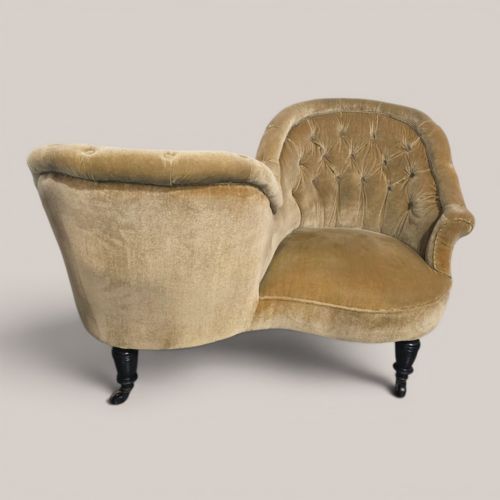
A conversation sofa is an upholstered seating form designed to allow two people to sit facing opposite directions while maintaining easy dialogue. These pieces are often double-ended or serpentine in layout.
Such furniture served grand Victorian reception rooms where central floor placement encouraged social interaction among guests.