



Gold Upholstered Ottoman
These gold upholstered ottoman options bring low seating and foot rests into a room with giltwood frames and rich fabric covers.
Gold Upholstered Ottoman
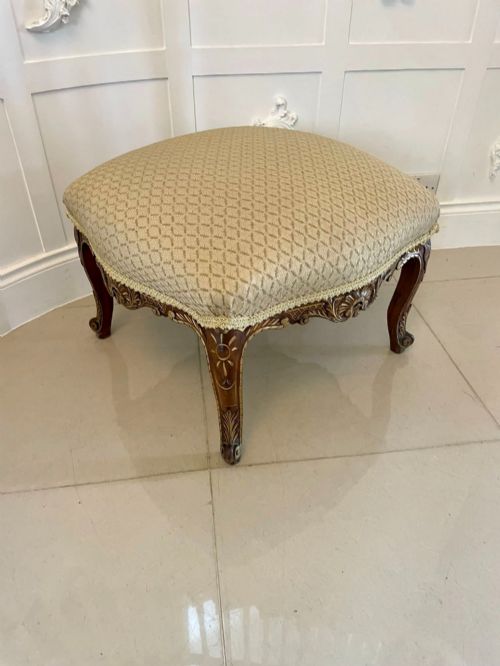
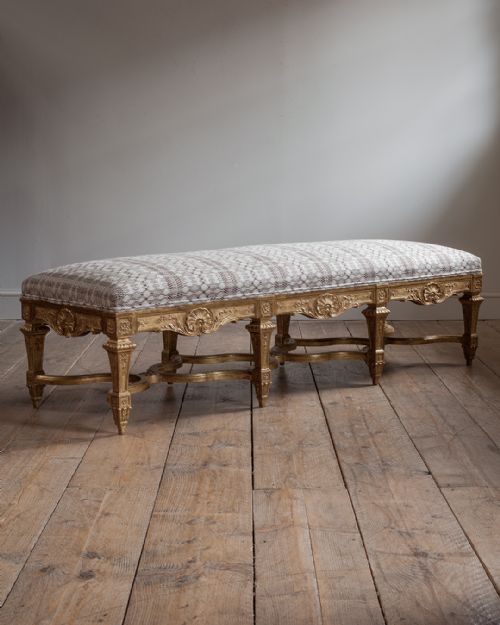
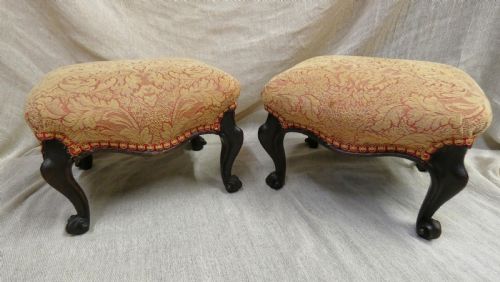
A gold upholstered ottoman functions as a seat, footstool or low bench, often taking the form of a French-influenced giltwood frame with soft fabric top. Buyers seeking a gold upholstered ottoman encounter pieces ranging from compact Victorian footstools to large nineteenth-century window seats and duchesse brisee sections.
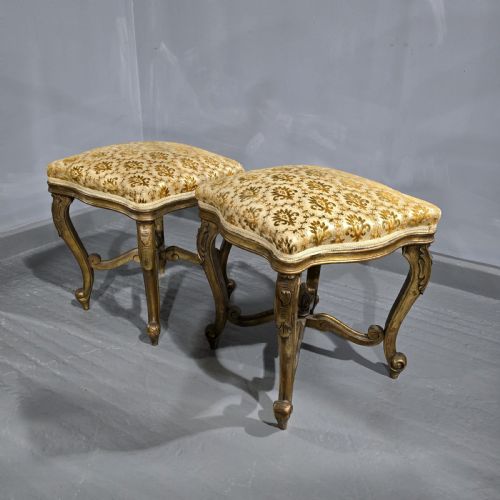
The selection on this page draws heavily from the nineteenth century, including Victorian and Regency eras alongside revival movements such as Louis XV and Louis XVI styles. These items appear primarily as stools, footstools, window seats and work boxes upholstered in velvet, silk or plain fabric.
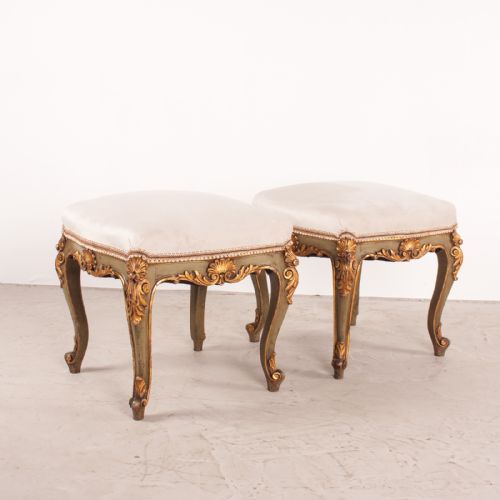
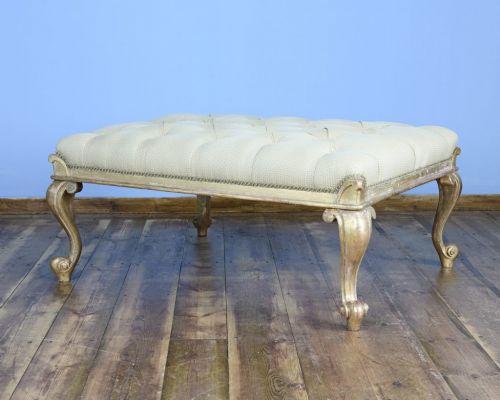
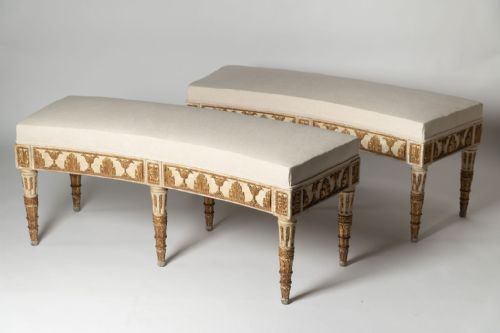
Makers and workshops across France, Italy and Britain produced these items, utilising carved wood, walnut and mahogany beneath heavy gilding. The variety spans simple rectangular footrests to grand scale parcel gilt designs with deep buttoned upholstery.
Materials and construction methods
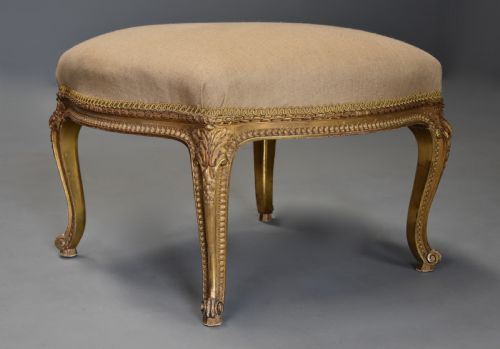
Frames are shaped from timber such as walnut, mahogany or general carved wood, then coated with gold leaf or paint to create the characteristic gilt finish. Skilled artisans hand-carved details like floral motifs, scrollwork and fluted legs into the wooden structures.
Upholstery techniques involve deep buttoning, silk coverings and velvet textiles secured over padding to create a resilient and decorative top surface. Certain pieces incorporate stamps or structural elements typical of nineteenth-century French and British cabinet makers.
Listings span the nineteenth century, featuring Victorian, Regency, and French revival styles built from walnut, mahogany, and giltwood.
Evaluating craftsmanship and condition
Quality rests in the depth and crispness of the hand carving on the wooden frame, where sharper relief and balanced proportions distinguish finer work. The application of gold leaf or period gilding shows superior ageing compared to flat or uniform modern paints.
Structural integrity depends on the joinery of the timber legs and rails, which should remain solid beneath the weight of daily use. Original upholstery techniques, such as traditional stuffing and precise buttoning, elevate a piece above later re-coverings.
LOIDRAULT FRERES PARIS·A.M.E. Fournier
The Gold Upholstered Ottoman Glossary
- Giltwood
- Timber coated with gold leaf or powder over a prepared gesso base. This finish provides the bright golden surface seen on many period frames.
- Duchesse brisee
- A multi-part daybed or chaise longue that separates into an armchair and one or two stool sections. It combines seating and foot support in a single suite.
- Curule stool
- An ancient Roman magistrate chair shape featuring intersecting curved legs forming an X-form base. Nineteenth-century revivalists adopted this form for formal seating.
- Parcel gilt
- A decorative treatment where only specific carved highlights on a wooden frame receive gold leaf, leaving underlying wood or paint exposed elsewhere.
- Buttoning
- A method of upholstery where twine pulls the fabric deep into the padding at regular intervals, securing the filling and creating geometric tufts.
Gold Upholstered Ottoman: Frequently Asked Questions
What is a gold upholstered ottoman?
A gold upholstered ottoman is a low seat or footrest featuring a gilded wooden frame and a fabric-covered top. These items serve as functional furniture and decorative accents in drawing rooms and bedrooms.
They appear in various historic styles, from ornate French rococo revival designs to restrained Victorian footstools.
How were these ottomans used historically?
Historically, these pieces functioned primarily as footrests before armchairs, or as low auxiliary seats for dressing and social gatherings. Some larger examples, such as work boxes or window seats, provided dual purposes for storage and resting.
Their placement was typically in formal reception rooms where gilded furnishings demonstrated the owner's taste.
How do I care for antique giltwood?
Antique giltwood requires gentle dusting with a soft, dry cloth to protect the delicate gold leaf surface from abrasion. Moisture and chemical cleaners can strip the historical finish entirely.
Keep these items away from direct sunlight and strong heat sources to prevent the wood and underlying gesso from cracking.
How can I tell a Victorian piece from a Regency one?
Regency pieces often display classical restraint, drawing on ancient Greek and Roman forms such as the curule X-frame. Victorian items frequently embrace heavier proportions, eclectic revival styles and deep buttoned upholstery.
Examining the turning, carving depth and secondary woods helps clarify the specific period of manufacture.