
Gold Trilogy Engagement Ring
A gold trilogy engagement ring holds three stones representing past, present, and future, combining traditional sentiment with enduring style.
Gold Trilogy Engagement Ring
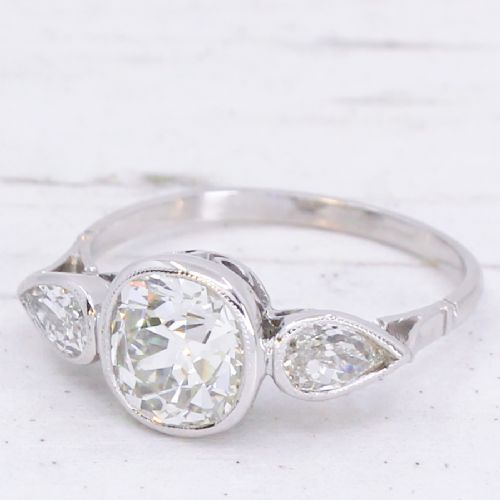
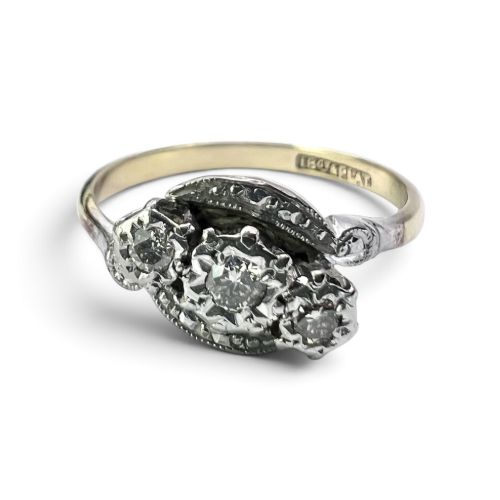
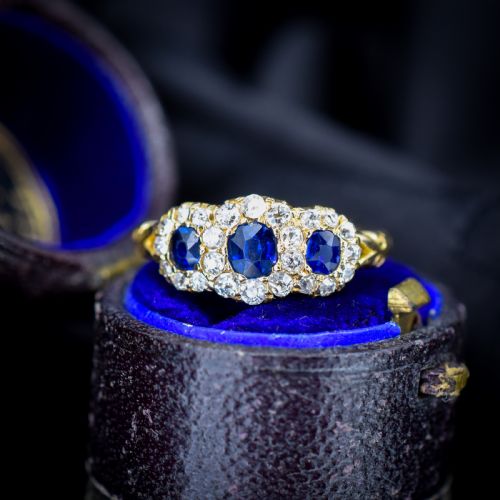
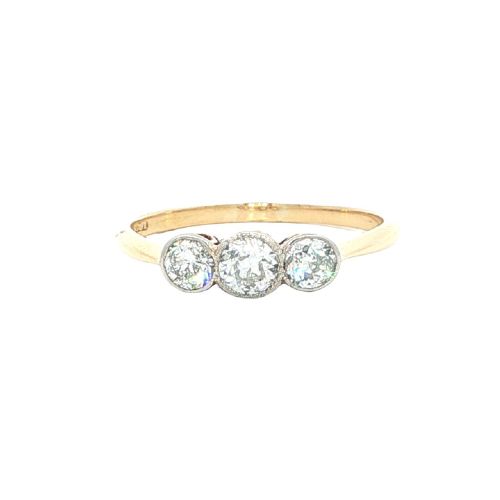
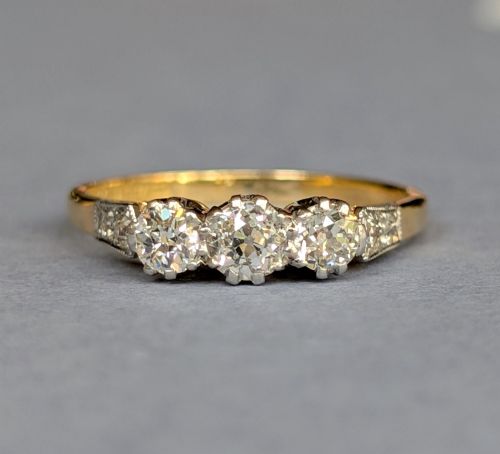
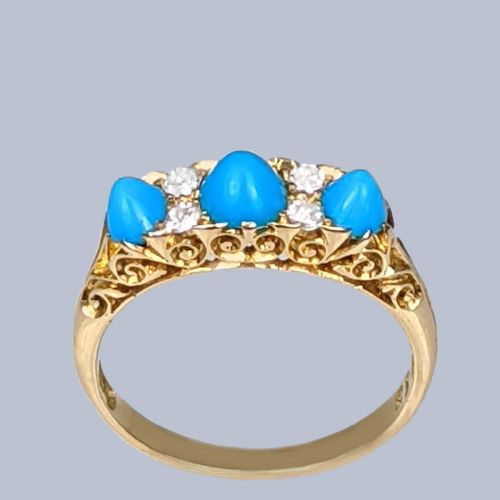
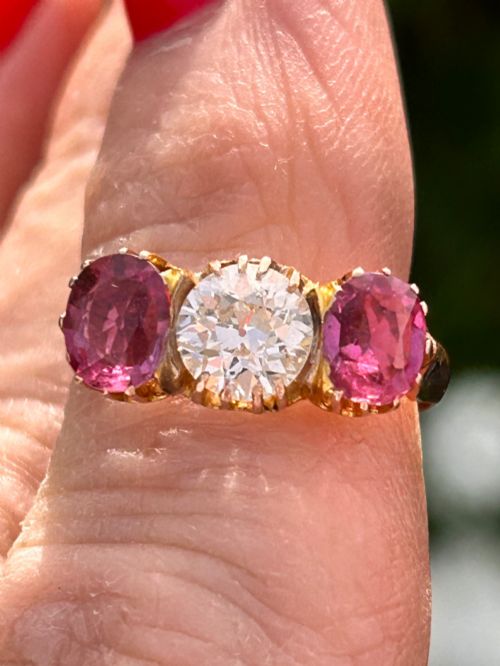
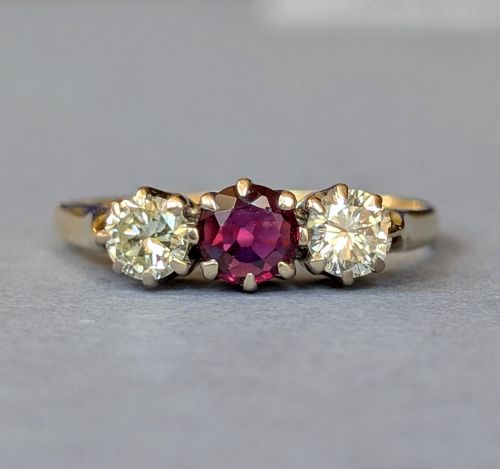
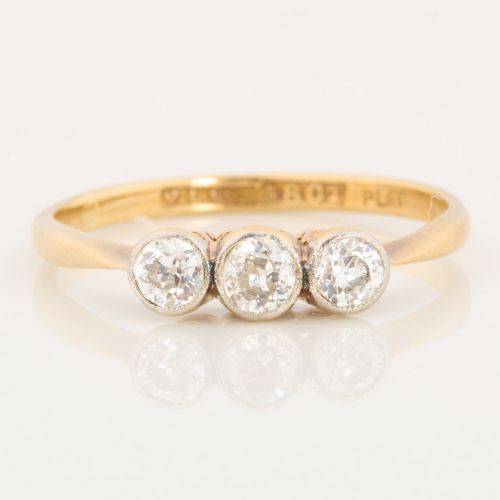
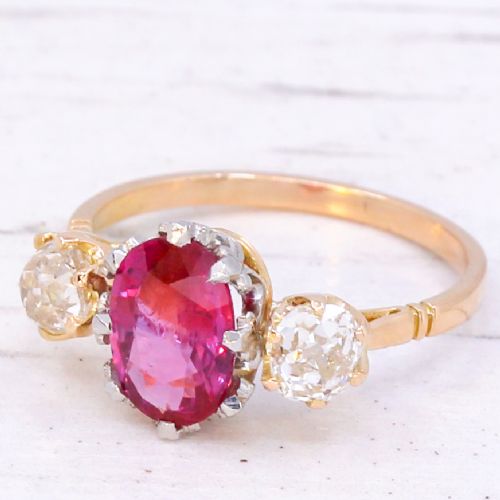
When searching for a gold trilogy engagement ring, buyers encounter three-stone configurations spanning the Victorian, Edwardian, Art Deco, and mid-century periods. These pieces showcase a central gem flanked by two side stones, a design steeped in romantic symbolism.
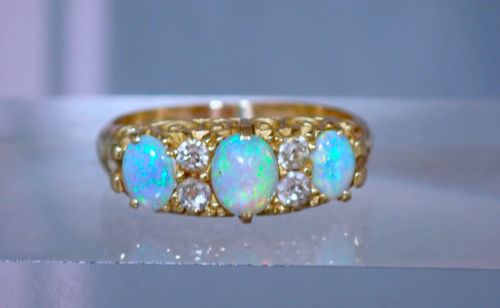
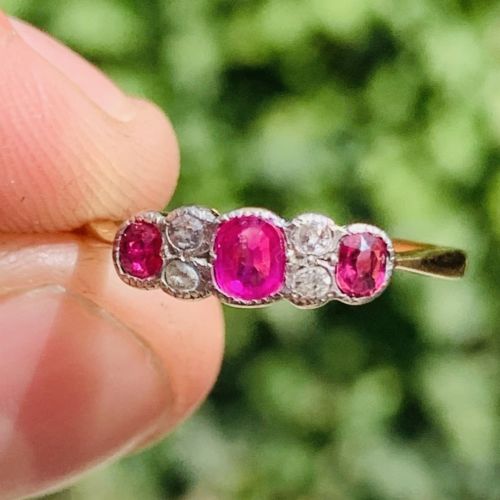
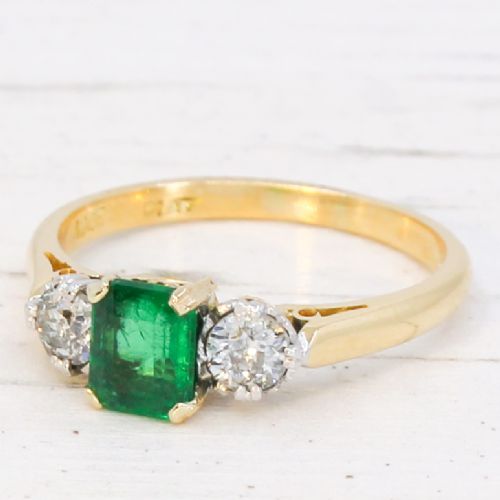
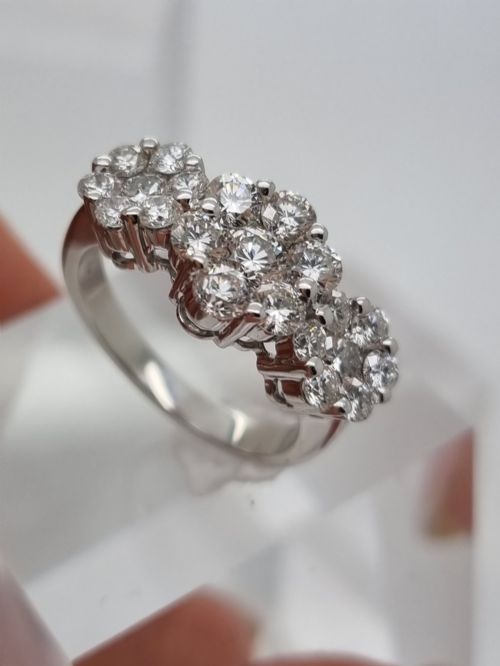
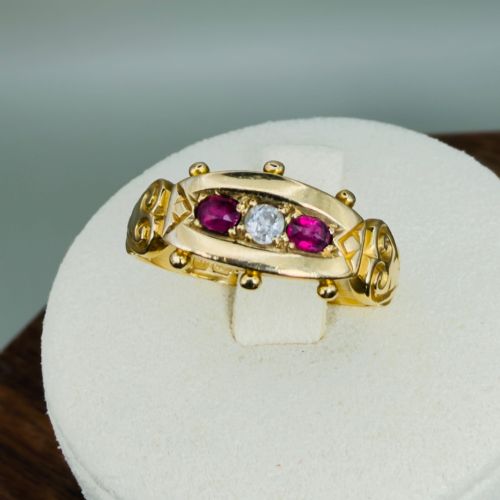
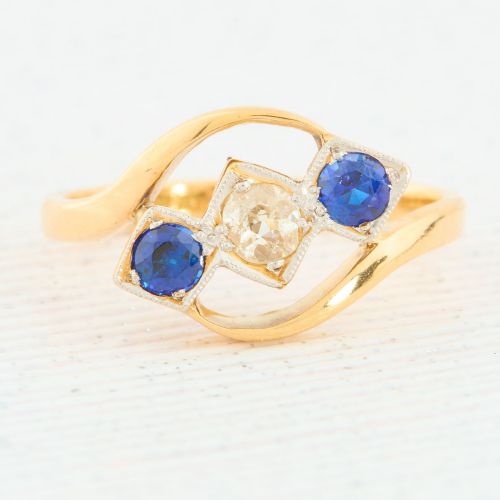
The materials span 18ct gold, 18ct yellow gold, white gold, and platinum settings. Diamond is the most frequent centre stone, often accompanied by rubies, sapphires, emeralds, opals, or pearls.
Victorian and Edwardian examples sit alongside 1930s and 1940s vintage designs. The overarching format remains consistent while the specific gemstone combinations vary widely across eras.
How they were made
Jewellers typically utilised 18ct gold for the band and often combined it with platinum settings to securely hold diamonds and coloured gemstones. This dual-metal approach maximised durability while maintaining the warm tone of gold.
Gemstones such as old cut diamonds, cushion cuts, and sapphires were hand-set into claw, bezel, or carved half-hoop mountings. Hallmarks stamped into the metal frequently record assay offices like Birmingham and Chester alongside specific production years.
Listings feature gold trilogy engagement rings set with diamonds, rubies, sapphires, emeralds, opals, and pearls across Victorian, Edwardian, and Art Deco periods.
What varies in quality
The standard of a piece rests upon the calibre and match of the three gemstones, particularly where old cut diamonds or unheated rubies are concerned. Proportions between the central stone and its flanking companions dictate the overall visual harmony.
Fine craftsmanship shows in the crispness of the claw work and the integrity of the gold or platinum band. Maker marks and clear hallmarking further distinguish superior examples from standard production.
The Gold Trilogy Engagement Ring Glossary
- Old cut diamond
- A diamond cut popular before modern brilliant faceting standards, featuring a smaller table and higher crown that produces a distinctive soft glow under candlelight.
- Trilogy ring
- A ring set with three stones, traditionally symbolising the past, present, and future of a relationship.
- Half-hoop ring
- A ring design where gemstones span across the upper arc of the band rather than encircling the entire finger.
- Platinum
- A dense, durable white metal utilised in jewellery manufacturing for its strength in secure stone settings.
- Hallmark
- An official stamp struck into precious metals indicating purity, origin, and often the year of assay.
Gold Trilogy Engagement Ring: Frequently Asked Questions
What does a gold trilogy ring symbolise?
The three stones represent the past, the present, and the future of a couple's shared life together.
This romantic meaning made the style a popular choice for engagements across the Victorian and Edwardian eras.
Are these rings suitable for daily wear?
Most examples utilise durable 18ct gold and platinum, making them robust enough for everyday engagement wear.
Softer gems like opal require extra care compared to harder stones like diamond or sapphire.
How do I identify an Edwardian trilogy ring?
Edwardian pieces often feature delicate platinum-topped gold work and intricate gallery details surrounding the stones.
Assay office hallmarks and stylistic lightness help distinguish them from heavier Victorian designs.
Can I find coloured gemstones in these rings?
Rubies, sapphires, emeralds, and opals frequently appear alongside diamonds in these three-stone settings.
Coloured centre stones flanked by smaller diamonds were particularly favoured during the late nineteenth and early twentieth centuries.