


Gold Tone Watercolour
Gold tone watercolour artworks bring subtle light and historic atmosphere into a room.
Gold Tone Watercolour
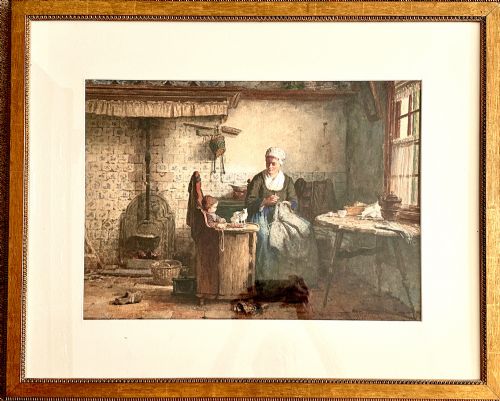
When you search for gold tone watercolour, you are looking at original paintings and framed artwork created across the nineteenth and early twentieth centuries. These works include landscape scenes, architectural studies, and interior portraits executed on paper with watercolours and ink.
The pieces on this page span the Victorian and Edwardian periods, featuring British, Italian, and Dutch realist styles. You will encounter castle river landscapes, garden scenes in Kashmir, and framed architectural studies.
Common forms include glazed framed paintings and monochrome ink works enhanced with watercolour. Their subjects range from rural harvest scenes to historical portraits, reflecting varied artistic traditions of the 1800s and early 1900s.
Materials and construction methods
Artists painted these works on paper using watercolours and ink, frequently enclosing the finished pieces behind protective glass. The application of pigment relied on water-based techniques that allowed for delicate washes and tonal depth.
Framing typically involved wood and giltwood surrounds that complement the golden tones within the paintings. These period frames preserve the paper artworks while adding structural presence and decorative appeal.
Materials documented across these artworks include paper, watercolour, watercolours, ink, glass, wood, giltwood, and gilt wood.
Assessing quality in historical works
The standard of a gold tone watercolour rests on the precision of the brushwork and the clarity of the composition. Skilled handling of light and pigment distinguishes accomplished artists from minor practitioners.
Condition of the paper and the integrity of the original wood or giltwood frame also shape the character of each piece. Intact glazing and well-preserved paper surfaces maintain the visual impact intended by the creator.
Hendrik Valkenberg·David Cox Jnr·James Hardy of Bath·G Villiers Stuart·Charles H Poingdestre·JE Hood·Alexander Melville
The Gold Tone Watercolour Glossary
- Watercolour
- A painting method in which the paints are made of pigments suspended in a water-based solution. It allows for translucent layers of colour.
- Giltwood
- Wood that has been treated with gold leaf or a gold-coloured finish. This material is standard for period frames accompanying nineteenth-century works.
- Monochrome ink
- A drawing medium using a single colour of ink, often combined with watercolour washes. It provides strong foundational lines beneath transparent pigments.
- Victorian
- Pertaining to the reign of Queen Victoria, spanning from 1837 to 1901. This era produced many of the detailed landscape and figurative watercolours seen here.
Gold Tone Watercolour: Frequently Asked Questions
How should I hang a framed watercolour?
Keep watercolours away from direct sunlight to prevent the pigments and paper from fading over time. Stable indoor humidity protects both the paper support and the wooden frame.
Ensure the hanging wire and wall fixings are secure, as period frames with glass can carry significant weight.
Are these paintings original works?
The listings consist of original hand-painted watercolours and ink drawings created by artists in the nineteenth and early twentieth centuries.
Each piece is a unique creation on paper rather than a modern reproduction or mechanical print.
What subjects are most common?
Landscapes, architectural views, and figurative interiors dominate the works from this era. Artists recorded both British countryside scenes and foreign travels.
Portraits and historical subjects also appear among nineteenth-century examples.
How do I identify the period?
Period indicators include the artist's active dates, stylistic conventions of Victorian or Edwardian art, and framing materials. Inscribed dates on the mounts or reverse often confirm the decade.
Paper types and framing construction styles also offer clues to the era of creation.