
Gold Three Stone Engagement
Gold three stone engagement rings carry past sentiments forward, uniting three gems on bands of yellow or white gold.
Gold Three Stone Engagement
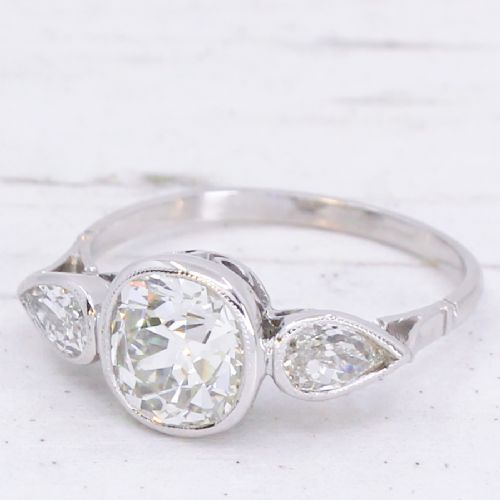
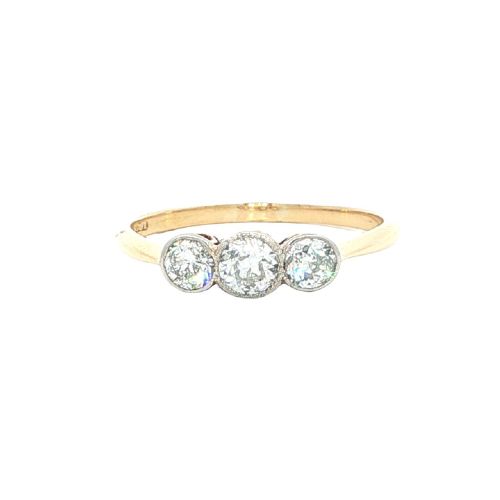
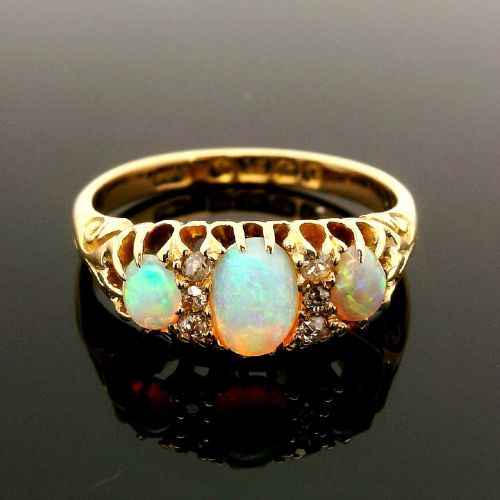
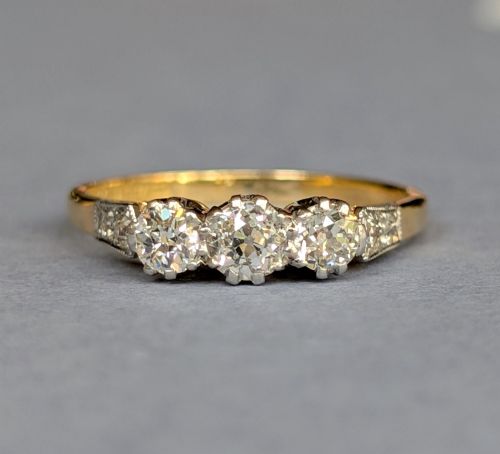
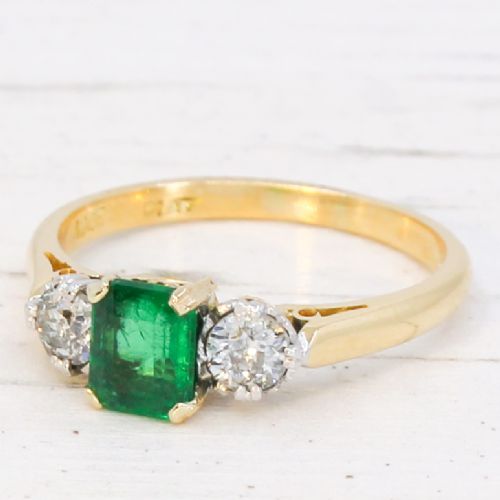
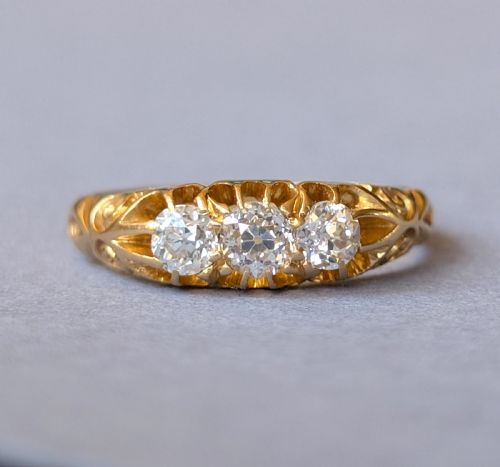
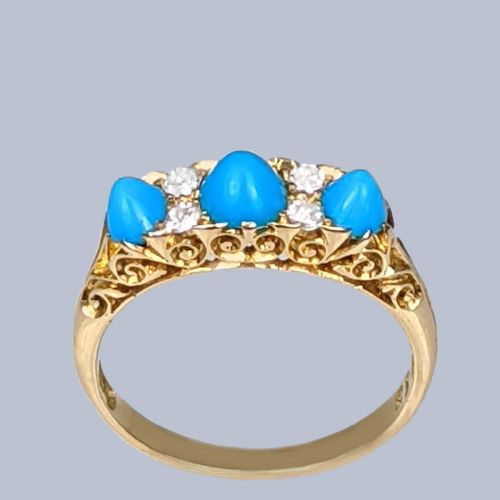
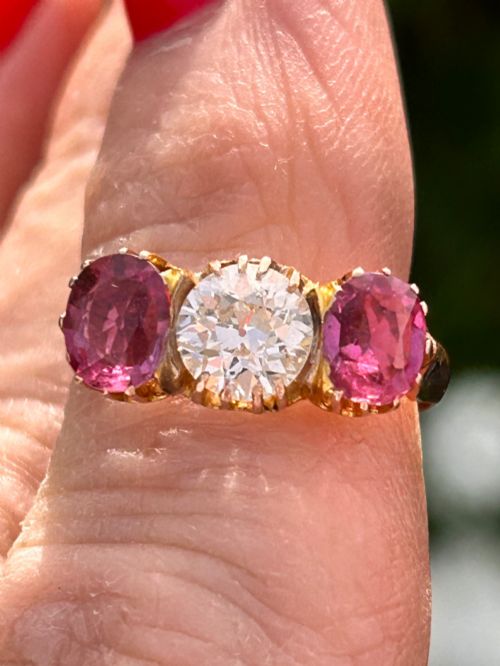
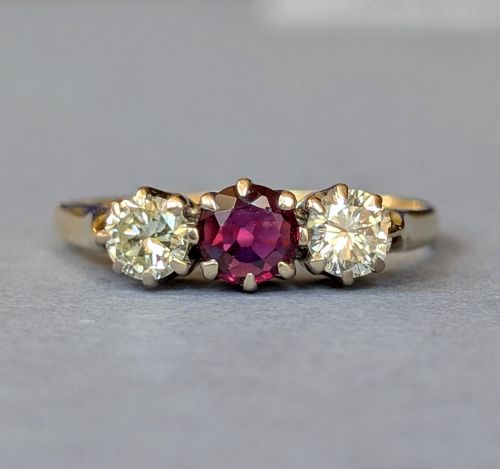
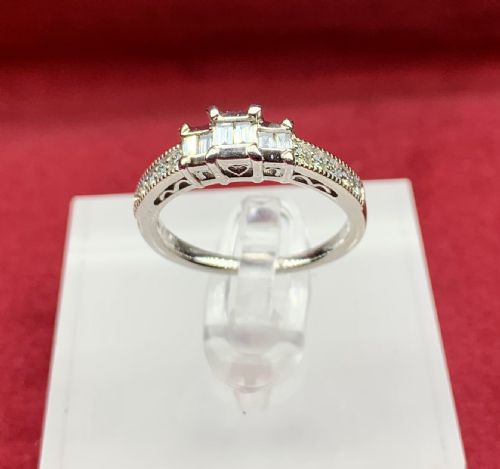
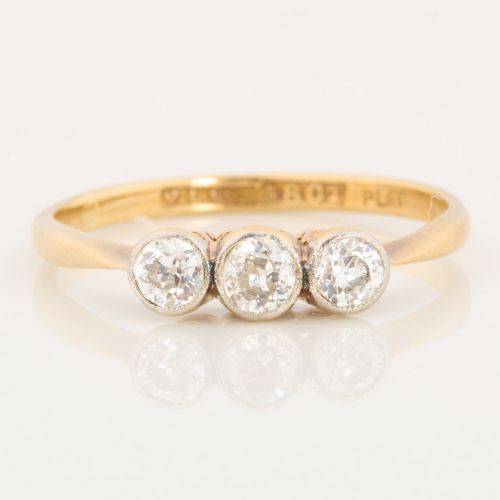
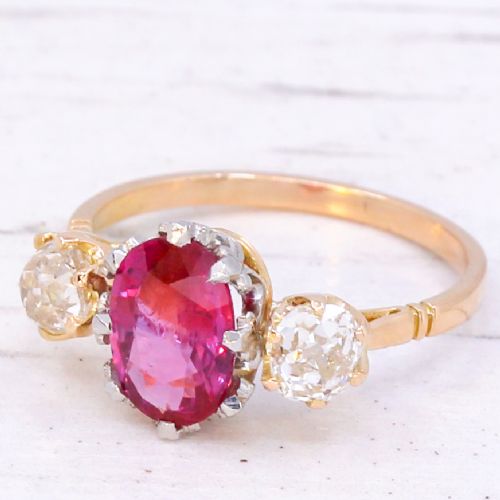
A gold three stone engagement ring, often called a trilogy ring, presents a central gemstone flanked by two smaller side stones on a precious metal band. These pieces span from the late nineteenth century through the Edwardian, Art Deco, and mid-century periods, capturing diverse aesthetic movements across generations.
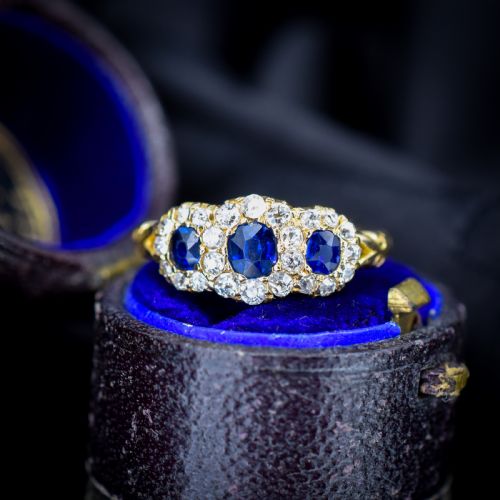
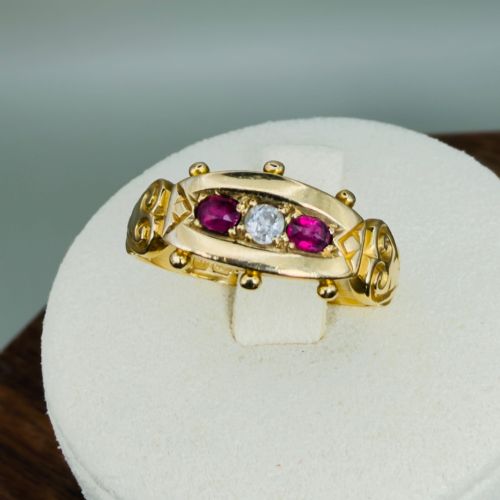
The most common examples on this page combine old cut diamonds or coloured gems like sapphires, rubies, and opals set in eighteen carat yellow gold or platinum. Surviving rings from Victorian and Edwardian workshops frequently pair diamonds with rich blue sapphires or deep red rubies.
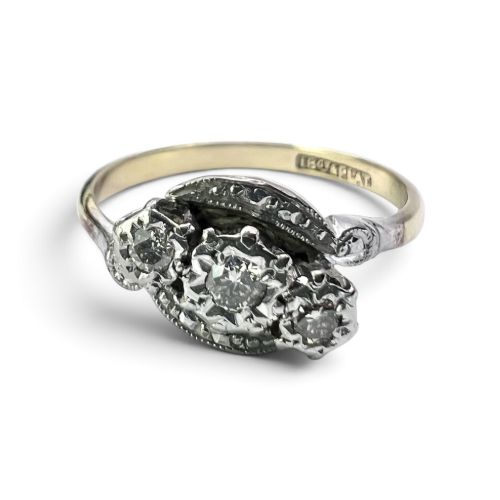
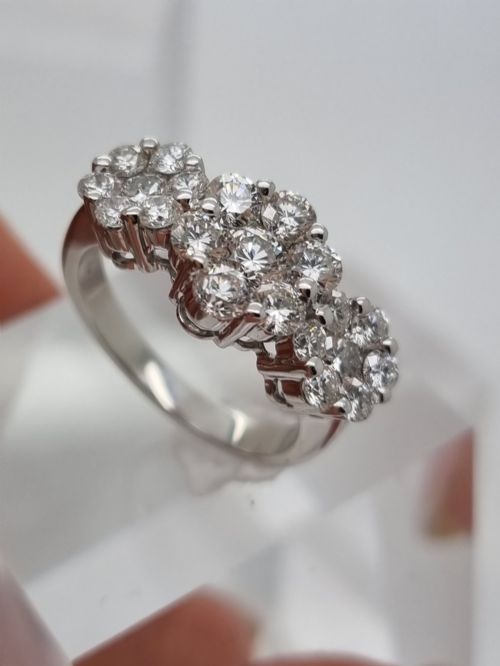
Makers utilised boat shapes, boat rings, and trefoil cluster arrangements alongside standard linear trilogy settings. Pieces from the nineteen-thirties and nineteen-forties often reflect streamlined geometric influences typical of Art Deco design.
How They Were Made
Goldsmiths worked primarily with eighteen carat yellow gold and platinum to fabricate the mounts, often combining yellow gold shanks with platinum settings to enhance the brilliance of white stones. Hand-cut diamonds such as old cushion cuts and old pear cuts display distinct facets shaped by early hand tools.
Gemstones including emeralds, opals, and unheated rubies were secured using claw settings or flush mountings tailored to individual stone shapes. Traditional techniques like carved half hoop designs and gypsy settings demonstrate the detailed handwork of nineteenth and twentieth-century jewellers.
What Varies in Quality
The distinction between tiers rests upon the natural quality, size, and matching of the central and side gemstones. Finer examples display well-proportioned old cut diamonds paired with high-grade coloured stones such as minor oil Colombian emeralds or natural opals with strong play of colour.
Structural integrity and the precision of the original goldsmith work also separate ordinary pieces from superior ones. Refined claw work, substantial gold weight, and minimal wear to the antique shank indicate higher initial craftsmanship.
The Gold Three Stone Engagement Glossary
- Trilogy ring
- A ring featuring three distinct gemstones mounted in a row, traditionally symbolising the past, present, and future.
- Old cut diamond
- A diamond cut by hand before the mid-twentieth century, characterised by a smaller table, higher crown, and open culet.
- Boat ring
- A ring featuring a navette-shaped setting that curves gently across the finger, typical of Georgian and Victorian designs.
- Trefoil cluster
- An arrangement of three stones grouped closely together to resemble a three-leaved clover or floral motif.
- Gypsy setting
- A style where stones are embedded flush into the thick metal band, popular during the late Victorian and Edwardian eras.
Gold Three Stone Engagement: Frequently Asked Questions
How do I care for an antique gold ring?
Antique gold rings require gentle handling due to their age and historical setting techniques. Regular inspection by a jeweller helps ensure the claws hold each gemstone securely.
Avoid wearing vintage rings during rigorous physical activities or exposing them to harsh household chemicals. Soft brushes and warm soapy water suffice for routine cleaning of gold and diamonds.
How can I tell the period of a ring?
Stylistic clues and gemstone cuts often reveal the era in which a ring was made. Hand-cut old European and old mine diamonds point towards Victorian and Edwardian periods.
Geometric lines and platinum accents typically indicate Art Deco origins from the nineteen-twenties and nineteen-thirties. Hallmarks stamped inside the band provide further official records of origin and date.
Can these rings be resized easily?
Most gold and platinum rings can be altered by a skilled jeweller to fit different finger sizes. The feasibility depends on the band thickness and the presence of intricate shoulder engravings.
Plain gold shanks adapt well to resizing without disturbing the main stone settings. Elaborate carved half hoop designs require extra care to preserve the original metalwork.