
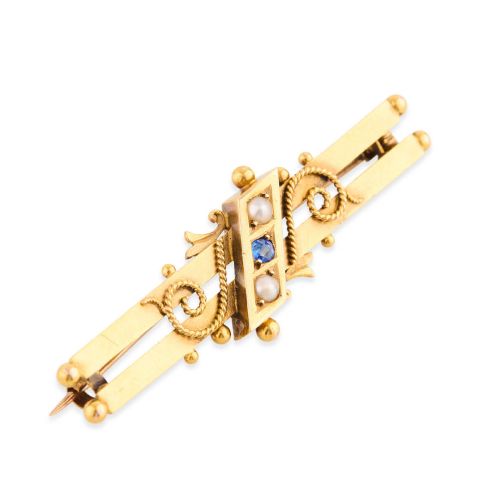
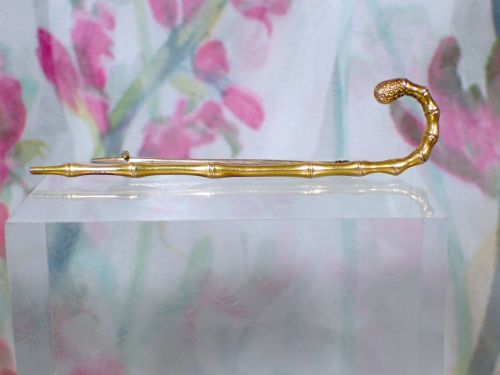
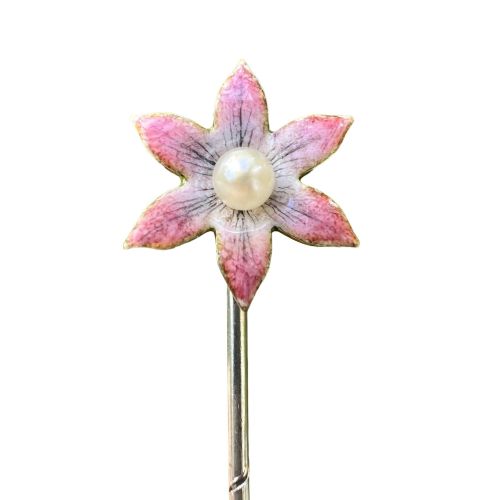


Gold Stick Pin Brooch
These gold stick pin brooch items combine the slender profile of a lapel pin with the secure fastening of a brooch, spanning Victorian and Edwardian periods.
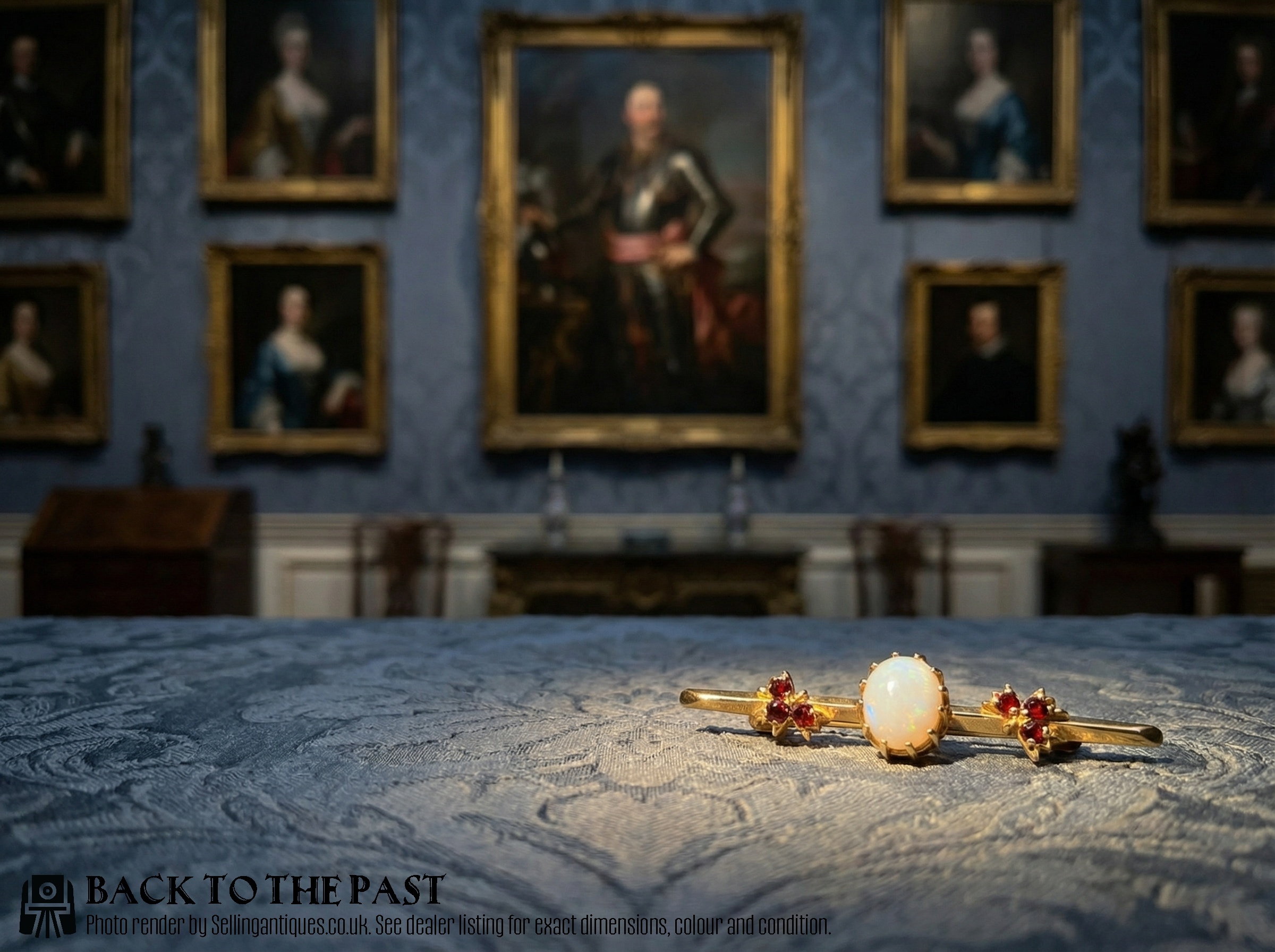
Gold Stick Pin Brooch
A gold stick pin brooch serves primarily as a decorative accent for lapels, cravats, and heavy fabrics, merging the long stem of a traditional stick pin with a brooch clasp. When searching for a gold stick pin brooch, collectors encounter diverse forms including walking sticks, hunting bugles, jockey caps, and delicate floral motifs.
The pieces on this page originate predominantly from the Victorian and Edwardian eras, alongside select examples from the nineteenth century through to the mid-twentieth century. Forms vary from simple bar configurations and crescent moons to figurative miniature portraits, sporting motifs, and natural nuggets.
Makers and artisans utilised varying carats of yellow gold, white gold, and platinum to form the structural foundations of these miniature works. Gemstones such as diamonds, pearls, garnets, amethysts, sapphires, opals, and rubies frequently adorn the precious metal work.
How they were made
Goldsmiths shaped 9ct, 15ct, and 18ct yellow gold, white gold, and platinum into slender shafts, twisted bars, and figurative mountings using traditional casting and wire-working techniques. Cannetille wirework and enamel details frequently enrich the gold surfaces.
Master jewellers set old-cut European diamonds, seed pearls, baroque pearls, and various coloured gemstones into the gold frames using grain setting and bezel techniques. Certain pieces incorporate carved hardstone, Essex crystal, and miniature painted portraits directly into the gold mounting.
Listings feature 9ct, 15ct, and 18ct yellow gold alongside white gold and platinum settings.
What varies in quality
The fineness and weight of the gold, ranging from 9 carat up to 18 carat gold and platinum, establish the fundamental material quality of each piece. Superior examples display intricate hand-applied enamelling, detailed cannetille wirework, or finely carved hardstone elements.
The quality of the incorporated gemstones, particularly old-cut diamonds, natural opals, and matched pearls, dictates the distinction between standard production and exceptional examples. Original box settings and well-preserved pin stems further elevate the desirability among collectors.
The Gold Stick Pin Brooch Glossary
- Stick pin
- A long pin with a decorative head designed to be pushed through a tie, lapel, or scarf and secured behind the fabric with a clasp or cap. These pieces often double as small brooches.
- Cannetille
- A delicate form of wirework ornamentation resembling fine gold embroidery or filigree, popular in nineteenth-century jewellery. Goldsmiths soldered tiny twisted gold wires and granules onto the metal surface to create rich textures.
- Essex crystal
- A technique where a rock crystal cabochon is reverse-intaglio carved and hand-painted on the flat back to create a three-dimensional optical illusion. Motifs such as animals or portraits appear lifelike beneath the convex dome.
- Jabot pin
- An ornamental pin originally designed to fasten the frilly jabot lace on eighteenth and nineteenth-century garments. These pieces feature decorative terminals at both ends of a central pin.
- Old-cut diamond
- A diamond cut by hand before modern machinery standardised facet proportions, typically featuring a small table and a high crown. These stones produce a distinctive soft candlelight sparkle rather than modern brilliant fire.
Gold Stick Pin Brooch: Frequently Asked Questions
How were gold stick pin brooches worn?
These pieces were traditionally pushed through heavy fabrics, lapels, cravats, or heavy woollen coats to serve as both fastener and ornament. The pin passed through the material before securing with a safety clasp or protective cap.
Today, collectors wear them pinned to jacket lapels, hats, or scarves in much the same manner, often grouping multiple pins together for visual impact.
How do I date a Victorian piece?
Dating relies on examining the gold carat marks, pin mechanisms, and stylistic motifs associated with particular reigns. Victorian pieces often incorporate 15ct gold, natural pearls, and motifs like crescent moons or mourning subjects.
Later Edwardian and twentieth-century examples frequently feature lighter 9ct gold mounts, floral enamel work, or platinum settings combined with old-cut diamonds.
Are these pins made of solid gold?
The listings comprise pieces fashioned from solid precious metals including 9ct, 15ct, and 18ct yellow gold, white gold, and platinum. Hallmarks and metal stamps often verify the specific gold standard used by the maker.
Makers selected these solid gold alloys to ensure the long stems possessed sufficient rigidity and strength for piercing thick fabrics without bending.
What gemstones appear in these brooches?
Common stones include old-cut diamonds, natural pearls, seed pearls, garnets, amethysts, opals, rubies, and sapphires. Some examples also feature carved hardstone, Essex crystal, or painted miniature portraits.
These gems were chosen to complement the warm tones of yellow gold and the intricate wirework typical of nineteenth and early twentieth-century jewellery.