



Yellow Gold Safety Pin Brooch
These yellow gold safety pin brooch pieces are secure fastenings turned decorative jewellery, prized for their versatility and warm metal tones.
Yellow Gold Safety Pin Brooch
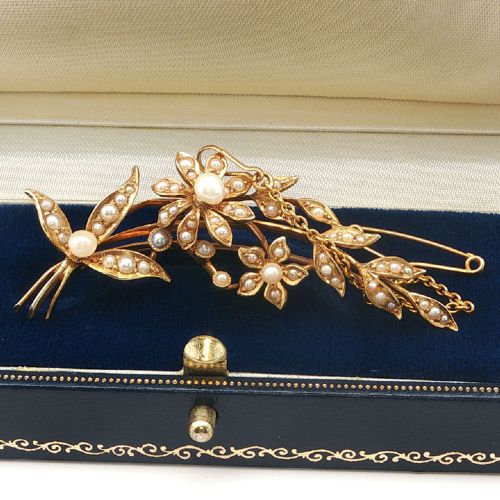
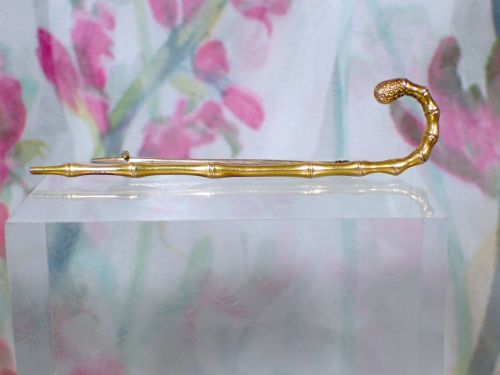
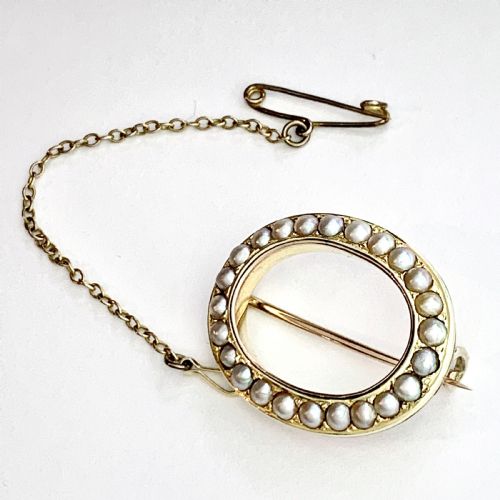
A yellow gold safety pin brooch adapts a utilitarian fastener into wearable ornamentation, appearing across Victorian, Edwardian, and mid-century periods. These items range from simple pins set with pearls or turquoise to elaborate bar brooches and shaped forms like swallows or walking sticks.
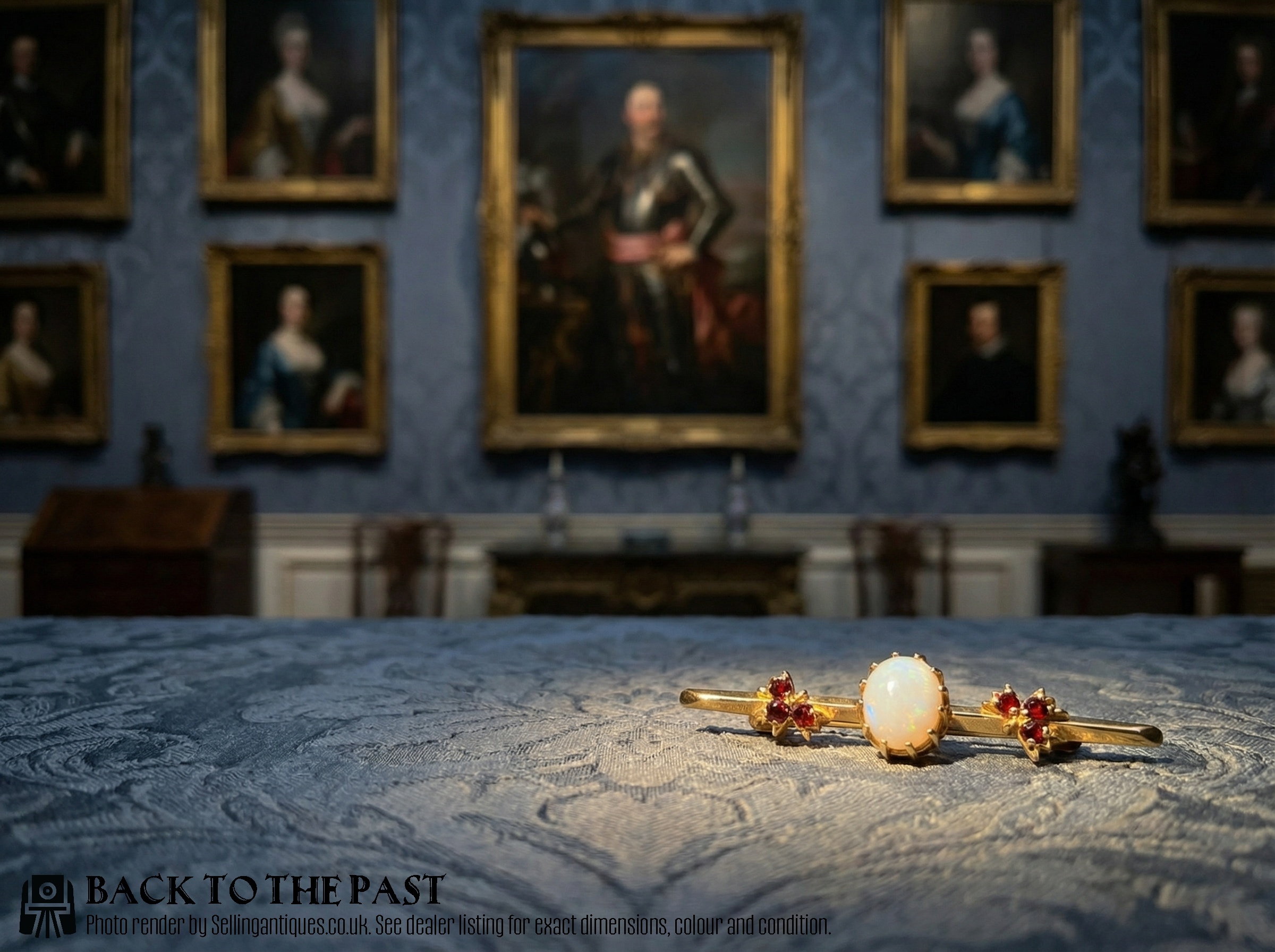
Victorian and Edwardian iterations frequently incorporate fifteen-carat gold alongside seed pearls or diamonds. Later vintage pieces from the 1920s to 1950s bring sapphires, opals, and garnets into the selection.
How they were made
Goldsmiths shaped nine-carat, fifteen-carat, and eighteen-carat yellow gold into pins, bars, and thematic motifs such as flowers and crescent shapes. Metalwork techniques like cannetille added delicate wirework texture to the body of the brooch.
Gemstones including old-cut diamonds, sapphires, peridots, and seed pearls were hand-set into the gold framework to complement the warm hue of the metal.
Several pieces double as miniature walking sticks and swallows, proving the Victorians loved pinning everyday objects to their lapels.
What varies in quality
The standard of a yellow gold safety pin brooch rests on the purity of the gold, ranging from nine-carat up to eighteen-carat, and the selection of matched gemstones. Pieces utilising fifteen-carat gold display a richer colour depth typical of older periods.
Finely executed details, such as securely mounted seed pearls, well-matched old-cut diamonds, and intricate hand-wrought motifs like cannetille work, distinguish superior examples from simpler utilitarian designs.
The Yellow Gold Safety Pin Brooch Glossary
- Cannetille
- A fine gold wirework technique resembling embroidery, popular in nineteenth-century jewellery production. It creates a textured, lace-like surface across the metal.
- Seed pearl
- A very small natural or cultured pearl, often half-drilled and glued or pegged onto gold settings. These diminutive pearls form delicate floral sprays and halos.
- Jabot pin
- An ornamental pin originally designed to fasten folds of fabric on a jabot cravat. They often feature an elongated pin stem with a decorative terminal.
- Old-cut diamond
- A hand-faceted diamond cut before the advent of modern brilliant-cut standards. These stones typically exhibit smaller tables and higher crowns.
Yellow Gold Safety Pin Brooch: Frequently Asked Questions
How do I wear a brooch safely?
Fasten the pin through tightly woven fabrics that can support the weight of the gold and gemstones without sagging. Using a removable safety chain, where fitted, provides additional security against loss.
Ensure the pin catch is fully engaged before stepping out. Store the brooch flat in a lined box when not being worn to prevent bending the pin stem.
Are these brooches solid gold?
The pieces listed utilise solid gold standards, specifically nine-carat, fifteen-carat, and eighteen-carat yellow gold. Hallmarks and metal tests confirm the composition.
Solid gold construction ensures durability over decades of wear. The metal develops a gentle patina with age rather than wearing away to reveal a base metal core.
How do I date a gold brooch?
Dating relies on stylistic clues, gemstone cuts, and manufacturing techniques characteristic of periods like the Victorian era or the 1920s. Motifs such as swallows and walking sticks point firmly to nineteenth and early twentieth-century tastes.
Examination of the pin mechanism and gold purity marks also helps narrow the production era. Fifteen-carat gold, for instance, strongly indicates British manufacture before the 1930s.
Can I clean gold jewellery at home?
Warm soapy water and a very soft brush will remove daily dust from the gold and hard gemstones safely. Dry the piece thoroughly with a soft cloth afterwards.
Avoid soaking items set with seed pearls, as moisture can weaken the adhesive or damage the organic nacre. Professional cleaning is recommended for antique settings with fragile stones.