





Gold Silver Pendant Brooch
These gold silver pendant brooch designs combine the security of a brooch with the versatility of a pendant for day and evening wear.
Gold Silver Pendant Brooch
A gold silver pendant brooch offers dual functionality, functioning equally well pinned to a lapel or suspended from a chain around the neck. The pieces catalogued here span the Victorian, Edwardian, and nineteenth-century periods, showcasing the craftsmanship of eras when convertible jewellery gained immense popularity.
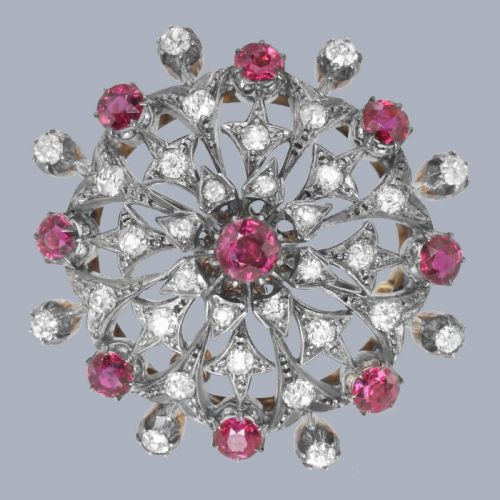
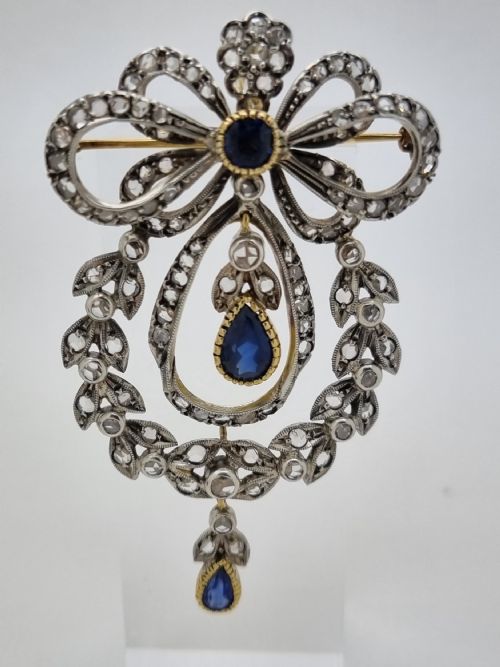
Starbursts, crosses, bows, and natural motifs such as flies, butterflies, and monkeys dominate the available forms. Most surviving examples pair silver settings on the face to brighten diamond sparkle with gold backing to protect clothing from tarnishing.
Collectors frequently encounter convertible pieces featuring detachable bails or fold-down pins that transform the ornament seamlessly. These items range from modest turquoise and pearl clusters to substantial diamond starbursts set with rubies, emeralds, sapphires, and enamel.
Materials and construction methods
The dual-metal technique relies on silver mounted over gold, allowing stones to be set securely in bright white metal while the underlying gold structure provides strength and warmth. Diamond, ruby, sapphire, emerald, turquoise, pearl, and paste stones are secured using period hand-cutting and collet-setting methods.
Goldsmiths utilised 18kt yellow gold and silver-gilt alongside standard gold components to construct intricate frames for multi-gem compositions. Fine detailing often incorporates enamel work, pique, and delicate wirework to delineate wings, petals, and structural ribbons.
Gold Silver Pendant Brooch Retail Price Guide 2026
Typical asking prices for gold silver pendant brooch among the pieces listed under this phrase on Sellingantiques today, from the lower quarter to the upper quarter. They describe what is for sale here now, not the wider market.
Insects captured in gold and silver, from diamond flies to emerald monkeys, demonstrate Victorian whimsy.
Evaluating craftsmanship and condition
Quality rests in the crispness of the metalwork and the integration of the conversion mechanism, ensuring the pin tucks away securely when worn as a pendant. Superior examples display balanced stone arrangement, matching old-cut diamond or gemstone graduation, and intact original fittings without modern replacement parts.
The finesse of the hand-carved motifs, such as the wings of an insect or the facets of a starburst, separates standard production from exceptional workshop output. Preservation of original silver and gold surfaces without excessive polishing indicates careful historical ownership.
The Gold Silver Pendant Brooch Glossary
- Pendant brooch
- A dual-purpose piece of jewellery equipped with both a pin fitting and a loop or bail for suspension on a chain. This versatility allowed Victorian and Edwardian wearers to transition items from daytime corsage ornaments to evening necklaces.
- Silver-gilt
- Silver that has been coated with a thin layer of gold, often termed vermeil in modern contexts. This finish provided the appearance of solid gold while maintaining specific structural pairings.
- Old-cut diamond
- A generic term for diamonds cut before the development of the modern brilliant cut in the early twentieth century. These stones typically feature smaller tables, higher crowns, and open culets.
- Collet setting
- A metal collar that encircles the girdle of a gemstone to hold it in place. This traditional technique is characteristic of nineteenth-century mountings.
- Pique
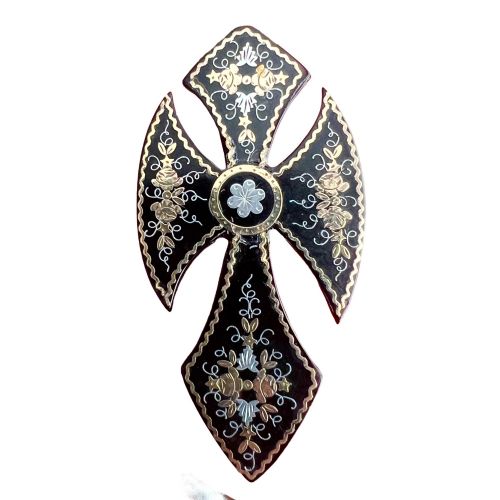
- A method of inlaying contrasting materials, such as gold or silver, into a base material like tortoiseshell. It appears in specific cross and decorative items from the period.
Gold Silver Pendant Brooch: Frequently Asked Questions
How do I wear a convertible pendant brooch?
These pieces usually feature a concealed bail that flips up to accommodate a chain, alongside a secure pin and safety catch for fastening to fabric. You simply slide the chain through the bail for necklace wear or fold the mechanism down when pinning to garments.
Ensure the pin catch is secure before attaching it to heavier fabrics to prevent loss during movement.
Why did period makers use both gold and silver?
Silver was favoured on the face of the jewellery because its white reflectivity enhanced the brilliance of old-cut diamonds and gemstones. Gold was used on the reverse to prevent the silver from tarnishing and staining clothing.
This bi-metal construction remains a reliable indicator of nineteenth-century and Edwardian manufacturing techniques.
How can I tell a Victorian piece from an Edwardian one?
Victorian examples often feature heavier gold and silver mounts, romantic motifs like bows and flora, and deeper coloured gems like rubies and emeralds. Edwardian pieces generally lean towards lighter, airier platinum or silver-on-gold lacework with diamonds and sapphires.
Examining the construction of the pin mechanism and the cut of the stones helps clarify the timeline.
Are these pieces safe for daily wear?
While durable, antique jewellery requires gentle handling due to age and delicate stone settings. Avoid exposing them to harsh chemicals, perfumes, or immersion in water.
Storing them individually in soft pouches prevents scratches between the silver and gold components.