
Gold Seed Pearl Pendant
A gold seed pearl pendant brings together delicate natural pearls and precious metal, offering a wearable piece of Victorian, Edwardian, or Art Nouveau history.
Gold Seed Pearl Pendant
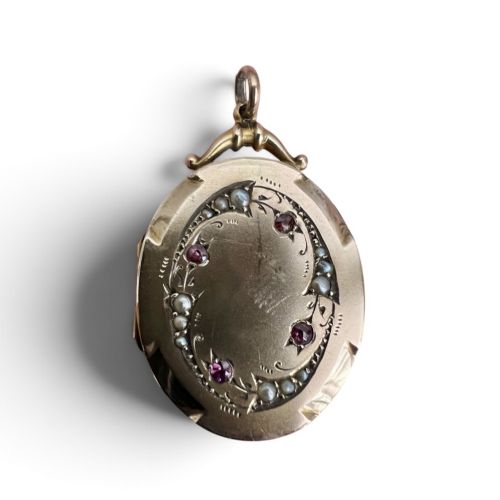
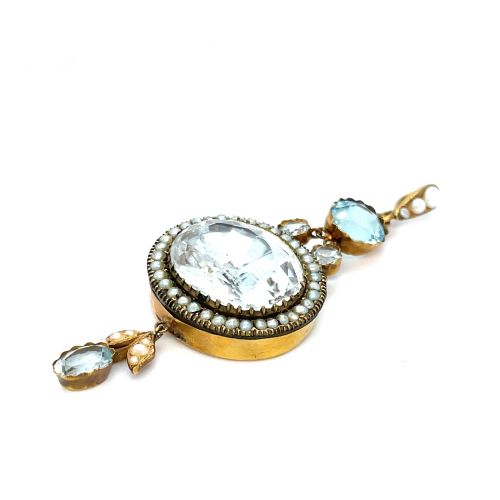
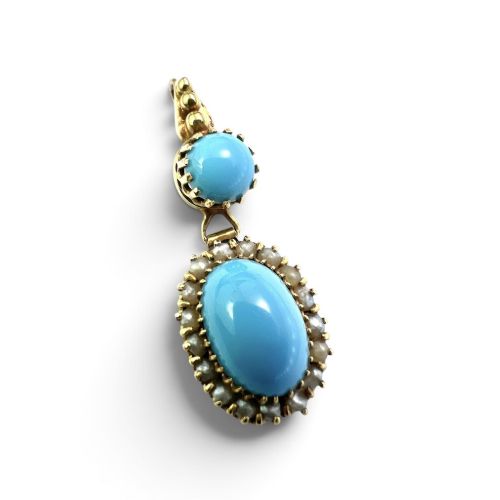
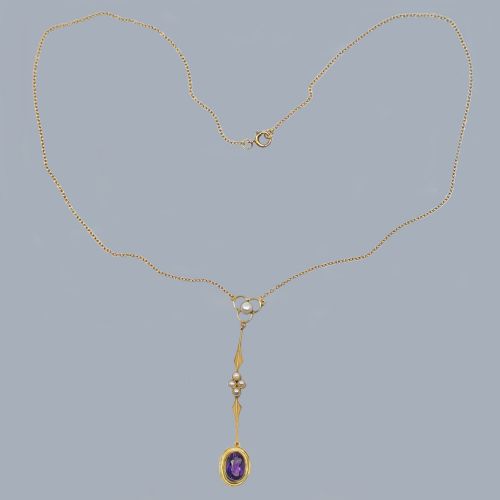
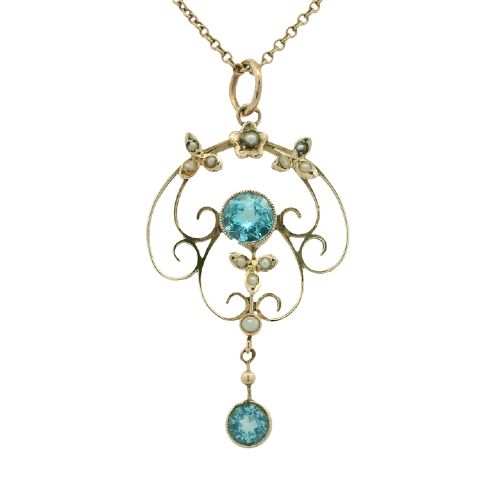
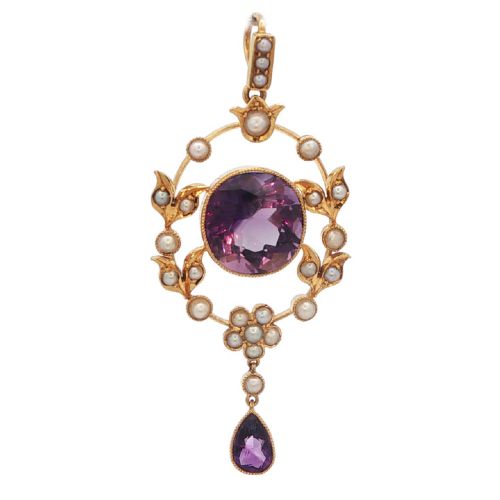
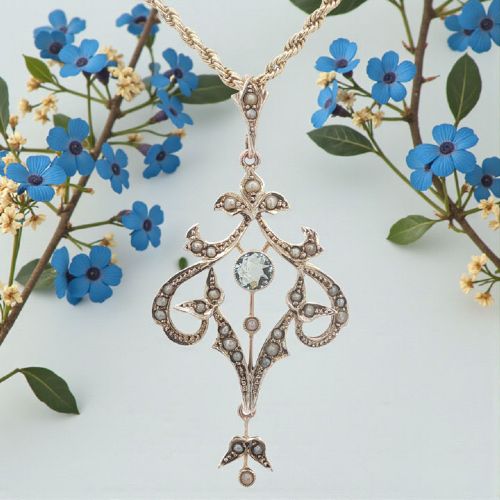
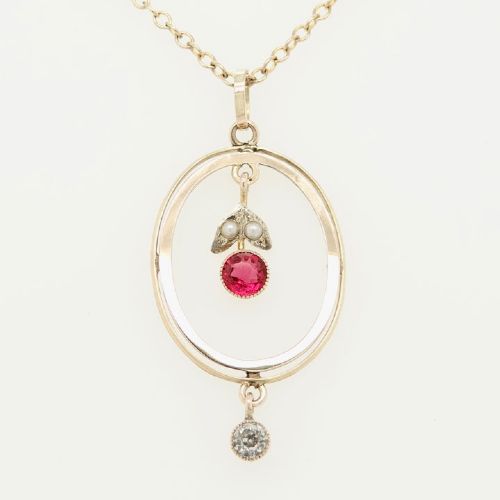
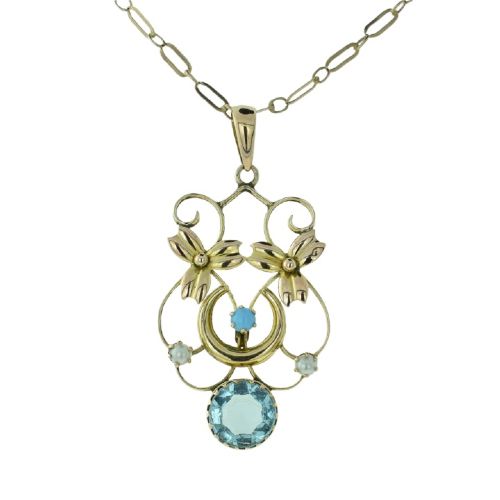
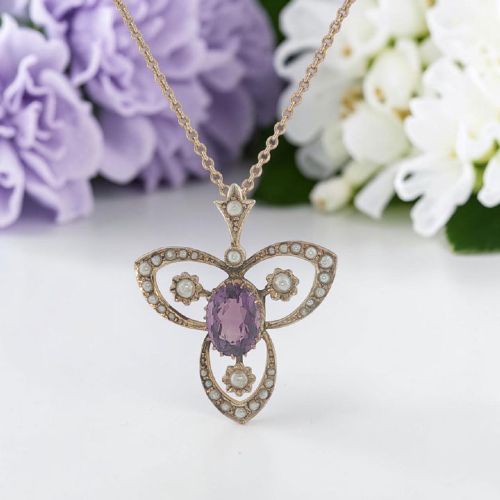
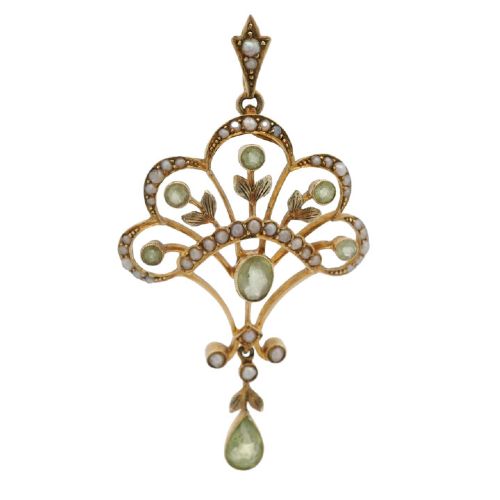
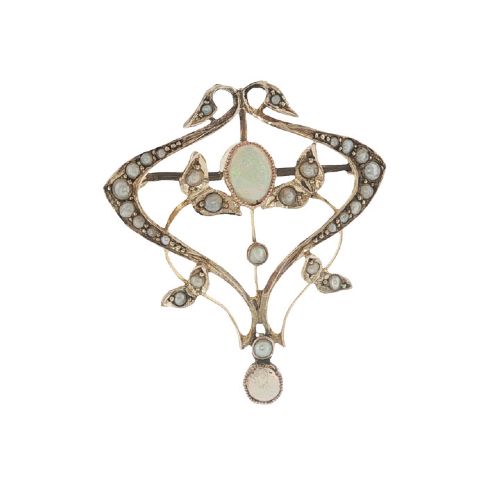
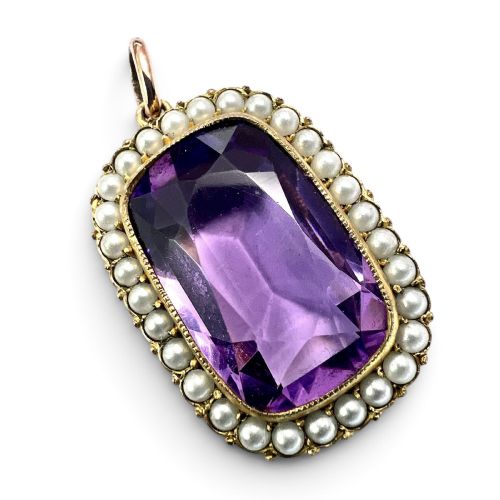
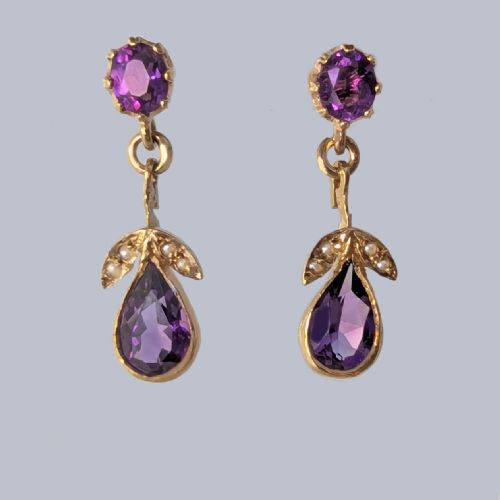
A gold seed pearl pendant is a small, ornate decorative ornament designed to suspend from a chain or ribbon around the neck. These pieces frequently date from the Victorian, Edwardian, and Art Nouveau periods, spanning the nineteenth and early twentieth centuries. Surviving examples combine tiny, river-harvested pearls with central gemstones such as amethyst, peridot, and aquamarine.
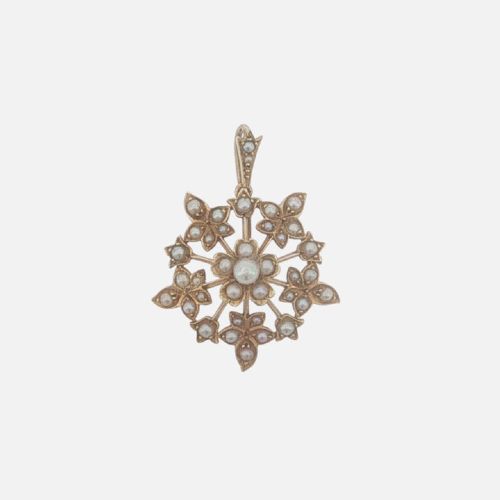
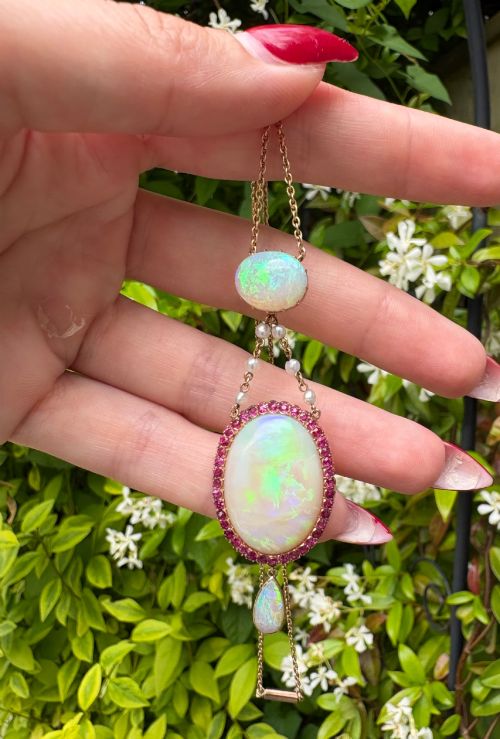
The selection ranges from delicate halo and starburst clusters to sweeping, asymmetrical Art Nouveau lines and convertible brooch-pendant combinations. Many pieces incorporate 9ct or 15ct gold settings, occasionally utilising rose or yellow hues depending on the exact decade of manufacture. Buyers encountering these items on this page will find both simple floral motifs and elaborate fringe necklaces.
Makers often arranged minute pearls to outline hearts, bows, ribbons, and crosses, surrounding coloured gems with bright white lustre. Certain designs feature drop elements or lavaliere configurations that sway with movement. Each surviving pendant reflects the prevailing aesthetic preferences of its specific decade of production.
How They Were Made
Goldsmiths utilised 9ct and 15ct yellow or rose gold, shaping the metal through casting, stamping, and wire-work to form delicate frames. Artisans drilled minute natural pearls by hand before securing them onto fine pins or threads within the gold architecture. Coloured gemstones such as aquamarine, amethyst, and peridot were then bezel-set or claw-set as focal points.
Art Nouveau workshops employed plique-a-jour enamel alongside gold and pearls to create translucent, stained-glass effects within the pendant body. French and British makers soldered intricate wire scrolls and starburst clusters together to support the weight of the central stones without bulk. Many workshop outputs included hidden folding bails or pin backs, allowing the pendant to convert into a brooch.
Gold Seed Pearl Pendant Retail Price Guide 2026
Typical asking prices for gold seed pearl pendant among the pieces listed under this phrase on Sellingantiques today, from the lower quarter to the upper quarter. They describe what is for sale here now, not the wider market.
Victorian jewellers occasionally transformed tiny beetles and insects into gold and pearl charms, letting bugs flutter softly against the wearer's chest.
What Varies in Quality
The standard of a gold seed pearl pendant depends on the uniformity, lustre, and original matching of the tiny pearls. Higher-grade examples maintain every single pearl intact, secured firmly in its original setting without replacements. The finesse of the goldwork itself separates ordinary production from exceptional workshop output, visible in hand-carved details and balanced symmetry.
The quality of the accompanying gemstone significantly influences the piece, with deeply saturated amethysts, vivid peridots, and clean aquamarines commanding attention. Structural integrity also matters, as hollow or stamped gold can dent, whereas solid high-carat constructions retain their crisp definition over generations. Original maker marks or complete, unaltered conversion mechanisms further elevate the standing of a survival.
S. Blanckensee & Son·Marius Hammer·Murrle Bennett·Sellier
The Gold Seed Pearl Pendant Glossary
- Seed Pearl
- A tiny, naturally occurring pearl, typically under two millimetres in diameter, used extensively in clusters and floral motifs during the nineteenth and early twentieth centuries.
- Lavaliere
- A pendant necklace featuring a suspended drop stone or ornament that hangs lower than the main neckline structure.
- Plique-a-jour
- An enamelling technique where enamel is applied within a cellular framework without a backing, allowing light to shine through the transparent colours.
- Bail
- The loop or ring attached to the top of a pendant through which a chain or ribbon passes.
- Foil Back
- A historical technique where a thin sheet of coloured metallic foil is placed behind a gemstone or paste to enhance its brilliance and colour reflection.
Gold Seed Pearl Pendant: Frequently Asked Questions
How do I wear an antique pendant safely?
Most antique pendants suspend easily from modern or period-appropriate chains using the original bail. For pieces that also function as brooches, ensure the pin mechanism locks securely before fastening.
Store your gold seed pearl pendant flat in a lined box away from hard items. Avoid exposing natural pearls to harsh chemicals, perfumes, or ultrasonic jewellery cleaners.
Were these pieces originally worn as brooches?
Many Victorian and Edwardian jewels were manufactured with dual-purpose frames incorporating both a hidden loop and a pin finding on the reverse. This versatility allowed the owner to pin the ornament to a lace collar or suspend it from a ribbon.
When examining the back of a piece, a hinged pin and C-clasp indicate convertible functionality. Both configurations were equally fashionable across the nineteenth and early twentieth centuries.
How do I date a seed pearl pendant?
Dating relies heavily on the prevailing design characteristics, gemstone choices, and gold purity marks. Symmetrical starbursts and heavy yellow gold often point towards Victorian production, while flowing lines suggest the Edwardian era.
Assay marks and hallmarks stamped on the jump rings or reverse provide official confirmation of the manufacturing decade. Comparing the construction style to dated archive examples further narrows the timeline.
Are seed pearls fragile?
Natural pearls are organic gems composed of calcium carbonate, making them softer and more susceptible to acids than mined stones. Gentle wear prevents the microscopic surface layers from scratching or losing their natural orient.
Because many antique pieces thread pearls onto fine silk or wire that weakens over time, periodic inspection by a specialist helps prevent loss. Clean them solely with a soft, dry cloth after wearing.