





Gold Sapphire Trilogy Ring
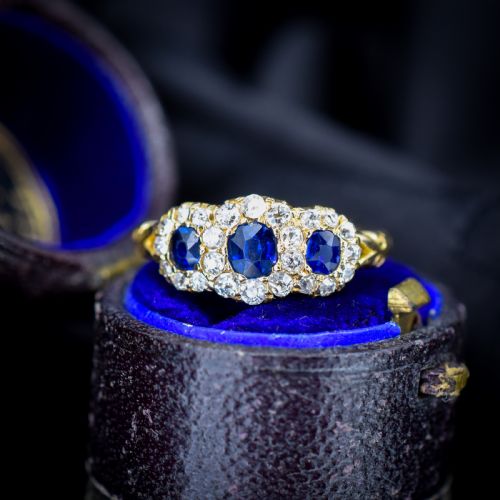
A gold sapphire trilogy ring brings together three stones of past centuries, pairing deep blue corundum with diamond sparkle.
Gold Sapphire Trilogy Ring
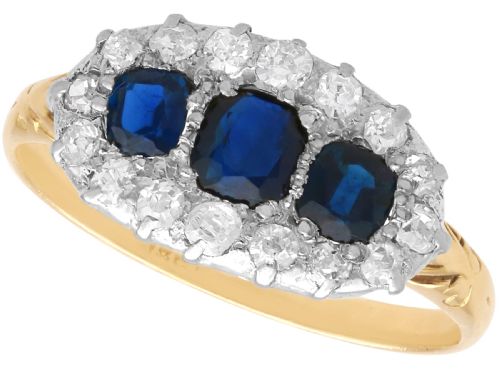
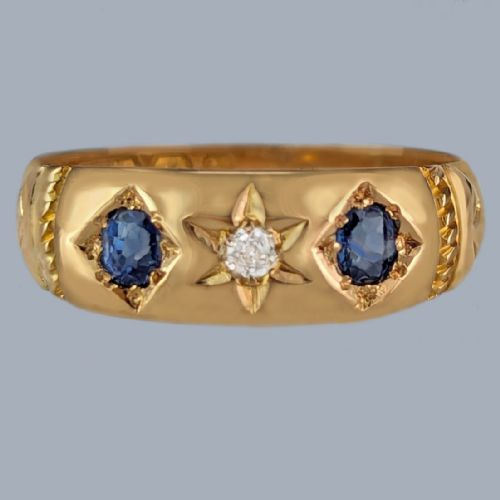
A gold sapphire trilogy ring displays three principal stones set across the finger, a design widely found from the Victorian period through the Art Deco era and mid-century decades. These pieces balance central blue sapphires with flanking diamonds, mounted in yellow gold, white gold, or platinum.
The selections on this page span Georgian, Victorian, Edwardian, and Art Deco periods, alongside later mid-century examples. Most common among these are Victorian and Art Deco 18ct yellow gold mountings featuring claw or rubover settings.
Buyers look for these rings to wear as engagement tokens or dress pieces, drawn by the historical weight and the contrast between rich blue sapphire and bright diamond facets.
Materials and Construction
Goldsmiths utilised 18ct yellow gold, 9ct gold, and platinum to fabricate the bands and settings for these three-stone arrangements. Platinum gained favour in Art Deco designs to hold diamonds securely while reflecting white light.
The precious metals were cast or hand-worked into claw settings, twist mounts, and rubover bezels. Craftsmen selected natural sapphires originating from Ceylon, Burma, or basaltic sources, pairing them with old-cut, rose-cut, or brilliant-cut diamonds.
Gold Sapphire Trilogy Ring Retail Price Guide 2026
Typical asking prices for gold sapphire trilogy ring among the pieces listed under this phrase on Sellingantiques today, from the lower quarter to the upper quarter. They describe what is for sale here now, not the wider market.
Some Victorian makers hid tiny diamond chips inside secret gallery wirework so the wearer caught sparkles from unexpected angles.
Factors That Separate Quality Tiers
The calibre of a gold sapphire trilogy ring rests largely on the origin, saturation, and clarity of the central sapphire, alongside the cut and brilliance of the accompanying diamonds. Natural stones with deep, even colour distribution and minimal inclusions command greater regard.
Metalwork execution also dictates the tier of a piece, separating standard commercial production from finer goldsmithing where claws are neatly tapered and settings integrate harmoniously with the band.
The Gold Sapphire Trilogy Ring Glossary
- Trilogy ring
- A ring set with three stones, traditionally symbolising the past, present, and future.
- Rubover setting
- A mounting style where a thin collar of metal folds over the edge of the gemstone to hold it securely in place.
- Old cut diamond
- A hand-faceted diamond cut before modern machine standards, featuring a smaller table and high crown.
- Ceylon sapphire
- A natural sapphire originating from Sri Lanka, known for a vibrant and lively blue hue.
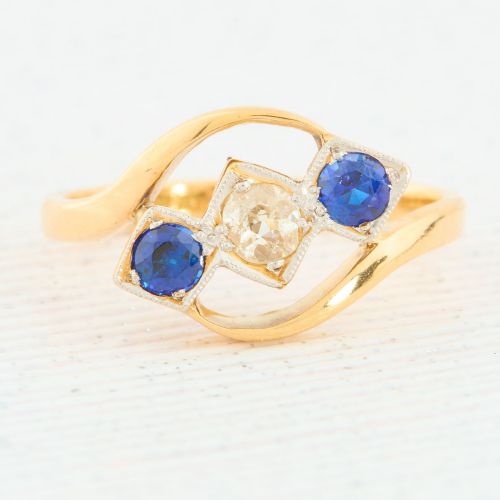
- Twist ring
- A design where the metal band and stone settings curve around one another in a crossover formation.
Gold Sapphire Trilogy Ring: Frequently Asked Questions
How do I care for a vintage gold sapphire ring?
Sapphires are remarkably hard stones, ranking just below diamonds on the Mohs scale, which makes them suitable for regular wear. Clean your ring using warm water, mild soap, and a soft brush to remove everyday oils.
Take care to remove the piece before engaging in heavy manual work, as older gold settings and claws can wear down or catch on fabrics over time.
How do I date an antique sapphire ring?
Dating relies on examining the cut of the stones, the metal composition, and any hallmarks stamped inside the shank. Old mine cuts and rose cuts point towards Georgian and Victorian origins, while geometric platinum settings typically indicate the Art Deco era.
Official assay office marks and registration numbers found on British pieces can also pinpoint the exact year of manufacture.
Can these rings be resized easily?
Most gold and platinum rings can be adjusted by a skilled jeweller to fit a different finger size. The feasibility depends on the band thickness and whether the decorative shoulders or hallmarks will be disturbed by the adjustment.
Consult a specialist who works with antique jewellery to ensure the structural integrity of the settings remains intact during the process.