
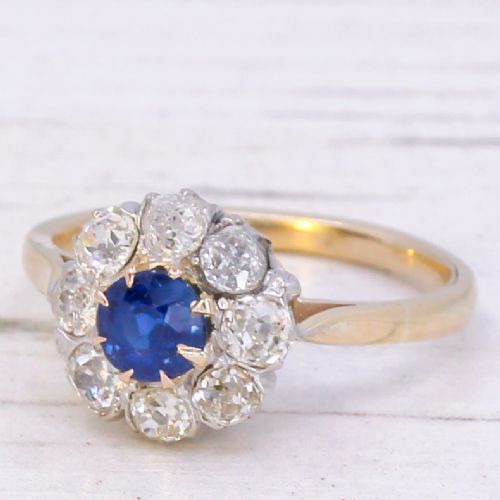


Gold Sapphire Target Ring
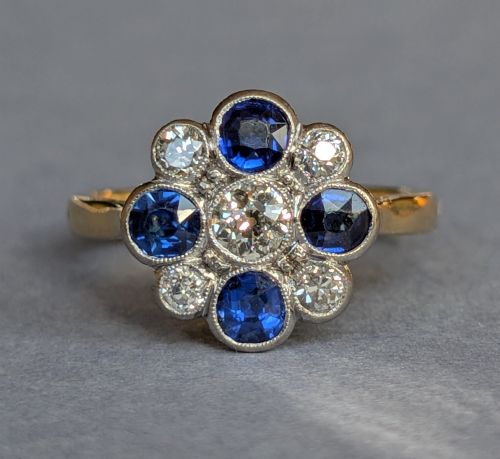
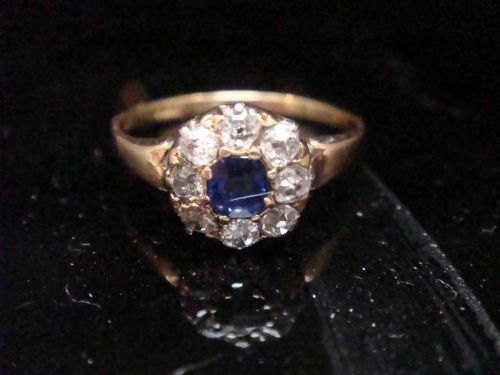
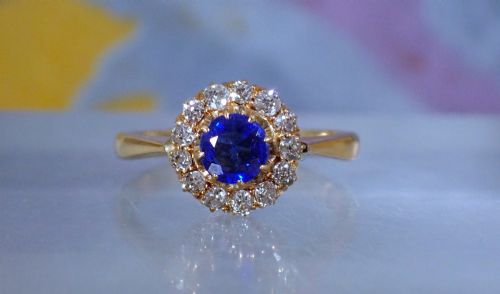
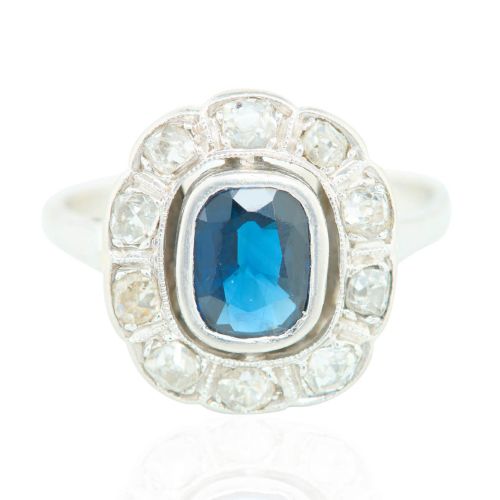
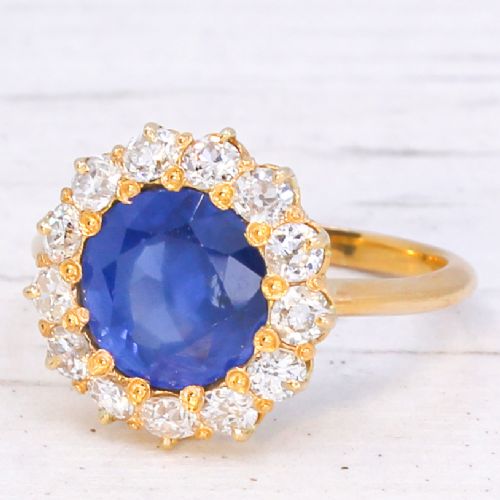
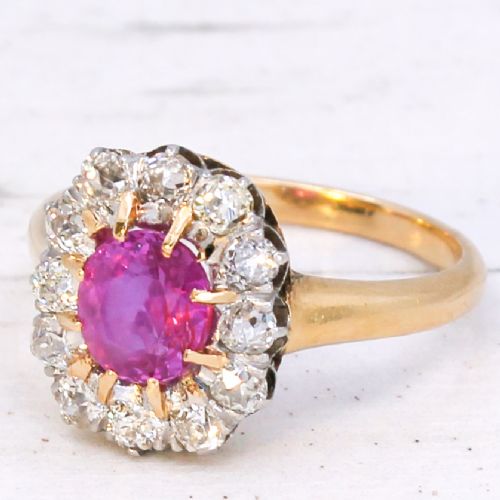
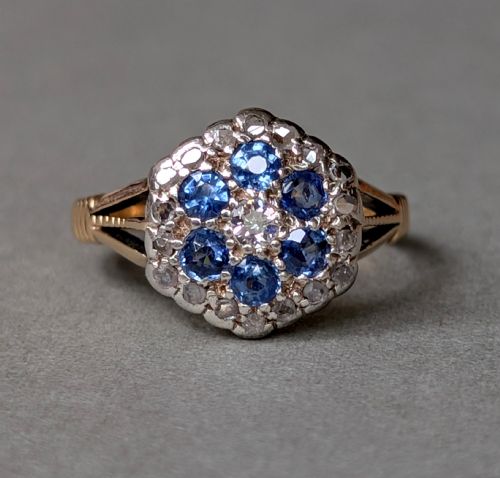
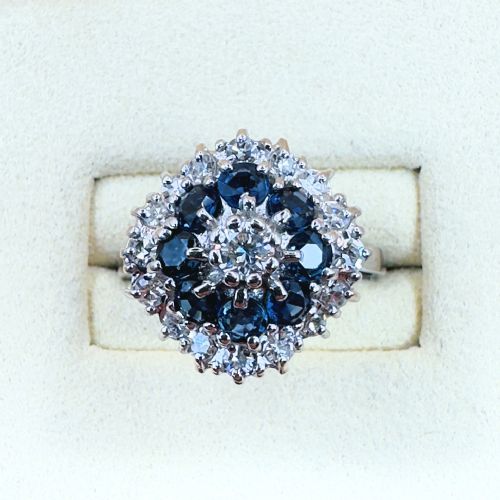
A gold sapphire target ring centres a vivid blue stone within geometric concentric rows of diamonds, offering the architectural symmetry beloved in the twentieth century.
Gold Sapphire Target Ring
The layout relies on sharp contrast between deep blue corundum and bright white diamonds, often mounted on yellow or white gold shanks. Pieces span from the early Edwardian years through the 1920s and 1930s, alongside later mid-century revivals.
Most examples combine 18ct gold with platinum settings to keep the diamond borders crisp and secure. The format prioritises geometric impact over simple solitaire settings, making the finger coverage substantial.
Materials and construction
Goldsmiths combined 18ct yellow or white gold with platinum tops, a pairing that allowed finer claw and millegrain work around tiny stones. Platinum held bright white diamonds firmly without discolouring the metal alongside the central sapphire.
Gemstones were cut into old cuts, brilliant cuts, or geometric calibré shapes tailored specifically to follow the concentric tiers of the target motif. Stones were set flush or held closely in shared-claw and bezel arrangements to form seamless borders.
Listings span from 1900 through the Edwardian era, the 1920s Art Deco period, and into mid-century revivals using yellow gold, white gold, and platinum.
Factors of quality
Quality rests upon the saturation and origin of the central sapphire, with unheated Burmese or Ceylon stones commanding higher regard than treated alternatives. The uniformity of colour across the sapphire and its accompanying border stones dictates the visual balance.
Execution of the metalwork defines the superior end of the range, visible in crisp millegrain edges, symmetrical concentric tiers, and secure stone settings that show no gaps in the geometric pattern.
The Gold Sapphire Target Ring Glossary
- Target ring
- A concentric ring design featuring a central stone encircled by one or more rings of contrasting gemstones. This layout creates a bold, geometric pattern resembling a bullseye.
- Calibré cut
- Small gemstones cut specifically into geometric shapes such as squares, rectangles, or trapezoids to fit tightly together in a continuous channel or border. This technique defined many Art Deco pieces.
- Millegrain
- A decorative technique featuring a row of tiny raised metal beads along the edge of a setting. It softens the metal profile and adds texture to Edwardian and Art Deco mountings.
- Old cut
- A diamond facet style hand-cut before modern brilliant proportions were standardised, typically featuring a smaller table, higher crown, and open culet. These stones display a warm candlelight sparkle.
- Cluster ring
- A ring arrangement where multiple smaller stones are grouped tightly around a larger centre stone. This style maximises visual presence and light reflection.
Gold Sapphire Target Ring: Frequently Asked Questions
What is a target ring?
A target ring is a cluster design featuring a central gemstone enclosed by one or more concentric rings of smaller stones, typically sapphires and diamonds.
This geometric layout gained immense popularity during the Art Deco period for its striking, architectural symmetry on the hand.
How do I care for a vintage gold sapphire target ring?
Sapphires are durable gemstones, but antique settings with fine millegrain and older claw work require gentle handling.
Remove the ring during heavy manual work and clean it using warm soapy water with a soft brush, avoiding harsh ultrasonic cleaners.
How can I tell an Edwardian target ring from an Art Deco one?
Edwardian examples tend to feature yellow gold paired with platinum, delicate floral motifs, and soft millegrain borders.
Art Deco pieces lean towards stark white gold or platinum, rigid geometric lines, and sharp concentric circles.
Were these rings worn as engagement rings?
Yes, many of these clustered designs served as engagement rings throughout the early twentieth century.
Their substantial finger coverage and vibrant colour contrasts made them fashionable choices for brides seeking alternative styles.