



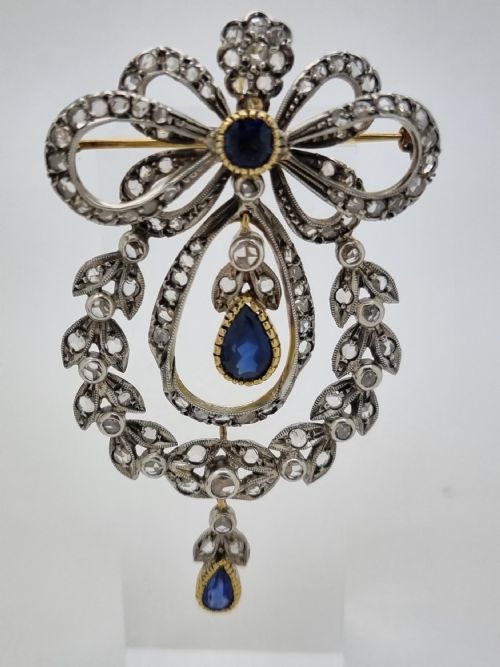

Gold Sapphire Drop Pendant
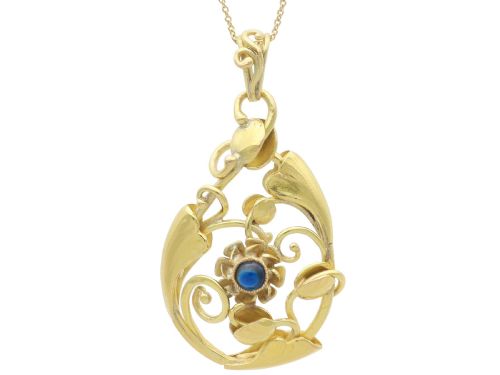
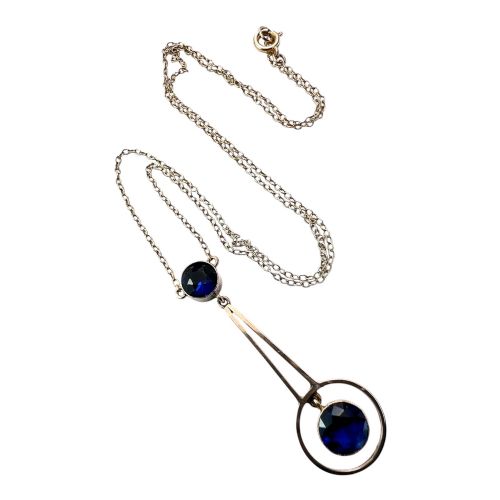
A gold sapphire drop pendant hangs with a central blue stone beneath a delicate chain, bringing period colour and fine metalwork to the neckline.
Gold Sapphire Drop Pendant
A gold sapphire drop pendant combines coloured stones and precious metal in vertical cluster, fringe and floral formations designed to suspend from the neck. These jewels appear most frequently from the Edwardian era and the mid-twentieth century, offering distinct periods of design within a single category of jewellery.
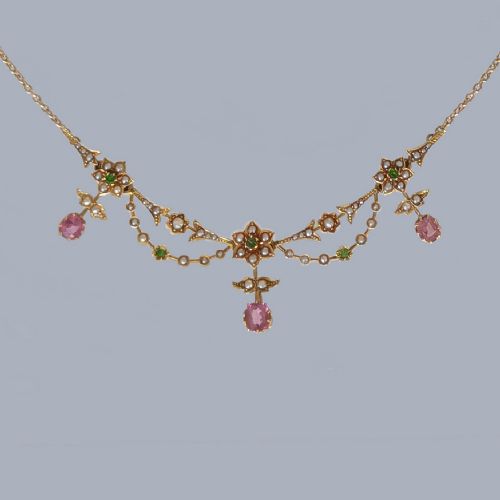
The material combinations span nine-carat, fifteen-carat and eighteen-carat yellow and white gold, often paired with seed pearls, diamonds and aquamarines. Formats include traditional pendants, convertible pendant brooches and fringe necklaces that position the drop stones centrally.
Edwardian examples lean towards foliate motifs and delicate gold wirework incorporating seed pearls and white sapphires. Mid-century items introduce structured clusters and fan shapes set with diamonds and standard blue or pink sapphires.
How they were made
Goldsmiths constructed these drops using cast and fabricated gold in nine, fifteen and eighteen-carat purities, soldering wire frames and bezel settings by hand. Stones including cabochon, pear-cut and round sapphires were secured alongside seed pearls and diamonds using claw or collet settings.
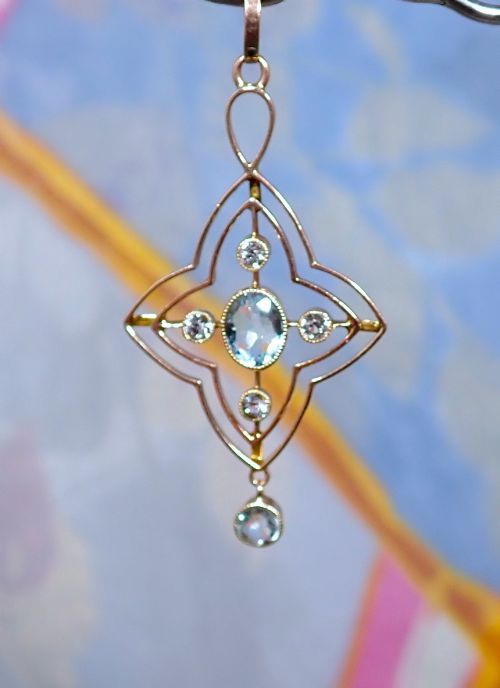
Edwardian workshops utilised intricate pierced backplates and millgrained edges to catch the light around white sapphires and aquamarines. Later mid-century pieces relied on sturdier prong settings to elevate diamond and sapphire clusters from the gold base.
Gold Sapphire Drop Pendant Retail Price Guide 2026
Typical asking prices for gold sapphire drop pendant among the pieces listed under this phrase on Sellingantiques today, from the lower quarter to the upper quarter. They describe what is for sale here now, not the wider market.
The listings combine Edwardian and mid-century items, spanning nine, fifteen and eighteen-carat gold alongside platinum-topped mountings.
What varies in quality
The standard of execution depends upon the fineness of the goldwork and the integration of secondary gems like seed pearls and diamonds. Early handmade Edwardian pieces often display meticulous openwork and hand-threaded pearls, whereas mid-century examples rely on calibrated cluster symmetry.
Stone selection dictates the upper tier of these pieces, particularly where natural unheated sapphires or well-matched diamond accents accompany the primary drop. The crispness of foliate engraving and the structural integrity of the suspension loop further distinguish finer examples.
The Gold Sapphire Drop Pendant Glossary
- Cabochon
- A gemstone shaped and polished with a smooth, rounded dome rather than faceted cuts. This technique was frequently utilised for sapphires and moonstones to highlight deep colour or internal sheen.
- Seed pearl
- A very small, naturally occurring or early cultured pearl, often drilled and threaded onto fine wire. These tiny pearls form delicate floral borders and festoons on Edwardian drop pendants.
- Fringe necklace
- A necklace design featuring multiple hanging drops suspended at intervals from a main chain or collar. This format often incorporates coloured stones alongside seed pearls.
- Millgrain
- A decorative border consisting of a row of small, raised metal beads along the edges of gold settings. This technique is characteristic of Edwardian jewellery fabrication.
Gold Sapphire Drop Pendant: Frequently Asked Questions
How do I date a gold sapphire drop pendant?
Examine the metal purity marks and stylistic clues such as foliate motifs, millgrained edges and seed pearl clusters typical of the Edwardian era. Later twentieth-century pieces often present heavier white gold settings and standard diamond cluster arrangements.
Assay marks and specific caratages like fifteen-carat gold point firmly to the early period before legal standards shifted.
Can I wear an antique pendant every day?
These pieces require thoughtful care, especially Edwardian iterations containing delicate seed pearls and fine gold wirework. Removing the necklace during physical activity preserves the original settings and delicate suspension loops.
Store the pendant separately in a lined box to prevent friction against other items in your collection.
Are all sapphires in these pendants blue?
While traditional blue stones dominate, listings frequently include pink sapphires, white sapphires and multi-coloured arrangements alongside emeralds, tourmalines and garnets. Edwardian makers often mixed white sapphires with aquamarines and pearls for a lighter palette.
Pink varieties appear notably in fringe necklaces and floral drop clusters from the early twentieth century.