
Vintage Seed Pearl Jewellery
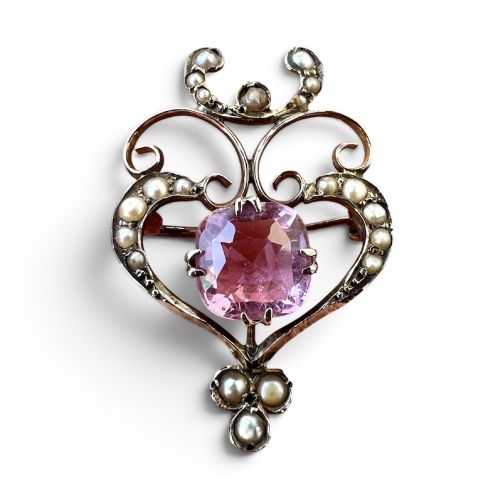
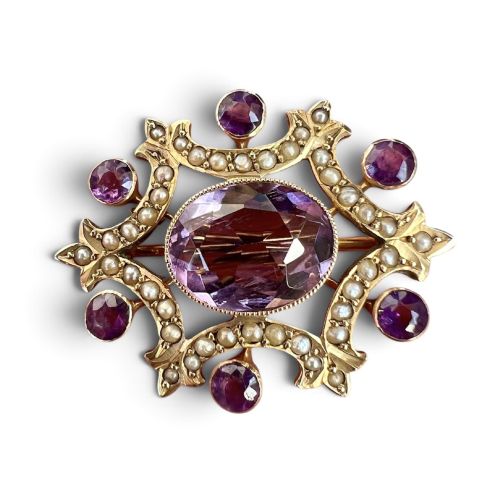
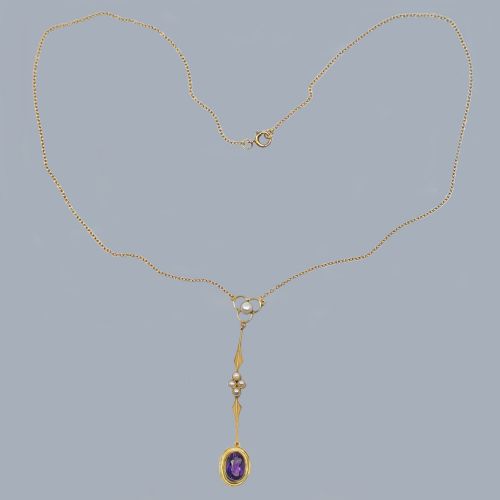
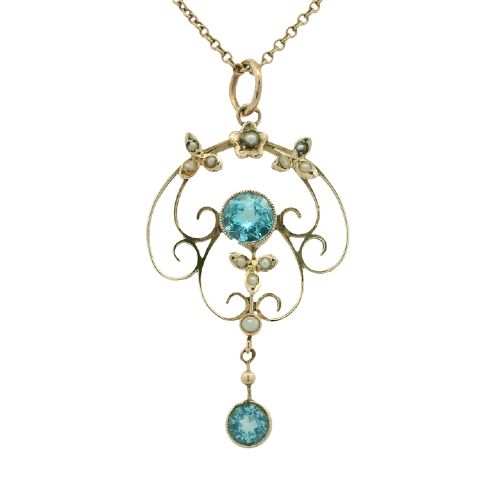
Vintage seed pearl jewellery brings together tiny, delicate spheres of lustre with coloured gemstones and rich gold settings from the Victorian, Edwardian and later eras.
Vintage Seed Pearl Jewellery
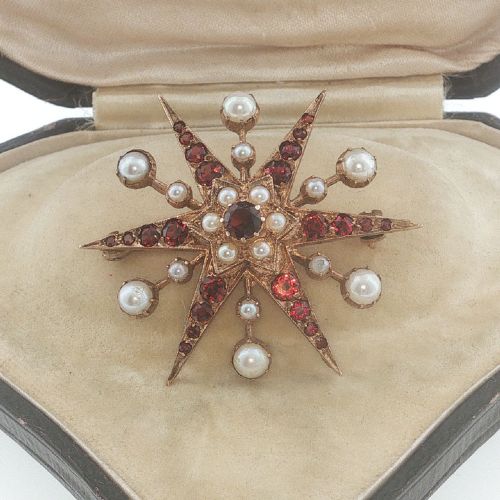
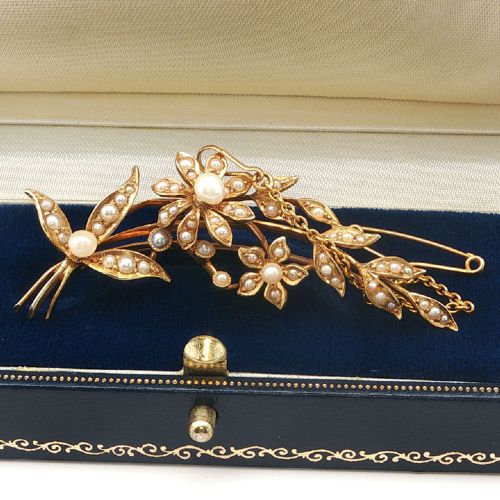
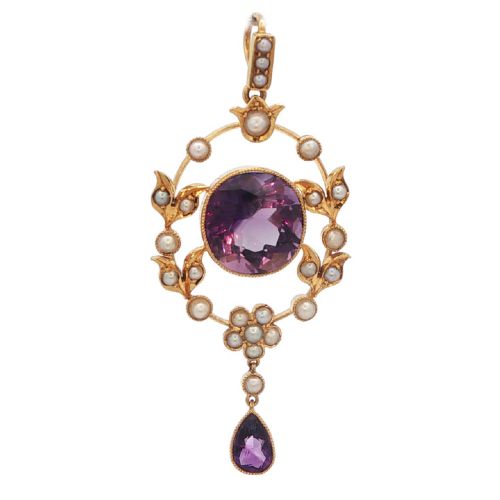
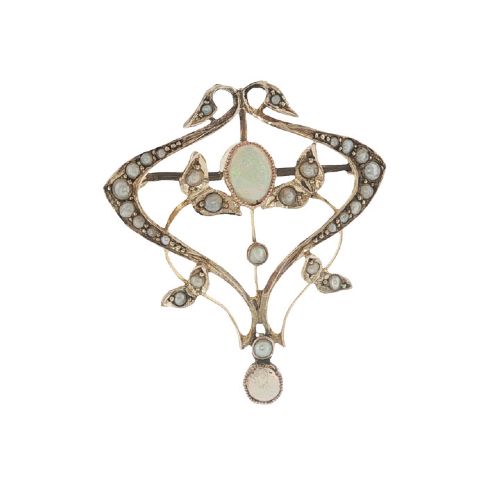
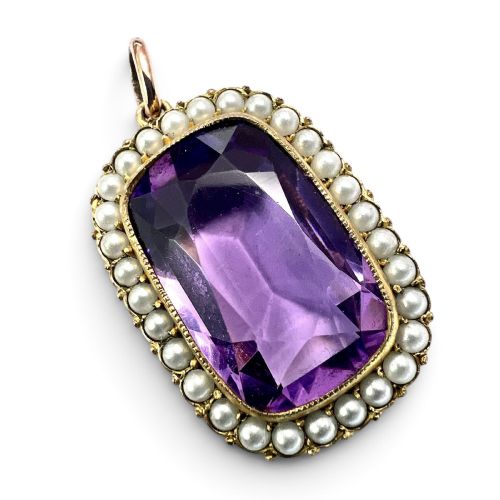
When you search for vintage seed pearl jewellery, you find intricate pendants, brooches, necklaces and rings that date from the late nineteenth century through to the mid-twentieth century. The Edwardian and Victorian periods dominate the selection, bringing delicate floral sprays, starbursts and fringe necklaces into view alongside later mid-century reinterpretations.
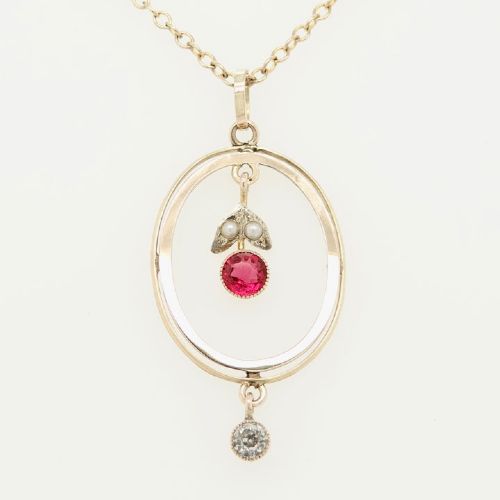
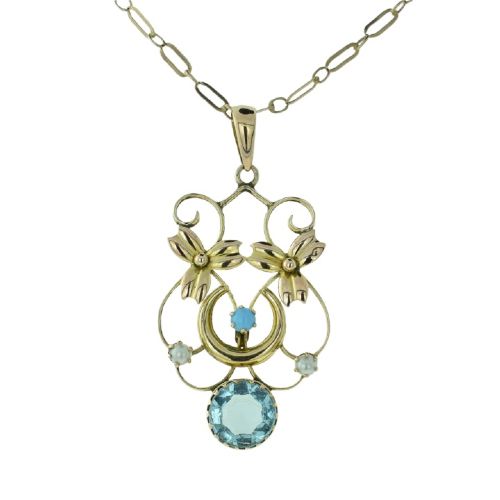
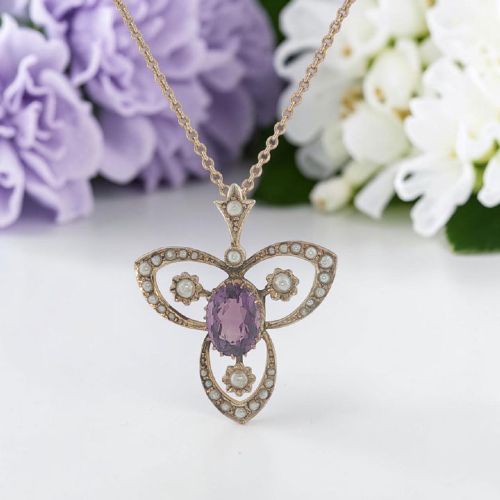
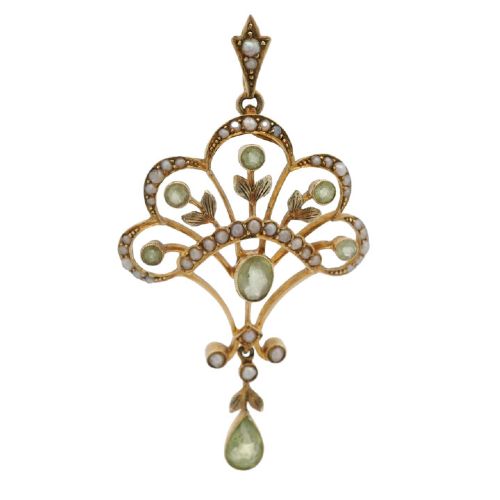
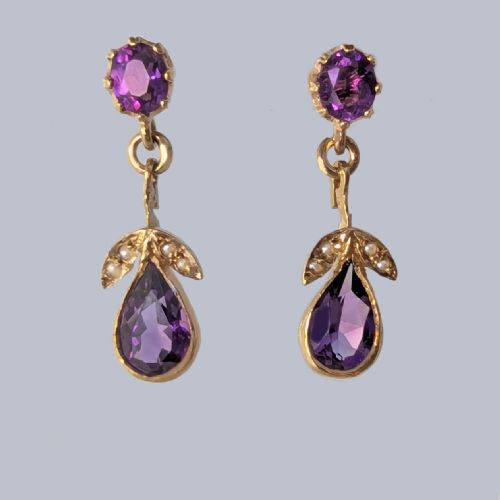
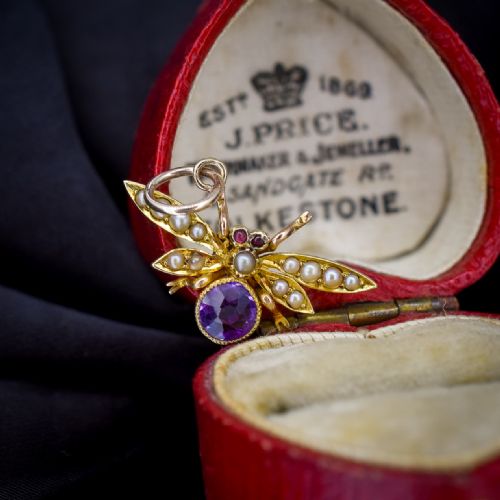
These pieces rely on assemblies of microscopic pearls, often threaded on silk or secured with fine wire alongside larger gemstones like amethyst, aquamarine, garnet and turquoise. Pendants and brooches are the forms most frequently encountered on this page, often combining 9ct or 15ct yellow and rose gold with platinum highlights.
How they were made
The construction of vintage seed pearl jewellery relies heavily on collet settings, grain setting and fine wirework to secure hundreds of minuscule pearls without overwhelming the metalwork. Goldsmiths utilised 9ct and 15ct gold, along with platinum and silver gilt, forming structured ribbon sliders, intricate starburst frames and delicate floral clusters.
Enamelling techniques such as plique-à-jour appear alongside gemstone cutting methods like cabochon and faceted stones to complement the natural lustre of the pearls. Metal components were frequently hand-finished, with engraved details on gold clasps, padlocks and bar brooches adding texture to the reverse of the pieces.
Gemstones paired with seed pearls in these items include amethyst, aquamarine, turquoise, garnet, tourmaline, peridot, topaz and opal.
What varies in quality
Quality in these items depends largely on the uniformity and nacre retention of the seed pearls themselves, as well as the complexity of the gold or platinum framework holding them. Pieces featuring intact, matching pearls with strong lustre sit firmly above those showing surface dullness or uneven replacement pearls.
The integration of the central gemstones, such as deep purple amethysts, blue topazes or pink tourmalines, alongside the delicacy of the surrounding wirework, dictates the overall refinement of the design. Hallmarking and maker marks also elevate a piece, providing clear documentation of its origin.
S. Blanckensee & Son
The Vintage Seed Pearl Jewellery Glossary
- Seed pearl
- A very small, naturally formed or freshwater pearl, typically measuring under two millimetres in diameter. These tiny spheres form the delicate background or primary decoration of Edwardian and Victorian clusters.
- Collet
- A band or collar of metal that holds a gemstone or pearl securely in place against its backing. It forms a clean, raised edge around the perimeter of the stone.
- Plique-à-jour
- An enamelling technique where the enamel is applied without a backing, creating a translucent, stained-glass effect that lets light pass through the design. This method is characteristic of fine Edwardian and Art Nouveau pieces.
- Cabochon
- A gemstone shaped and polished with a smooth, convex domed surface rather than faceted edges. This cut is frequently seen on turquoise, moonstone and opal accents within pearl jewellery.
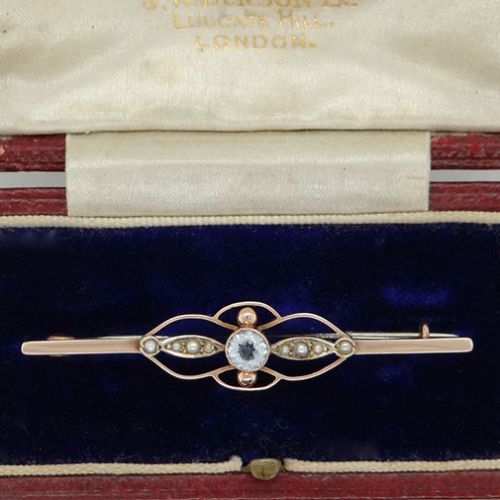
- Bar brooch
- A slender horizontal metal pin, often mounted with a central cluster of seed pearls and gemstones. They were widely worn at the neckline or lapel during the late nineteenth and early twentieth centuries.
Vintage Seed Pearl Jewellery: Frequently Asked Questions
How do I care for seed pearl jewellery?
Seed pearls are delicate and sensitive to acids, cosmetics, perfumes and prolonged immersion in water. You should wipe them gently with a soft, dry cloth after wearing and store them separately to avoid scratching.
Because many vintage pieces use silk threading that weakens over time, frequent wear should be managed with care. Professional restringing may be necessary for necklaces and bracelets.
How can I tell an Edwardian piece from a Victorian one?
Victorian seed pearl pieces often feature heavier gold settings, darker gemstones like garnets, and sentimental motifs such as padlocks, hair compartments and initial letters. They tend to have a warmer, more robust presence.
Edwardian items typically utilise lighter frameworks, frequently incorporating platinum alongside 15ct gold, with pastel stones like aquamarine, pink tourmaline and peridot. The aesthetic shifts toward lacy, garland-style designs and light-reflecting openwork.
Were seed pearls natural or cultured?
The seed pearls found in Victorian and Edwardian jewellery are natural saltwater or freshwater pearls harvested before the widespread commercial production of cultured pearls. Their organic origin accounts for minor variations in shape and lustre across a single piece.
Later mid-century pieces sometimes incorporated freshwater variations, but the older items rely on the historical gathering of tiny natural specimens.